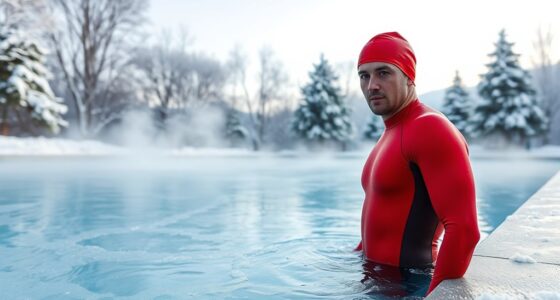
To start a cold plunge routine, begin with mental prep by visualizing success and setting positive intentions. Practice deep, slow breaths to stay calm, then gradually ease into the water, focusing on your breathing. Establish a consistent routine with pre-plunge rituals like affirmations or calming music to build familiarity and confidence. Remember, gentle, gradual exposure helps your body adapt. Keep at it, and you’ll discover more strategies to boost your resilience and enjoyment along the way.
Key Takeaways
- Gradually introduce cold exposure by starting with short, lukewarm dips and progressively lowering water temperature.
- Prepare mentally with visualization, deep breathing, and positive affirmations to build confidence.
- Establish a consistent pre-plunge routine like calming music or deep breaths to create a mental cue.
- Focus on controlled breathing during immersion to manage shock and stay calm.
- Practice regularly to adapt physically and mentally, making cold plunges more comfortable over time.
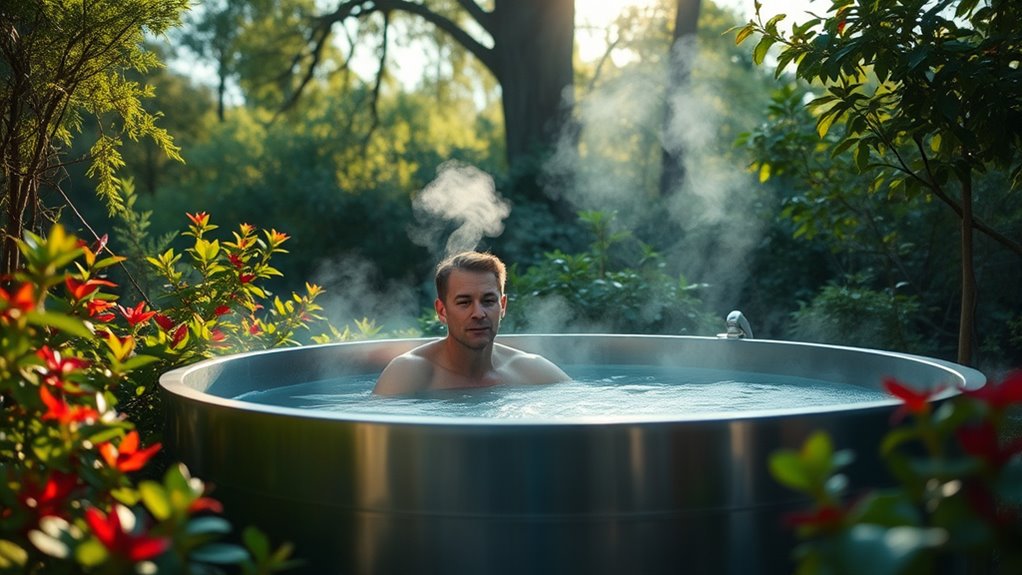
Starting a cold plunge routine can seem intimidating at first, but with the right approach, it becomes a manageable and rewarding practice. The key is to focus on your breathing techniques and mental preparation before stepping into the cold water. These elements help you stay calm and centered, making the experience more tolerable and even enjoyable over time.
First, take a few moments to prepare mentally. Visualize yourself successfully completing the plunge and remind yourself of the benefits, like improved circulation, increased alertness, and mental resilience. Setting a clear intention can boost your confidence and help you stay committed. It’s normal to feel apprehensive initially, but mental preparation helps you reframe that nervous energy as excitement or curiosity instead of fear.
Mentally prepare by visualizing success and focusing on the benefits to build confidence and stay committed.
Next, hone your breathing techniques. Proper breathing is essential because cold water triggers a natural stress response, often causing rapid, shallow breaths that can escalate panic. Practice slow, deep breaths—inhale through your nose for about four seconds, hold for a couple of seconds, then exhale slowly through your mouth or nose. This helps regulate your nervous system and prevents hyperventilation. When you’re about to step into the water, focus solely on your breath. If you start to feel overwhelmed, return your attention to this controlled breathing pattern to regain composure.
When it’s time to actually plunge, ease into the water gradually if you’re new. Submerge your feet first, then your legs, and continue to focus on your breath. Keep your mind on your breathing techniques, which serve as an anchor amid the shock of cold water. Remind yourself that discomfort is temporary and that you’re in control. As you acclimate, you’ll notice your body adapting more quickly, and your mental resilience strengthening.
It’s also helpful to establish a pre-plunge routine—like taking a few deep breaths, repeating affirmations, or listening to calming music—to set your mindset. Consistency is essential; the more regularly you practice, the easier it becomes to manage the mental and physical challenges. Over time, you’ll find that your mental preparation and breathing techniques become second nature, empowering you to face the cold with confidence. Remember, starting slow and being gentle with yourself creates the best foundation for a sustainable and beneficial cold plunge routine.
In addition, exploring voiceover skills can enhance your ability to stay calm and focused during challenging moments, whether in a cold plunge or other stressful situations.

Bubplay Ice Bath Cold Plunge Tub with Cover for Indoor Outdoor for Recovery, Cold Water Therapy, Athletes & Adults -105 Gallons, Black, XL
【XL Full-Body Cold Plunge for Most Adults】 Designed for an immersive ice bath / cold plunge experience with…
As an affiliate, we earn on qualifying purchases.
As an affiliate, we earn on qualifying purchases.
Frequently Asked Questions
How Long Should I Stay in the Cold Plunge Initially?
Start with an initial duration of 30 seconds to 1 minute in the cold plunge. You should focus on gradual adaptation, listening to your body, and avoiding discomfort. As you become more comfortable, slowly increase your time by 15-30 seconds each session. This approach helps build tolerance safely while maximizing benefits. Remember, consistency is key, and never push yourself to the point of pain or extreme discomfort.
What Safety Precautions Are Necessary for Beginners?
Safety is your first priority—don’t let hypothermia risks catch you off guard. Always start with proper equipment like insulated gloves and a thermometer, and never plunge alone. Keep your sessions short and gradually increase duration. Listen to your body; if you feel dizzy or numb, get out immediately. Remember, a cautious approach prevents accidents and keeps your cold plunge routine safe and enjoyable.
Can Cold Plunges Help With Mental Health?
Cold plunges can boost your mental health by reducing stress and improving mood. The mental health benefits include enhanced focus, decreased anxiety, and increased resilience to stress. When you immerse yourself in cold water, your body releases endorphins, which lift your spirits. Regular cold plunges can help you feel calmer and more centered, making it a natural way to support your overall mental well-being.
What Is the Ideal Water Temperature for Beginners?
Don’t bite off more than you can chew when it comes to water temperature; start with a range of 50-60°F (10-15°C). This temperature balances the need for a beneficial cold plunge while ensuring beginner comfort. As you get used to it, you can gradually lower the temperature. Remember, patience is key—rushing in too cold can be a shock to your system and discourage your routine.
How Often Should I Incorporate Cold Plunges Into My Routine?
You should incorporate cold plunges 2-3 times a week to avoid cold shock and allow your body to adapt gradually. Regular plunges can boost your immune system and improve recovery. As you build tolerance, you can increase frequency if desired. Listen to your body and avoid overdoing it, since too much exposure may lead to stress on your system. Consistency helps maximize immune benefits and minimizes risks.
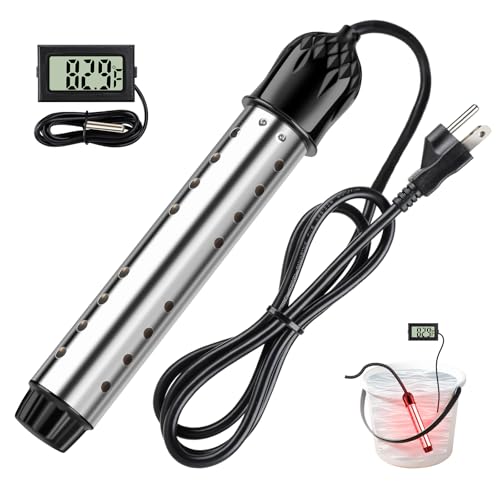
Portable Water Heater for Buckets & Tubs, 2000W Immersion Heater with Intelligent Shut-Off, Stainless Steel Guard & Digital Temperature Sensor, Fast Heating for Backyard Pools, RVs & Home Use
【ENJOY WARM WATER IN MINUTES】: Stop struggling with icy water! Our 2000W portable heater provides a quick and…
As an affiliate, we earn on qualifying purchases.
As an affiliate, we earn on qualifying purchases.
Conclusion
Starting a cold plunge routine might seem intimidating at first, but with consistency, you’ll discover benefits that rival the power of a supernova. Embrace the chill as your new secret weapon for energy, recovery, and mental clarity. Remember, every plunge takes you one step closer to transforming yourself into a resilient, invigorated powerhouse. Trust the process, stay committed, and soon you’ll wonder how you ever lived without this exhilarating practice. Your ultimate wellness revolution is just a plunge away!
Bubplay Ice Bath Cold Plunge Tub with Cover for Indoor Outdoor for Recovery, Cold Water Therapy, Athletes & Adults -105 Gallons, Black, XL
【XL Full-Body Cold Plunge for Most Adults】 Designed for an immersive ice bath / cold plunge experience with…
As an affiliate, we earn on qualifying purchases.
As an affiliate, we earn on qualifying purchases.

Silicone Cover Ice Bath Thermometer with Timer, Waterproof Floating Water Thermometer for Cold Plunge, Works with Ice Bath Tub Hot Tub Accurate Recovery(Black)
ICE BATH THERMOMETER WITH TIMER: Elevate your cold plunge tub experience with real-time temperature readings and accurate time…
As an affiliate, we earn on qualifying purchases.
As an affiliate, we earn on qualifying purchases.