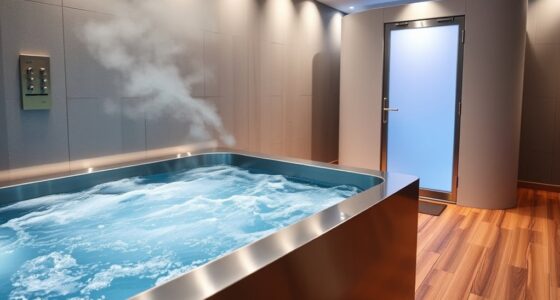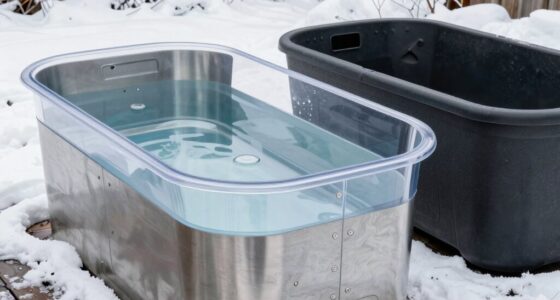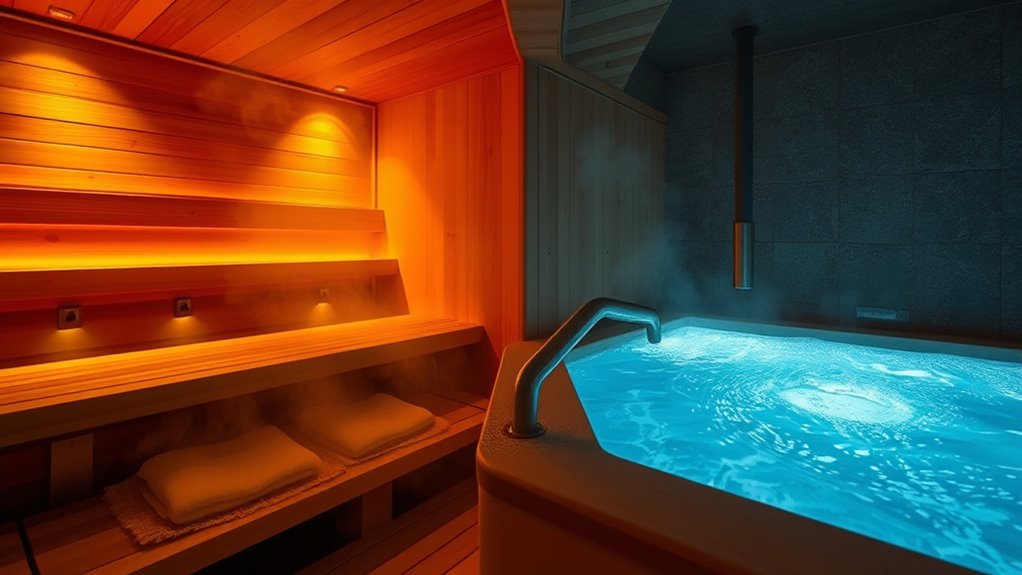

Contrast therapy, by alternating sauna and cold plunge sessions, helps you recover faster and boost physical performance. The heat relaxes muscles, increases blood flow, and reduces tension, while the cold reduces inflammation and sharpens mental clarity. This temperature switch stimulates your nervous system, enhances mood, and promotes a sense of refreshment. If you keep exploring, you’ll discover how to optimize these benefits safely and effectively for your recovery routine.

Get wellness gear delivered free with Prime
- Fast, free delivery on millions of items
- Prime Video, Amazon Music and more included
- Member-only deals all year
Key Takeaways
- Alternating sauna and cold plunge enhances blood flow, promoting faster muscle recovery and reducing soreness.
- The temperature shifts stimulate the nervous system, improving mental clarity and alertness.
- Contrast therapy reduces inflammation and swelling, supporting injury prevention and healing.
- Regular sessions boost mood, decrease stress, and improve sleep quality for overall well-being.
- Proper gradual exposure and hydration ensure safety and maximize physical and mental recovery benefits.
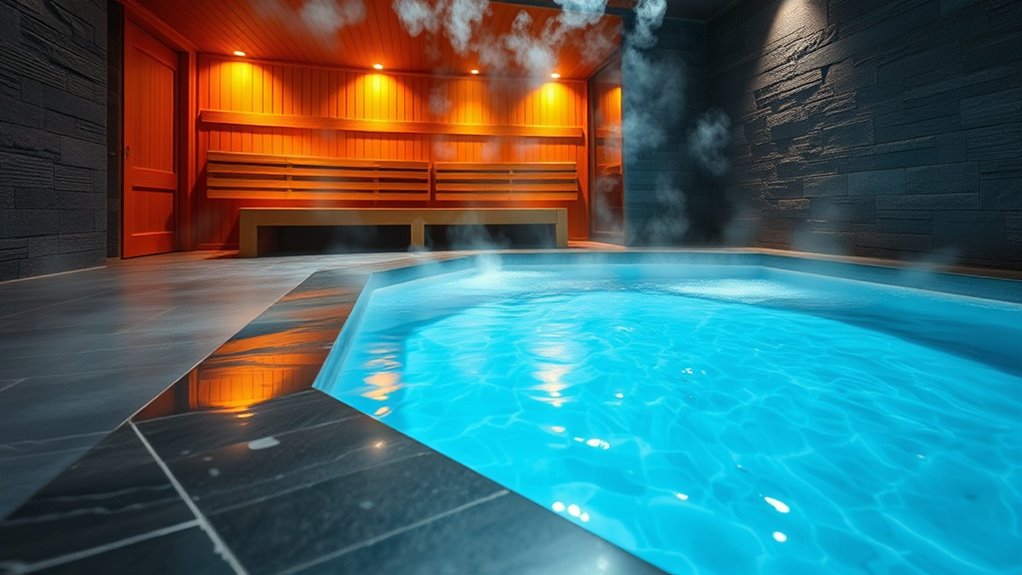
Have you ever wondered how alternating between hot and cold treatments can boost recovery and reduce pain? Contrast therapy, which involves switching between a sauna and a cold plunge, offers a powerful way to enhance your body’s healing process. When you expose your muscles to heat, you promote muscle relaxation, easing tension and stiffness. This warmth increases blood flow, helping nutrients reach tired tissues and waste products to be flushed out. As a result, your muscles become more flexible, reducing soreness and preventing injuries. After warming up, plunging into cold water causes blood vessels to constrict, which helps reduce inflammation and swelling. This rapid change in temperature stimulates your nervous system, boosting mental clarity and alertness. When you alternate between heat and cold, you activate your body’s natural recovery mechanisms, making the process more effective than using either treatment alone.
The cycle of hot and cold exposure also triggers a sympathetic nervous system response, which can heighten your mental focus. This mental clarity helps you stay more present and engaged in your recovery routine. The invigorating sensation of cold immersion can sharpen your senses, making you more aware of your body’s signals. Conversely, the soothing warmth relaxes your mind and eases mental fatigue, creating a balanced state of calm and alertness. This mental reset is essential for athletes and anyone seeking to improve their overall well-being. As your body adjusts to these temperature shifts, you may notice an improved mood and decreased stress levels. These mental benefits complement the physical advantages, making contrast therapy a holistic approach to recovery. Incorporating proper temperature regulation can optimize the benefits and ensure safety during your sessions.
Using contrast therapy regularly can also enhance your sleep quality, which is crucial for muscle repair and mental health. The cycle of heating and cooling helps regulate your nervous system, promoting relaxation and reducing cortisol levels. Over time, this can lead to better rest and quicker recovery from workouts or daily stressors. Plus, it’s a relatively simple and accessible practice—you don’t need fancy equipment, just a sauna and a cold plunge or even cold showers. Just remember to listen to your body: start slow, gradually increase exposure times, and always stay hydrated. The combination of muscle relaxation and mental clarity makes contrast therapy a compelling addition to your recovery routine. It not only alleviates pain and stiffness but also sharpens your mind, helping you feel refreshed and ready to take on new challenges.
infrared sauna for muscle recovery
As an affiliate, we earn on qualifying purchases.
As an affiliate, we earn on qualifying purchases.
Frequently Asked Questions
How Often Should I Practice Contrast Therapy for Optimal Results?
You should practice contrast therapy about 2 to 3 times a week for ideal results. Follow the frequency guidelines and aim for 10 to 15-minute sessions, alternating between the sauna and cold plunge. Make certain each session includes enough time to experience the benefits without overdoing it. Listening to your body is key; if you feel discomfort, adjust the duration or frequency accordingly.
Can Contrast Therapy Help With Chronic Pain Management?
Think of contrast therapy as a dynamic dance between fire and ice, soothing your muscles and awakening your blood flow. It can indeed help with chronic pain management by promoting muscle relaxation and enhancing blood flow, which reduces stiffness and discomfort. This invigorating switch between hot and cold stimulates your body’s healing response, easing persistent pain and helping you regain mobility. Give it a try; your body might thank you.
Are There Any Age Restrictions for Using Contrast Therapy?
Age restrictions for contrast therapy vary, but generally, it’s safest for adults and older teens. You should consult your healthcare provider if you’re under 18 or have health conditions. Always follow safety precautions, like limiting session durations and avoiding extreme temperatures, especially for seniors or those with cardiovascular issues. Staying informed and listening to your body helps guarantee a safe and effective experience.
What Are the Potential Risks or Side Effects of Contrast Therapy?
You should be aware that contrast therapy can pose risks like skin irritation and heart complications, especially if you have pre-existing conditions. Studies show that about 10% of users experience skin redness or irritation after sessions. Heart issues may also arise due to sudden temperature changes, which can strain your cardiovascular system. Always consult a healthcare professional before starting, and listen to your body during each session.
How Long Should Each Sauna and Cold Plunge Session Last?
For ideal benefits, keep each sauna session around 15-20 minutes and cold plunge sessions lasting 1-3 minutes, following general duration guidelines. You should listen to your body and avoid overdoing it, especially if you’re new to contrast therapy. As you become more experienced, you can adjust the session length slightly, but always prioritize safety and comfort. Remember, moderation is key to maximizing recovery benefits.
cold plunge tub for cold therapy
As an affiliate, we earn on qualifying purchases.
As an affiliate, we earn on qualifying purchases.
Conclusion
Give contrast therapy a try, and you might find your recovery smoother and faster. Sure, it feels a bit uncomfortable at first, but that initial discomfort quickly fades, leaving you refreshed and energized. Don’t let the cold plunge scare you away—start with shorter sessions and build up gradually. With consistency, you’ll notice reduced soreness and improved circulation. So, embrace the chill and heat; your body will thank you for it.
contrast therapy sauna and cold plunge kit
As an affiliate, we earn on qualifying purchases.
As an affiliate, we earn on qualifying purchases.
As an affiliate, we earn on qualifying purchases.
Halloween Picks
halloween
As an affiliate, we earn on qualifying purchases.