TL;DR

Get wellness gear delivered free with Prime
- Fast, free delivery on millions of items
- Prime Video, Amazon Music and more included
- Member-only deals all year
Fit&Well has published two balance drills recommended by Yancy Culp: slow, deliberate walking and slow high knees. Culp suggests practising consistently and increasing difficulty gradually; the report does not cite research testing these specific routines or quantify their effects.
Fit&Well has reported two balance drills recommended by Yancy Culp, a Spartan DEKA co-creator and senior director: delayed walking and slow high knees. The exercises are intended as gradual practice for people who want to work on balance and coordination, but the report does not cite a study establishing how much either drill improves balance.
Culp describes delayed walking as deliberately slowing the pace of an ordinary walk so that each step transition takes longer. This extends the time spent balancing on one foot before the other foot lands. He recommends practising for several minutes each day and gradually increasing the time taken for each transition. The exercise requires no special equipment, though the source does not provide a specific starting pace or a fixed progression schedule.
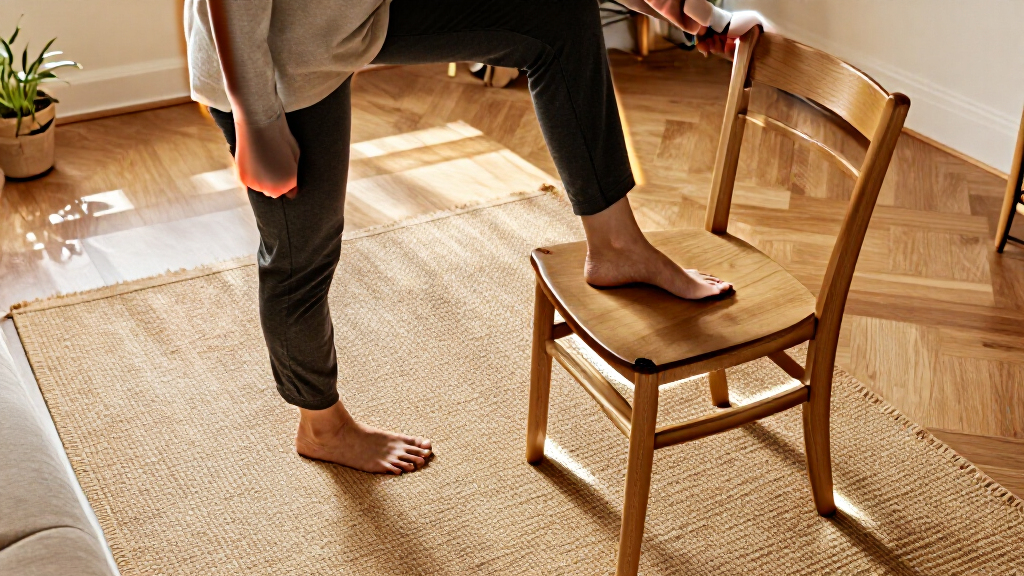
The second drill adapts a conventional high-knee exercise. Culp says to raise one knee slowly, take three seconds to complete the leg cycle, then return the foot to the ground. He recommends continuing for two minutes daily, adding one second to the cycle every fifth day. The report says this would lead to 10-second cycles after 35 days; that is a suggested progression, not a guarantee of a particular result.
Culp also suggests optional challenges, including briefly closing the eyes or reaching down with both hands to touch the raised foot. These make the movement more demanding. They are not necessary to begin practising, and the source gives no detailed safety guidance or adaptations for people with mobility limitations.
Balance Practice in Everyday Movement
The report presents balance as a skill that can be practised through ordinary movement, rather than only through dedicated equipment or complex workouts. Slow walking and controlled knee lifts may give readers accessible ways to focus on steadiness and coordination. Culp says balance supports confidence in movement and is relevant to fall risk, particularly with age; those points are his explanation of why the skill matters, not findings from a trial of these two drills.
That distinction matters for readers deciding how to use the advice. The article offers a practical routine and a progression, but it does not establish that completing it prevents falls, improves health outcomes, or works equally well for everyone. People who feel unsteady should prioritize a safe setting and use support rather than attempting a more difficult variation to meet a schedule.
balance training exercises for seniors
As an affiliate, we earn on qualifying purchases.
As an affiliate, we earn on qualifying purchases.
How the Two Drills Were Suggested
The Fit&Well report frames one-leg balance as a simple way to notice how steady a person feels during a daily task, such as putting on a sock or tying a shoe. Culp identifies standing on one leg during a task as one of five fitness checks he uses; the other areas he names include cardio fitness, strength and mobility. The report does not present this check as a medical assessment.
The article’s writer describes having difficulty putting on a sock and shoe while standing on one leg, then practising by putting on socks that way. The writer says the change took months and that balance improved noticeably. This is a personal account, not controlled evidence. Culp’s two drills are offered as alternatives for people who are not comfortable starting with a prolonged single-leg stance.
“Balance is one of the clearest indicators of how well the body is functioning day to day.”
— Yancy Culp, Spartan DEKA co-creator and senior director, as quoted by Fit&Well
balance and coordination workout equipment
As an affiliate, we earn on qualifying purchases.
As an affiliate, we earn on qualifying purchases.
Evidence and Safety Limits
The supplied report does not cite a clinical study or controlled test of delayed walking or slow high knees. It also does not explain how balance improvement was measured, how quickly most people might notice a change, or whether the routines reduce falls. Culp’s projected 35-day progression is a training suggestion, not a verified outcome for all participants.
The article does not specify who should avoid the exercises, how to adapt them for injury or disability, or what to do if they cause pain or dizziness. The eye-closing and foot-touching options may increase the challenge, but the report does not set out safeguards for attempting them. Readers with existing health conditions, a history of falls, or significant balance concerns can seek advice from a qualified health professional before starting.
As an affiliate, we earn on qualifying purchases.
Begin With Supported Practice
The report offers no scheduled follow-up, formal assessment, or additional evidence on the drills. Readers who choose to try them can begin with the simpler versions on a clear, level surface, near a stable counter or other support. They can stop if they feel pain, dizziness, or unsafe, and avoid closing their eyes or reaching down unless they can do so steadily and safely.
Progression should follow the person’s comfort rather than the proposed timetable. Anyone whose balance has changed suddenly or who is worried about falling should discuss the concern with a health professional instead of relying on exercise advice alone. Whether these specific routines produce measurable gains remains unestablished in the source report.
As an affiliate, we earn on qualifying purchases.
Key Questions
What are the two balance drills?
Delayed walking means walking slowly enough to spend longer balancing during each step transition. Slow high knees means lifting a knee in a controlled cycle and taking several seconds before placing the foot back down.
How often does Culp recommend practising?
Culp recommends doing delayed walking for several minutes each day. For slow high knees, he suggests two minutes daily and adding one second to the leg cycle every fifth day.
Does the report prove these drills prevent falls?
No. The report attributes general comments about balance and fall risk to Culp, but it does not cite a study showing that these two exercises prevent falls or produce a particular improvement.
How can someone make the drills safer?
Start on a clear, level surface and stay near a stable support if needed. Do not add the eye-closing or reaching challenges if they feel unsafe. People with health conditions, a history of falls, or substantial balance concerns can seek professional guidance before beginning.
Source: rss
Halloween Picks
halloween
As an affiliate, we earn on qualifying purchases.