
To connect your heater to a ventilation system effectively, start by inspecting and sizing your ductwork to match your heater’s output, ensuring smooth airflow without restrictions or delays. Seal all joints tightly with high-quality sealant or tape to prevent leaks that can reduce efficiency. Install dampers for zone control and position vents strategically for even heat distribution. Regular maintenance and proper system adjustments will keep your setup running smoothly—continue exploring for detailed tips on optimizing your system’s performance.
Key Takeaways
- Ensure duct sizes match the heater’s capacity for optimal airflow and efficient heating.
- Seal all duct joints with quality sealants or metallic tape to prevent leaks and maintain system efficiency.
- Install adjustable dampers for zone control, allowing customized heating and energy savings.
- Position vents strategically for even airflow distribution and avoid obstructions to optimize performance.
- Regularly inspect and maintain ductwork to keep it clean, sealed, and functioning properly for reliable heater operation.
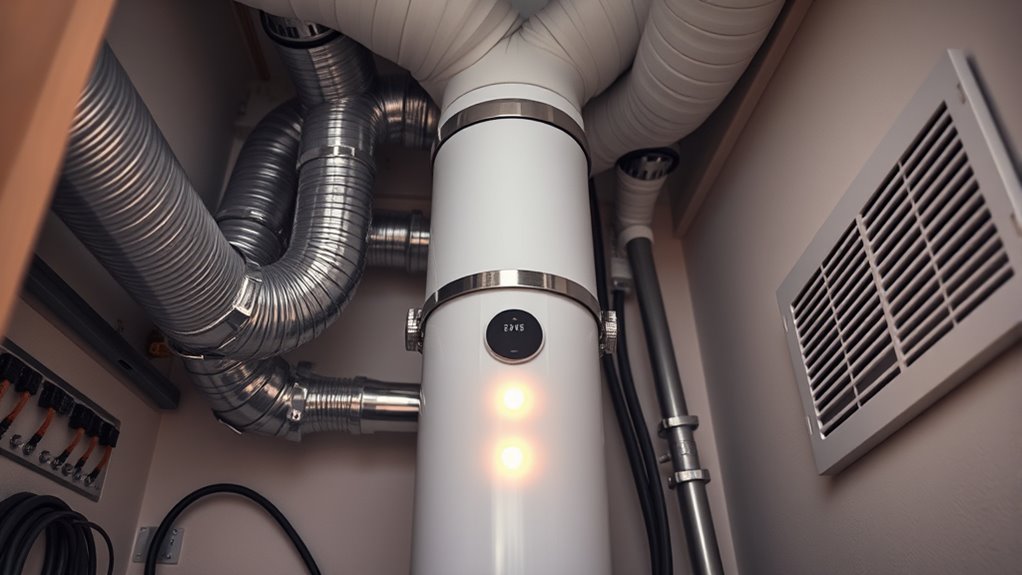
Connecting your heater to a ventilation system is indispensable for maintaining safe and efficient indoor air quality. When you properly integrate the two, you guarantee that stale air, excess humidity, and indoor pollutants are effectively removed, creating a healthier environment. The key to successful connection lies in understanding how ventilation ductwork works and how to optimize airflow. Your goal should be to design a system that maximizes airflow efficiency without creating pressure imbalances or noise issues.
Start by inspecting your existing ventilation ductwork. It should be appropriately sized for your heater’s output capacity. If the ducts are too narrow, airflow will be restricted, leading to poor heat distribution and inefficient operation. Conversely, oversized ducts can cause air to move too slowly, resulting in uneven heating and potential moisture buildup. You want a balanced, well-designed duct system that promotes smooth airflow from your heater to the entire space.
Next, focus on sealing all joints and connections within the ductwork. Leaky ducts can cause air loss, reducing the system’s overall efficiency and compromising indoor air quality. Use high-quality sealants or metallic tape to guarantee airtight connections. Proper sealing directs airflow exactly where you want it, preventing drafts and ensuring that heated air reaches every corner of your space.
To achieve airflow optimization, consider installing adjustable dampers within your duct system. Dampers allow you to control airflow to different zones, so you can prioritize heating where it’s needed most. This not only improves comfort but also reduces energy consumption. When integrating your heater, guarantee the dampers are accessible for future adjustments and maintenance.
You should also pay attention to the placement of your vents and registers. Position them strategically to promote even airflow and avoid dead zones. Proper vent placement reduces the workload on your heater and prevents uneven heating or cold spots. Additionally, ensure the vents are clean and unobstructed, as dust or furniture blocking airflow can hinder system performance.
Finally, remember that regular maintenance of your ventilation ductwork is crucial. Dust, debris, and mold can accumulate over time, impairing airflow and lowering air quality. Schedule periodic inspections, and clean or replace filters regularly to keep the system functioning at peak efficiency. Proper duct design plays a vital role in ensuring your heater’s optimal performance and energy efficiency. By maintaining your ductwork and fine-tuning airflow, you’ll guarantee your heater operates smoothly and your indoor environment remains comfortable and healthy.
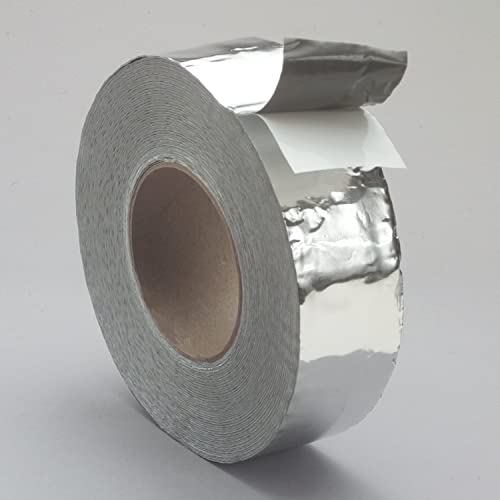
Duct Joint Sealing Mastik Tape (3" x 100')
Primarily used for superior vapor sealing of metal ducts.
As an affiliate, we earn on qualifying purchases.
As an affiliate, we earn on qualifying purchases.
Frequently Asked Questions
Can I Connect Any Heater to a Ventilation System?
You can’t connect any heater to a ventilation system because heater compatibility depends on the unit’s design and venting compatibility. Always check if your heater is suitable for venting through a specific system, as some heaters require specialized connections. Consult the manufacturer’s guidelines to verify compatibility, and consider professional installation to prevent safety hazards or inefficiency. Proper matching guarantees safe operation and ideal heating performance.
What Safety Precautions Are Necessary During Installation?
During installation, you should prioritize safety by wearing appropriate safety equipment like gloves and goggles to protect against ventilation hazards. Confirm proper ventilation to prevent buildup of dangerous gases and avoid fire hazards. Double-check connections for leaks or blockages, and turn off power sources before working. Always follow manufacturer instructions and local codes to ensure safe installation, reducing risks associated with ventilation hazards.
How Does Ventilation Affect Heater Efficiency?
Think of your ventilation system as the lungs of your home; it breathes life into your heater’s efficiency. Proper airflow optimization guarantees heat circulates evenly, preventing energy loss. When ventilation is well-designed, it conserves energy by reducing strain on your heater, making it work smarter, not harder. This balance keeps your space warm and your energy bills lower, turning your home into a cozy haven with less effort.
Are There Specific Vent Types for Different Heaters?
Yes, there are specific vent types for different heaters. You need to take into account the vent type to guarantee heater compatibility, such as direct vent, natural vent, or power vent systems. Each type suits particular heater models and fuels, like gas or electric. Check your heater’s manufacturer guidelines to select the right vent type, ensuring safe operation, ideal efficiency, and compliance with local codes. Proper selection prevents issues like leaks or improper venting.
What Maintenance Is Required After Integration?
Think of your system like a finely tuned orchestra—you need regular maintenance to keep it harmonious. You should routinely clean the filters to guarantee efficient airflow and prevent buildup. Additionally, perform system inspections to spot any leaks, blockages, or wear. These steps help maintain safety and performance, just like a conductor ensuring every instrument is in tune. Regular upkeep keeps your heater and ventilation system working smoothly for years to come.

Aulmscn 6" Motorized Duct Damper,Adjustable Volume Damper, Stainless Steel Backdraft Damper Airflow Control for HVAC Ventilation System,AC 24V (6inch)
[Remote Motorized Control]: The damper features a AC 24V electric actuator. Simply connect the switch to the actuator…
As an affiliate, we earn on qualifying purchases.
As an affiliate, we earn on qualifying purchases.
Conclusion
By properly connecting your heater to a ventilation system, you guarantee better air quality and energy efficiency. For example, imagine a homeowner who integrated his heater seamlessly, reducing indoor pollutants and lowering energy bills. Taking these steps not only enhances comfort but also promotes a healthier living space. Remember, consulting professionals for precise installation guarantees maximum performance and safety. With the right approach, your home becomes a more comfortable, efficient, and healthier environment.

Trane TD1 Ductulator with Sleeve, Duct Sizing Calculator
Multicolorido, vermelho, verde e azul
As an affiliate, we earn on qualifying purchases.
As an affiliate, we earn on qualifying purchases.

Hon&Guan 4" Air Filtration Kit: 4 Inch Inline Duct Fan with Speed Controller, 10" High Carbon Filter, 8 Ft Ducting & Rubber Coupler, Ventilation System for Grow Tents, Indoor Gardening, Hydroponics
【Efficient Ventilation System Kit】: Includes Hon&Guan 4" inline duct fan, Speed Controller, 10" High Carbon Filter & 8…
As an affiliate, we earn on qualifying purchases.
As an affiliate, we earn on qualifying purchases.