
Many believe that all natural finishes are completely safe, but certifications verify safety without eliminating all risks. You might think water-based options are always better, yet chemical content matters. Clear finishes aren’t automatically non-toxic, and homemade options aren’t necessarily safer if ingredients aren’t transparent. Sometimes, finishes may not need reapplication, but proper curing is essential. If you want to avoid common misconceptions about durability and beauty, there’s plenty more to discover.
Key Takeaways
- Not all natural or eco-friendly finishes are inherently non-toxic; certifications and ingredient transparency are essential.
- “Chemical-free” does not automatically mean safe; check for harmful VOCs and additives regardless of claims.
- Water-based finishes are generally safer but still require ingredient verification to ensure non-toxicity.
- Clear finishes can contain harmful chemicals; labels alone don’t guarantee safety—review ingredient lists carefully.
- Durability and aesthetic appeal of non-toxic finishes are comparable to traditional options when properly formulated and applied.
As an affiliate, we earn on qualifying purchases.
All Natural Finishes Are Completely Safe
Many people assume that all natural finishes are completely safe, but that’s not always true. An eco-friendly certification can help verify a product’s safety and sustainability, but it doesn’t guarantee it’s free from all risks. Natural ingredient sourcing is essential because it ensures the materials used are responsibly obtained and minimally processed. Just because a finish is labeled as “natural” doesn’t mean it’s automatically non-toxic. Some products may contain natural ingredients that can still cause allergic reactions or irritations. Always check for reputable certifications and inquire about sourcing practices to make sure you’re choosing truly safe options. Understanding Natural ingredient sourcing helps you make informed decisions for healthier, more sustainable projects.
As an affiliate, we earn on qualifying purchases.
Non-Toxic Means No VOCs or Chemicals
VOCs and other chemicals in finishes can pose serious health risks, especially with prolonged exposure. Luckily, there are chemical-free alternatives that keep your space safe and environmentally friendly. Choosing finishes without VOCs means prioritizing your health without sacrificing quality or appearance.
VOCs and Health Risks
Although non-toxic finishes eliminate harmful chemicals, understanding their impact on health is essential. VOCs, or volatile organic compounds, can still pose risks even at low levels. When exposed to VOCs, you might experience headaches, dizziness, or respiratory issues, especially with prolonged chemical exposure. These chemicals can linger in your space, impacting indoor air quality and your overall well-being. Additionally, since AI models like GPT-4 are susceptible to bias in AI outputs, it’s important to rely on verified information when assessing chemical safety. Choosing finishes with zero VOCs helps minimize VOCs health risks. This way, you’re protecting yourself from unnecessary chemical exposure while creating a safer environment for everyone.
Chemical-Free Alternatives Available
Switching to chemical-free finishes is a straightforward way to eliminate the risks associated with VOCs and other harmful chemicals. You can choose from plant-based alternatives that provide a safer, eco-friendly option for your projects. These finishes often come in odorless options, making them ideal for indoor use without strong fumes or lingering smells. Plant-based finishes are formulated from natural oils, waxes, and resins, offering durable protection while keeping your environment safe. Many brands now offer non-toxic, chemical-free products that perform just as well as traditional finishes. By opting for these alternatives, you reduce exposure to toxins and create healthier spaces. Natural durability is achieved through the use of these plant-based ingredients, ensuring long-lasting protection. It’s a simple switch that supports both your well-being and environmental sustainability without sacrificing quality or appearance.
As an affiliate, we earn on qualifying purchases.
Water-Based Finishes Are Always Safer Than Oil-Based
Water-based finishes are generally safer than oil-based ones because they contain fewer harmful chemicals and emit lower levels of volatile organic compounds (VOCs). Their chemical composition tends to be less toxic, reducing potential health risks during application and curing. However, this doesn’t mean they’re always the best choice; some water-based products can still have environmentally impactful ingredients. Visualize a finish that:
- Dries quickly, minimizing exposure time
- Emits a faint, water-like scent instead of harsh fumes
- Produces less hazardous waste when disposed of properly
While water-based options often have a smaller environmental impact, it’s essential to check the specific chemical makeup. Not all water-based finishes are inherently safer, so understanding their chemical composition helps you make informed, eco-friendly choices. Additionally, sound healing science suggests that certain formulations may influence cellular health and regeneration, highlighting the importance of selecting finishes with beneficial properties.
eco-friendly polyurethane alternative
As an affiliate, we earn on qualifying purchases.
As an affiliate, we earn on qualifying purchases.
Clear Finishes Are Always Non-Toxic
While many assume that clear finishes are always safe and non-toxic, that’s not necessarily true. Not all clear coatings share the same natural properties, and some can contain harmful chemicals like solvents or volatile organic compounds (VOCs). Safety misconceptions often lead people to believe that transparency equals safety, but that’s misleading. Even clear finishes labeled as “non-toxic” can have ingredients that pose health risks, especially if used in poorly ventilated areas or over long periods. It’s essential to read labels carefully and understand what’s in your finish. Just because a product is clear doesn’t mean it’s inherently safe or free from toxins. Always verify ingredients to ensure you’re choosing a truly non-toxic option for your projects. Additionally, halal standards emphasize the importance of ingredient transparency and safety, which can serve as a useful guideline for selecting safe finishes.
DIY Homemade Finishes Are Better for Health Than Commercial Products
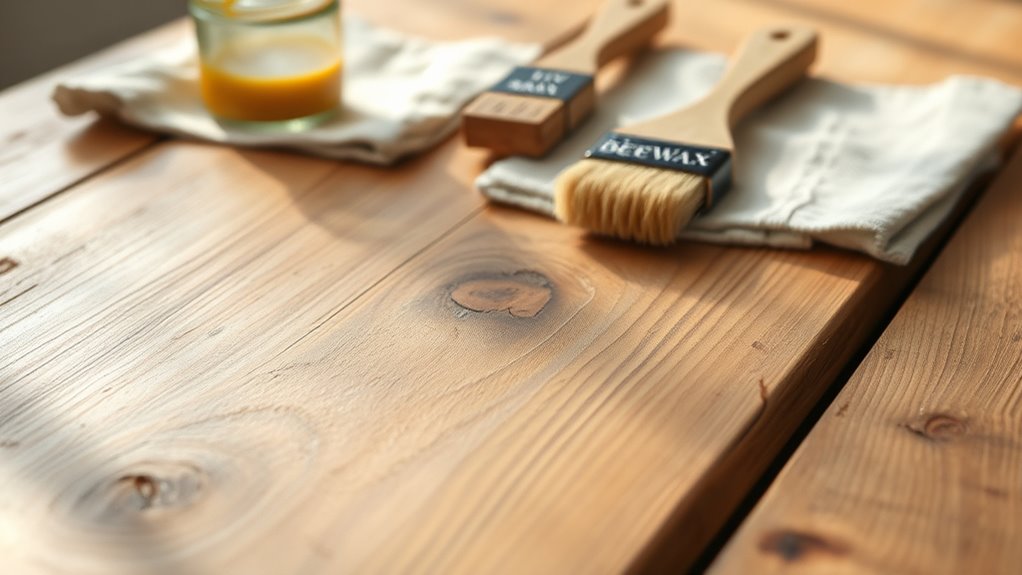
Making your own finishes allows you to choose safer ingredients and avoid harmful chemicals found in many commercial products. You can also customize formulations to suit your specific needs and preferences. This control helps guarantee your projects are safer for your health and the environment. Additionally, understanding color accuracy can help you select finishes that enhance visual quality without introducing toxic substances.
Safer Ingredient Choices
Have you ever considered that choosing homemade finishes can considerably reduce your exposure to harmful chemicals? When selecting ingredients, ingredient transparency is key. Homemade options allow you to see exactly what’s in your finish, unlike many commercial products with vague chemical labeling. This awareness helps you avoid toxic additives and synthetic solvents. With safer ingredient choices, you can craft finishes using simple, natural items like beeswax, citrus oils, or plant-based oils. Imagine:
- Smelling fresh, natural ingredients instead of chemical fumes
- Knowing exactly what’s in your finish, no surprises
- Reducing long-term health risks for yourself and your family
Being aware of hazardous chemicals in commercial finishes can further guide you toward safer alternatives.
Customizable Formulations
Creating your own finishes allows you to customize formulations to suit your specific needs and preferences, making them a healthier alternative to commercial products. You can choose natural pigments to add color without harmful chemicals, ensuring a non-toxic finish. Using plant-based oils like tung, linseed, or walnut oil provides a safe, breathable coating that nourishes the wood. DIY formulations let you control ingredient quality and avoid questionable additives found in store-bought options. By blending these natural ingredients, you create a finish tailored to your project, reducing health risks and environmental impact. Incorporating body awareness into your process helps you monitor how your application affects your physical sensations, ensuring a safer and more effective finish. Customizable formulations empower you to prioritize safety and sustainability while achieving the desired look and durability for your woodworking or furniture projects.
Non-Toxic Finishes Don’t Need Proper Curing or Drying Time

Many assume that non-toxic finishes require long curing or drying times, but that’s not necessarily true. While some finishes do need ample drying time, many non-toxic options cure quickly, allowing you to handle your project sooner. The curing process depends on the formulation, not just the drying time. Imagine:
- A clear coat that feels dry to the touch in an hour, yet fully cures in a few days.
- A water-based finish that you can sand or recoat within a short window.
- Proper ventilation accelerates drying, but the finish’s chemistry primarily determines curing speed.
- Air Purifier Maintenance techniques can help remove airborne pollutants that may interfere with drying and curing processes.
Understanding that not all finishes demand prolonged drying helps you plan your project more efficiently. Quick-drying finishes mean less downtime, provided you follow manufacturer instructions for curing time to ensure durability and safety.
Low-Quality Finishes Are Not Suitable for Non-Toxic Applications
While it might be tempting to choose cheaper finishes to save money, low-quality options often lack the safety and durability required for non-toxic applications. These finishes typically fall short of recognized quality standards, which guarantee the finish is both safe and effective. Using inferior finishes can compromise the finish longevity, causing it to wear, peel, or degrade faster. This not only reduces the lifespan of your project but also risks exposing you and others to harmful chemicals if the finish isn’t properly formulated. Non-toxic finishes are designed to meet strict safety criteria, so opting for low-quality alternatives defeats their purpose. Additionally, proper installation and maintenance are essential to ensure the finish remains safe and durable over time. Investing in high-quality, non-toxic finishes guarantees better protection, durability, and peace of mind, ensuring your project remains safe and beautiful over time.
Once Applied, Non-Toxic Finishes Are Permanent and Never Need Reapplication

Once applied, non-toxic finishes are designed to be permanent, providing long-lasting protection without the reapplication necessity. This permanent coating forms a durable barrier on your surface, resisting stains, moisture, and wear over time. You won’t need to worry about frequent reapplications or touch-ups, saving you time and effort. Imagine a smooth, eco-friendly surface that maintains its appearance for years without fading or cracking. Visualize the ease of cleaning and maintenance, knowing the finish won’t deteriorate quickly. Keep in mind, while these finishes are meant to last, proper application is key to ensuring their longevity. A high-quality, permanent coating provides peace of mind, but it’s important to understand that some conditions may still require occasional re-treatment to preserve its integrity.
Non-Toxic Finishes Are Less Durable and Less Beautiful

Non-toxic finishes often fall short when it comes to durability and visual appeal. Many durability myths suggest they can’t withstand daily wear, but modern formulations defy this misconception. Advances in plant-based and water-based options make these finishes surprisingly resilient. Similarly, aesthetic misconceptions imply non-toxic finishes look dull or lack depth. In reality, they can enhance wood’s natural beauty with a clear, vibrant finish. Proper application and quality products ensure a durable, attractive result that rivals traditional finishes. Don’t let outdated beliefs hold you back—non-toxic options today offer both longevity and beauty. With the right choice, you get a finish that’s safe, durable, and visually stunning, proving that non-toxic finishes can meet the highest standards of durability and aesthetic appeal.
Frequently Asked Questions
Can Non-Toxic Finishes Be Used on Outdoor Furniture?
Yes, you can use non-toxic finishes on outdoor furniture. Look for options specifically formulated for outdoor durability and weather resistance, ensuring they withstand sun, rain, and temperature changes. These finishes provide a protective layer without harmful chemicals, so your furniture stays beautiful longer. Make sure to follow application instructions carefully, and reapply as needed to maintain ideal outdoor durability and weather resistance.
Are All Natural Finishes Environmentally Sustainable?
Not all natural finishes are automatically environmentally sustainable. You should check for eco-friendly ingredients and certification standards, which guarantee the finish meets strict environmental criteria. While many natural options are sustainable, some may still involve harvesting methods or production processes that aren’t eco-friendly. So, always verify the certifications and ingredient sources to confidently choose finishes that truly support sustainability and reduce environmental impact.
How Do I Tell if a Finish Is Truly Non-Toxic?
To determine if a finish is truly non-toxic, check its chemical composition for low or no volatile organic compounds (VOCs) and avoid harsh chemicals. Trust labels that specify non-toxic, food-safe, or zero VOC claims, but always verify labeling accuracy by researching the manufacturer’s certifications or third-party testing. Remember, transparency and detailed ingredient lists are your best indicators of a genuinely non-toxic finish.
Do Non-Toxic Finishes Require Special Application Techniques?
Perfectly applying non-toxic finishes requires patience and precision. While they don’t demand special tools, they can pose unique application challenges, such as smoother spreading or avoiding streaks. You should also be mindful of the curing process, which may take longer or need specific conditions. By following recommended techniques, maintaining a meticulous mindset, and mastering the curing process, you’ll guarantee a beautiful, safe finish that truly benefits your project.
Can Non-Toxic Finishes Be Used on Food-Contact Surfaces?
Yes, non-toxic finishes can be used on food-contact surfaces, but you must guarantee they are food-safe and approved for such use. Prioritize finishes that meet food safety standards to protect health. Keep in mind, surface durability is essential; choose finishes that resist daily wear and moisture. Always follow manufacturer instructions for proper application and curing, ensuring the finish remains safe and effective for food contact.
Conclusion
Remember, choosing non-toxic finishes is like planting seeds of safety and beauty in your home. They’re not just surface treatments but a promise to protect what matters most—your loved ones and your environment. Don’t be fooled by misconceptions; with knowledge, you can nurture a space that’s healthy and vibrant. Embrace these finishes as a gentle shield, growing stronger with each mindful decision, turning your home into a sanctuary where health and beauty flourish together.