
When choosing wood for your sauna, cedar is a top pick due to its moisture resistance, natural oils, and pleasant aroma, making it durable and safe. Spruce offers affordability and a light tone but is less resistant to moisture and decay. Hemlock provides good stability and smoothness but may require additional treatments for longevity. To make the best choice for your needs, explore how each wood’s qualities influence insulation, safety, and maintenance.
Key Takeaways
- Cedar is naturally resistant to moisture, decay, and insects, making it highly durable for sauna environments.
- Spruce offers a cost-effective option with good thermal insulation but requires additional treatment for moisture resistance.
- Hemlock provides a balanced choice with moderate durability and a light appearance, suitable for various sauna styles.
- Cedar’s pleasant aroma and natural oils enhance relaxation and help prevent mold, reducing the need for chemical treatments.
- Proper wood treatment and sealing are essential regardless of the choice to maximize safety, longevity, and insulation efficiency.
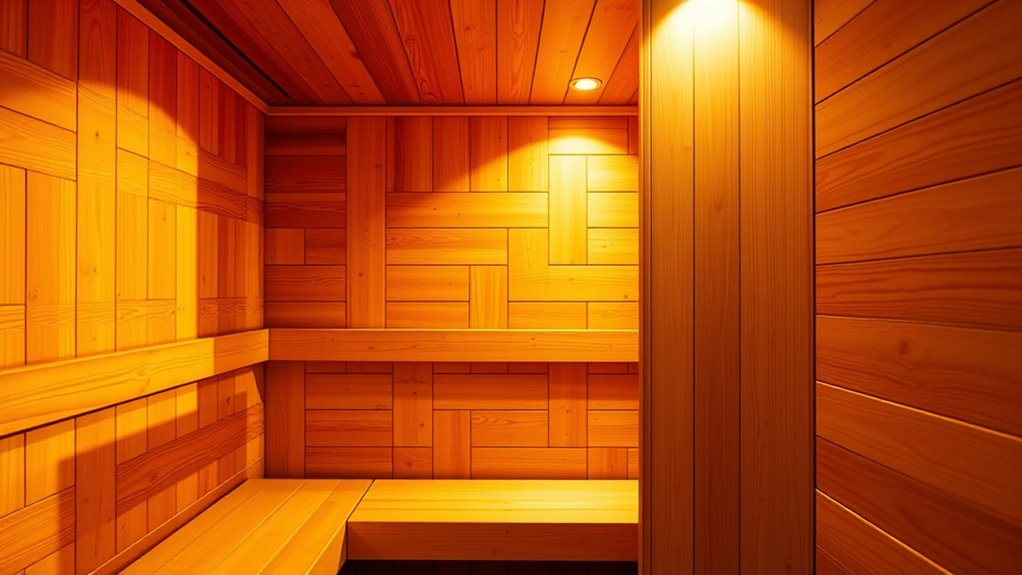
When building a sauna, selecting the right type of wood is indispensable for safety, durability, and comfort. The wood you choose influences the sauna’s overall performance, including how well it insulates and how easy it is to maintain. Proper sauna insulation relies heavily on the natural properties of your chosen wood, as well as how you treat it beforehand. Wood treatment options are vital because they can enhance durability, prevent mold, and improve safety, especially in a humid environment like a sauna.
Selecting the right wood and proper treatment ensures safe, durable, and easy-to-maintain sauna insulation.
Cedar is a popular choice for many sauna enthusiasts. It naturally resists moisture, decay, and insect damage, making it an excellent option for sauna insulation. Its low density and fine grain help it stay cool to the touch, even during high temperatures, which boosts comfort. Cedar also emits a pleasant aroma that many find relaxing, but be sure to consider wood treatment options to preserve its qualities over time. Applying a non-toxic sealant or protective finish can help maintain its appearance and prevent the wood from deteriorating in the humid environment. Cedar’s natural oils act as a form of wood treatment, but additional coatings can extend its lifespan and guarantee safety. Additionally, understanding the AI security aspects of treatment products can help ensure that only safe and effective finishes are used in your sauna.
Top picks for "choos right wood"
Open Amazon search results for this keyword.
As an affiliate, we earn on qualifying purchases.
Frequently Asked Questions
How Does Wood Density Affect Sauna Heat Retention?
Higher wood density improves heat retention in your sauna because denser wood absorbs and holds heat better. When you select wood with greater density, it stays warm longer and maintains a consistent temperature, enhancing your sauna experience. Lower density woods, on the other hand, tend to lose heat faster. So, if you want efficient heat retention, opt for dense woods like cedar or hemlock, which help keep your sauna warm longer.
Are Some Woods More Resistant to Mold and Mildew in Humid Environments?
Some woods are like resilient warriors against mold and mildew in humid environments. Cedar, in particular, offers excellent moisture resistance and mold prevention, making it a popular choice for saunas. Its natural oils act as a shield, ensuring your sauna stays fresh and mold-free longer. Other options like spruce and hemlock are less resistant, so you’d want to treat or maintain them regularly to keep humidity at bay.
Which Wood Type Is Best for Outdoor Saunas?
For outdoor saunas, cedar is your best choice due to its natural resistance to moisture, mold, and decay. Its tight wood grain helps prevent water infiltration, ensuring durability in outdoor conditions. Plus, cedar’s warm, aesthetic appeal creates a cozy, inviting atmosphere. You’ll appreciate its ability to withstand varying weather, maintaining its beauty and integrity over time, making it an excellent option for outdoor sauna construction.
How Does the Cost Compare Among Cedar, Spruce, and Hemlock?
Imagine you’re building a sauna and notice cedar costs more than spruce and hemlock. Typically, cedar has a higher price comparison due to its durability and availability differences, which drive up its cost. Spruce and hemlock are more affordable and readily available, making them budget-friendly choices. If you prioritize longevity and aesthetics, cedar’s higher price might be worth it, but if you want a cost-effective option, spruce or hemlock can work well.
Can Certain Woods Emit Harmful Fumes When Heated?
Certain woods can emit harmful fumes when heated, so you should be aware of wood toxicity. Cedar, for example, generally doesn’t produce toxic fumes and is safe for sauna use. However, some softwoods like spruce and hemock may emit fumes if they contain chemical treatments or resins. Always choose properly dried, untreated wood to minimize fumes emission and guarantee your sauna remains a safe, healthy environment.
Conclusion
Choosing the right wood for your sauna is like tending a garden—you must select the right seeds to nurture growth and warmth. Cedar, spruce, and hemlock each bring unique qualities, but the best choice depends on your needs and preferences. Remember, the wood you pick is the foundation of your sanctuary. When you choose wisely, your sauna becomes a nurturing oasis, blooming with comfort and serenity, reminding you that the right foundation makes all the difference.