Choosing between daily and weekly cold plunges depends on your recovery goals, lifestyle, and how your body responds to cold exposure. Daily immersions can boost recovery, mental health, and stress reduction but might be overwhelming for some or hard to maintain. Weekly plunges still offer significant benefits and are easier to fit into a busy schedule. To find the best routine for you and get practical tips, keep exploring further.
Key Takeaways
- Daily cold plunges boost recovery, mental health, and stress reduction but may be overwhelming for beginners.
- Weekly sessions allow gradual adaptation, serve as self-care rituals, and are easier to sustain long-term.
- Choose frequency based on personal goals, schedule, cold tolerance, and recovery needs for optimal results.
- Consistency in either routine enhances benefits; adjust based on comfort and effectiveness over time.
- Combining daily and weekly immersions can balance recovery, mental health, and sustainability.
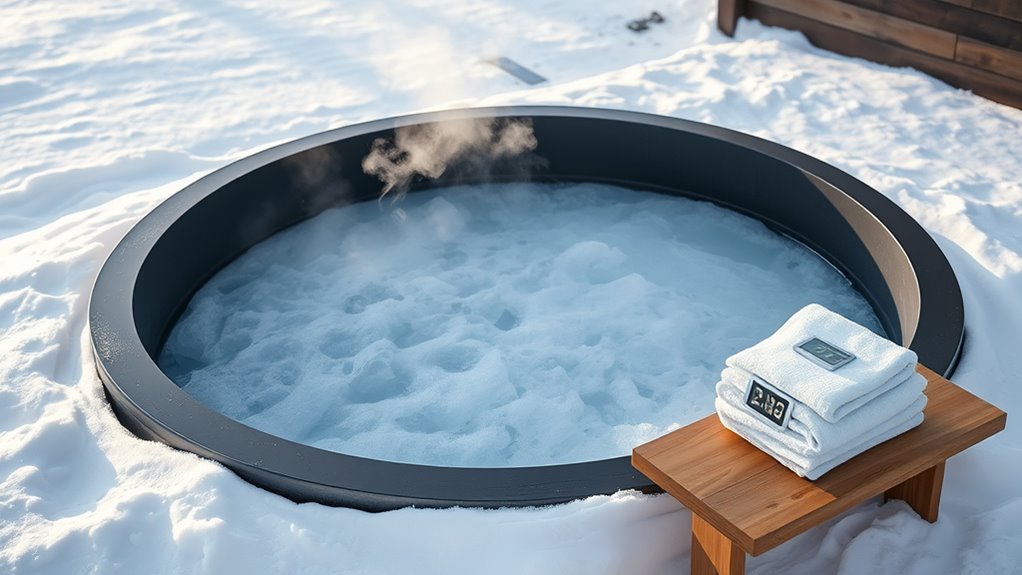
Are you ready to incorporate cold plunges into your wellness routine? If so, scheduling your dips thoughtfully can make a significant difference in maximizing their benefits. One key aspect to deliberate is whether you should opt for daily or weekly immersion sessions. Both approaches have their advantages, and understanding how each impacts recovery benefits and mental health will help you create a routine that suits your goals and lifestyle.
Starting with daily cold plunges, many enthusiasts find that consistent exposure helps speed up recovery benefits. When you plunge regularly, your muscles recover more quickly after workouts, reducing soreness and inflammation. The cold stimulates blood flow, which delivers oxygen and nutrients more efficiently to fatigued muscles, enhancing overall recovery. Additionally, daily immersion can have a calming effect on your mental health. The act of submerging yourself in cold water can serve as a mindfulness practice, helping you stay present and reducing stress levels. Over time, this routine can boost your resilience to daily pressures, improving your mood and mental clarity.
On the other hand, some people prefer a weekly schedule, especially if they’re just starting out or have a busy lifestyle. Weekly cold plunges still provide notable recovery benefits, especially when combined with proper rest and nutrition. A weekly routine allows your body to adapt gradually to the cold, potentially making the experience more tolerable and sustainable. From a mental health perspective, a weekly immersion can act as a dedicated self-care ritual, giving you something to look forward to without feeling overwhelmed. It’s enough to provide mental clarity and stress relief, while also giving your body time to reset between sessions.
Choosing between daily and weekly sessions depends on your personal goals, schedule, and how your body responds to cold exposure. If recovery from intense workouts is a priority, and you find that daily plunges boost your mental health, then a daily routine might be ideal. Conversely, if you’re focusing on mental health and stress reduction, and want a manageable, less frequent commitment, weekly sessions could be more sustainable. Remember, consistency is key, so whatever frequency you choose, stick with it long enough to notice the benefits. Listening to your body is vital—if daily plunges feel too intense or cause discomfort, scaling back to weekly might be better. Conversely, if weekly sessions feel insufficient, increasing frequency could enhance your recovery benefits and mental well-being over time.
Ultimately, the best schedule aligns with your lifestyle, goals, and how you feel during and after each plunge. Whether daily or weekly, the important thing is to make cold plunges a regular, intentional part of your wellness routine, supporting both your physical recovery and mental health.

Bubplay Ice Bath Cold Plunge Tub with Cover for Indoor Outdoor for Recovery, Cold Water Therapy, Athletes & Adults -105 Gallons, Black, XL
【XL Full-Body Cold Plunge for Most Adults】 Designed for an immersive ice bath / cold plunge experience with…
As an affiliate, we earn on qualifying purchases.
As an affiliate, we earn on qualifying purchases.
Frequently Asked Questions
How Do I Determine the Best Frequency for My Cold Plunge Routine?
You should determine the ideal frequency for your cold plunge routine by listening to your body and observing how you feel afterward. Start with a personalized schedule, perhaps daily or weekly, and adjust based on your energy levels, recovery, and overall well-being. Experiment gradually, noting any benefits or discomfort, to find what works best for you. Consistency and personalization help maximize benefits without overtaxing yourself.
Are There Specific Health Conditions That Affect Cold Plunge Scheduling?
Certain health conditions, like heart conditions and circulatory issues, can complicate cold plunge schedules. If you have heart problems, cold exposure can cause constriction, stressing your heart. Circulatory concerns might impair your body’s ability to recover from cold shocks. You should consult your healthcare provider before plunging into cold water, especially if you have these conditions. Prioritize your health, proceed cautiously, and customize your cold plunge routine accordingly.
Can I Combine Daily and Weekly Cold Plunges Effectively?
Yes, you can combine daily and weekly cold plunges effectively if you prioritize cold plunge safety and maintain a suitable temperature, usually between 50-59°F. Doing so allows you to enjoy benefits without overexposure. make certain you listen to your body, avoid extreme cold, and gradually increase immersion time. This balanced approach helps prevent risks, making your cold plunge routine both safe and beneficial.
What Are the Signs I Should Adjust My Cold Plunge Schedule?
If you notice signs of overexposure like persistent shivering, numbness, or skin irritation, it’s time to adjust your cold plunge schedule. Cold intolerance, such as increased discomfort or dizziness, also indicates you might be overdoing it. Reduce the frequency or duration of your plunges, listen to your body, and give yourself time to recover. Always prioritize your comfort and safety to avoid adverse effects.
How Does Timing of Immersion Impact Its Benefits?
Think of timing as the dawn of your mental resilience and metabolic boost. Immersing in cold water in the morning sparks alertness, sharpening your mind for the day ahead. Evening plunges help your body recover and relax. Regular timing maximizes benefits, keeping your resilience steady and metabolism active. Adjust based on your goals—morning for energy, evening for recovery—and watch how your body and mind thrive with consistent, well-timed cold plunges.
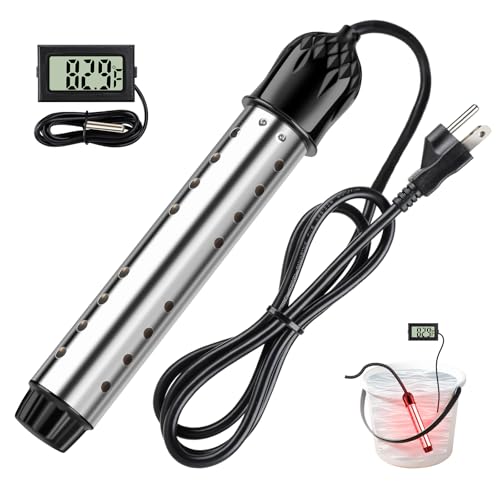
Portable Water Heater for Buckets & Tubs, 2000W Immersion Heater with Intelligent Shut-Off, Stainless Steel Guard & Digital Temperature Sensor, Fast Heating for Backyard Pools, RVs & Home Use
【ENJOY WARM WATER IN MINUTES】: Stop struggling with icy water! Our 2000W portable heater provides a quick and…
As an affiliate, we earn on qualifying purchases.
As an affiliate, we earn on qualifying purchases.
Conclusion
Whether you choose daily or weekly cold plunges, listen to your body’s quiet whispers. Embrace the rhythm that feels right, allowing the chill to invigorate your days without overwhelming your senses. With patience and attentiveness, you’ll find a gentle balance that refreshes your mind and body. Trust the subtle cues, and let the cool embrace become a soothing part of your routine—guiding you toward wellness in subtle, steady waves.

AS ColdPlunge Ice Bath Chiller & Cold Plunge Tub Kit, 1/3HP Cold Plunge Chiller with External Pump & Filter, XXL 148Gal Upgraded Ice Pod, Cold Plunge Tub with Water Chiller for Cold Therapy Recovery
Complete Cold Plunge Recovery Kit — Ice-Free and Hassle-Free: This all-in-one cold plunge bundle includes a 1/3 HP…
As an affiliate, we earn on qualifying purchases.
As an affiliate, we earn on qualifying purchases.
Bubplay Ice Bath Cold Plunge Tub with Cover for Indoor Outdoor for Recovery, Cold Water Therapy, Athletes & Adults -105 Gallons, Black, XL
【XL Full-Body Cold Plunge for Most Adults】 Designed for an immersive ice bath / cold plunge experience with…
As an affiliate, we earn on qualifying purchases.
As an affiliate, we earn on qualifying purchases.