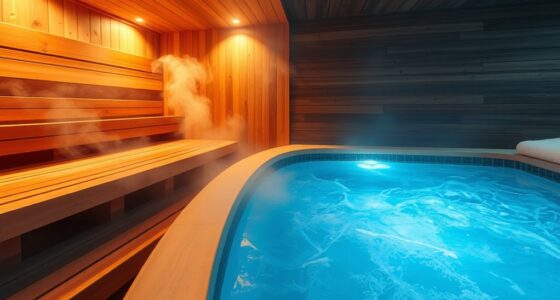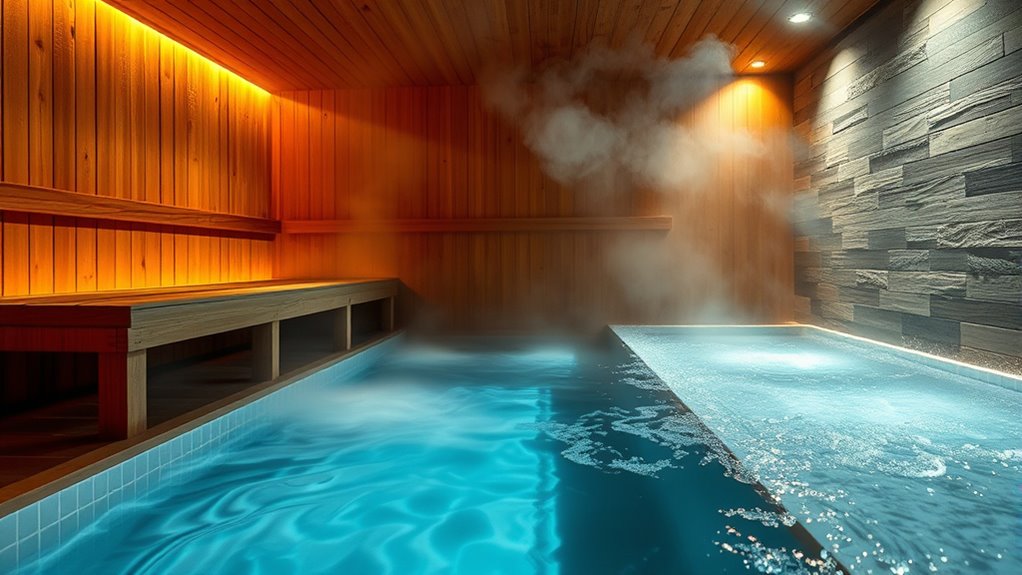
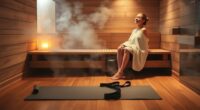
A typical contrast therapy cycle involves spending 10-15 minutes in a sauna to relax muscles and boost circulation, followed by a quick 1-3 minute cold plunge to constrict blood vessels, reduce inflammation, and energize you. You then repeat this cycle 2-3 times to enhance recovery, build mental resilience, and improve overall circulation. Proper temperature regulation and gradual acclimation are key for maximum benefits and safety—keep exploring to discover how to customize your routine effectively.
Key Takeaways
- Begin with 10-15 minutes in the sauna to relax muscles and increase circulation.
- Transition to a 1-3 minute cold plunge to constrict blood vessels and reduce inflammation.
- Repeat the hot-cold cycle 2-3 times for optimal recovery and mental resilience.
- Monitor temperatures and durations to prevent adverse effects and maximize benefits.
- Gradually increase exposure over time to improve tolerance and effectiveness of contrast therapy.

Contrast therapy cycle involves alternating between hot and cold treatments to boost recovery, reduce inflammation, and improve circulation. When you engage in this process, you’re actively encouraging your body to heal faster and perform better, especially after intense workouts or long periods of physical exertion. The hot environment, like a sauna, helps relax your muscles, increase blood flow, and loosen tight tissues. This relaxation not only accelerates muscle recovery but also prepares your body for the cold plunge. The cold, on the other hand, constricts blood vessels, reducing swelling and inflammation, which can substantially diminish soreness. Alternating between these extremes creates a pump effect that flushes out metabolic waste and delivers fresh nutrients to your muscles, supporting faster recovery.
As you move through the cycle, you notice your mental resilience strengthening. The discomfort of switching from hot to cold might initially feel challenging, but over time, it trains your mind to handle stress more effectively. This mental toughness is vital, especially if you’re aiming to push through tough workouts or mental barriers. The cold exposure triggers a release of endorphins and adrenaline, boosting your mood and sharpening your focus. The contrast between the intense heat and cold also sharpens your awareness of your body’s responses, making you more attuned to your physical and mental state. This heightened awareness can improve your ability to manage stress in everyday life, not just during recovery sessions.
Additionally, incorporating proper temperature regulation can enhance the overall effectiveness of the cycle and prevent adverse effects. In practice, you might start with a sauna session lasting around 10 to 15 minutes, where your muscles loosen and circulation increases. Then, you plunge into cold water or a cold plunge pool for 1 to 3 minutes, feeling the immediate shock but also the invigorating rush afterward. Repeating this cycle 2-3 times amplifies the benefits. Over time, as you become more accustomed to the process, you’ll notice that your muscles recover faster and soreness diminishes more quickly. Simultaneously, your mental resilience grows stronger, making you better equipped to handle physical and mental challenges outside the recovery setting.
Top picks for "contrast therapy cycle"
Open Amazon search results for this keyword.
As an affiliate, we earn on qualifying purchases.
Frequently Asked Questions
How Long Should Each Sauna and Cold Plunge Session Last?
You should aim for sauna sessions lasting 15-20 minutes and cold plunge sessions of 1-3 minutes, following recommended duration guidelines. To maximize benefits, limit your contrast therapy to 2-3 cycles per session. Pay attention to your body’s signals, and gradually increase duration as you become more comfortable. Maintain a consistent session frequency, such as 2-3 times weekly, to support recovery and circulation without overdoing it.
Can Contrast Therapy Be Safely Combined With Other Treatments?
Like a symphony blending instruments, contrast therapy can complement other treatments if you consider safety considerations carefully. You should consult your healthcare provider before combining therapies, especially if you’re on medication or have health conditions. While many complementary therapies work well together, make certain they don’t overstimulate your body. When done properly, this harmony can enhance recovery, but always prioritize safety to avoid any unintended health issues.
What Are the Best Times of Day to Perform Contrast Therapy?
You should perform contrast therapy during times that maximize your body’s recovery and energy levels, typically in the morning or early evening. Timing optimization involves scheduling sessions when your body is most receptive, like after workouts or during breaks. Incorporate this into your daily scheduling to enhance relaxation and circulation benefits. Avoid late-night sessions to ensure they don’t interfere with your sleep, and listen to your body’s signals for best results.
Are There Any Medical Conditions That Contraindicate Contrast Therapy?
You should be cautious if you have certain medical contraindications or health precautions, as contrast therapy might not be suitable. People with cardiovascular issues, hypertension, or skin infections should consult a healthcare professional before trying it. If you’re pregnant or have nerve conditions, it’s best to avoid or seek medical advice. Always listen to your body and stop if you experience any discomfort or adverse reactions.
How Often Should I Incorporate Contrast Therapy Into My Routine?
You should aim to incorporate contrast therapy into your routine 2 to 3 times a week, but always follow personalized scheduling based on your body’s response and any medical advice. Start with shorter sessions, like 5-10 minutes in the sauna and cold plunge, and adjust frequency based on how you feel. Listening to your body helps prevent overuse and maximizes benefits while ensuring safety.
Conclusion
By switching between hot saunas and cold plunges, you activate circulation and boost recovery. Studies show that contrast therapy can reduce muscle soreness by up to 30% and improve overall well-being. So, next time you’re feeling fatigued, try this cycle to invigorate your body and mind. Remember, consistency is key—incorporate contrast therapy into your routine, and you’ll reap the benefits in both performance and relaxation.