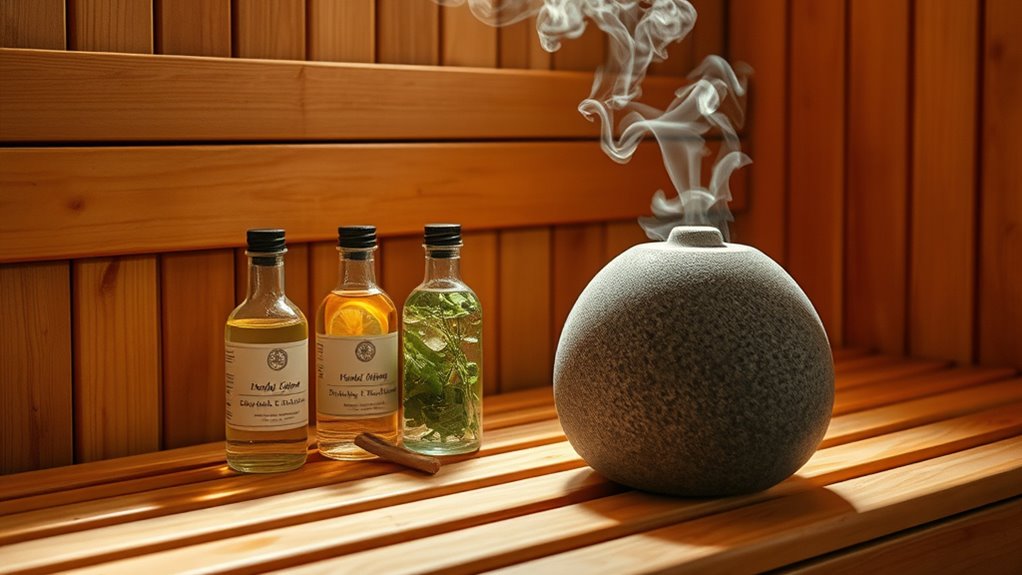
Aromatherapy and essential oils play a key role in enhancing your sauna experience by promoting relaxation, boosting your mood, and improving breathing. When diffused properly, these oils help stimulate your senses and create a calming environment. Choosing the right scents, like eucalyptus or lavender, can further support your wellness goals. To maximize benefits safely, pay attention to dilution and ventilation. Keep exploring to discover how to make your sauna sessions even more rejuvenating and enjoyable.
Key Takeaways
- Aromatherapy enhances relaxation, mood, and overall wellness during sauna sessions through inhalation of therapeutic essential oils.
- Diffusing essential oils in warm, humid sauna air improves their effectiveness and promotes calming or invigorating effects.
- Proper dilution and safety precautions prevent skin irritation and adverse reactions when using essential oils in saunas.
- Selecting specific essential oils like eucalyptus or lavender aligns with desired respiratory benefits or relaxation goals.
- Incorporating aromatherapy into sauna routines supports holistic wellness and stress reduction through sensory stimulation.
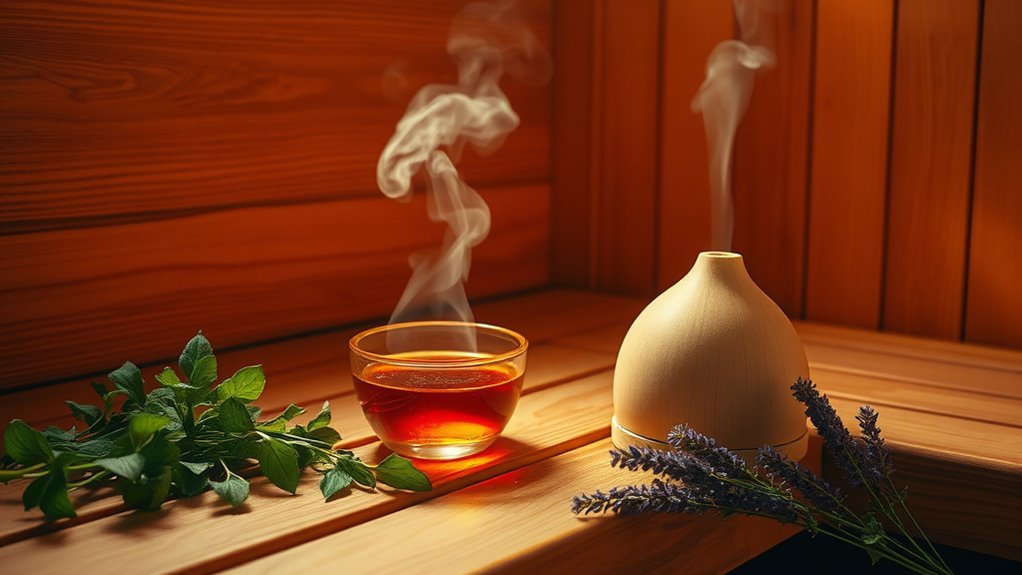
Many people discover that incorporating aromatherapy and essential oils into sauna sessions enhances relaxation and overall wellness. When you add a few drops of carefully chosen essential oils to your sauna, you create an environment that not only soothes your body but also stimulates your senses. Aromatherapy benefits are well-documented, including stress reduction, mood elevation, and improved respiratory function. The warm, humid air helps diffuse the oils more effectively, allowing you to breathe in their therapeutic properties deeply. This can lead to a more profound sense of calm and clarity after each session. However, it’s vital to prioritize essential oil safety, as not all oils are suitable for inhalation or skin contact, especially when used in high concentrations. Always dilute essential oils properly and conduct patch tests if you’re new to a particular scent. Understanding credit card terms can also be beneficial if you plan to purchase essential oils online to ensure transparency and avoid scams.
Choosing the right essential oils for your sauna experience is vital. For instance, eucalyptus and peppermint are popular for their invigorating and respiratory benefits, helping clear congestion and improve airflow. Lavender and chamomile, on the other hand, are favored for their calming effects, promoting relaxation and better sleep. When you incorporate these oils, ensure you add only a few drops to a diffuser or a bowl of water placed inside the sauna. Avoid direct contact with skin, as some oils can cause irritation or allergic reactions. Remember, safety first—if you’re pregnant, nursing, or have underlying health conditions, consult a healthcare professional before using certain essential oils. Proper ventilation in your sauna is also important to prevent overwhelming yourself with concentrated fumes.
essential oil diffuser for sauna
As an affiliate, we earn on qualifying purchases.
As an affiliate, we earn on qualifying purchases.
Frequently Asked Questions
Are There Any Essential Oils That Are Unsafe for Sauna Use?
Some essential oils can be unsafe for sauna use due to essential oil allergies or flammable oil risks. Avoid oils like eucalyptus, peppermint, and citrus, which can cause skin irritation or allergic reactions. Also, since oils are flammable, use them sparingly and carefully, ensuring proper dilution. Always test a small amount first and consult with a professional if you’re unsure, to prevent health issues or fire hazards.
How Often Should I Use Aromatherapy During Sauna Sessions?
You should use aromatherapy during sauna sessions 1 to 3 times weekly, following recommended frequency guidelines. A recent survey shows 65% of enthusiasts find daily use overwhelming. Pay attention to your scent preferences and how your body reacts—some oils may be more stimulating or calming. Always dilute essential oils properly and start with a few drops to avoid irritation. Adjust your frequency based on your comfort and scent enjoyment.
Can Aromatherapy Help With Detoxification Through Sauna Therapy?
Aromatherapy can enhance detoxification benefits during sauna therapy by promoting relaxation and stimulating your lymphatic system. Using aromatherapy techniques like diffusing essential oils such as eucalyptus or lemon can help your body release toxins more effectively. The soothing scents open your airways and boost circulation, making your detox process more efficient. Incorporate these aromatic elements into your sauna routine to maximize the detoxification benefits naturally and enjoy a more invigorating experience.
Do Essential Oils Affect Sauna Heating Equipment or Safety?
Essential oils generally don’t harm sauna equipment if you use oils compatible with your sauna’s materials. However, some oils can clog vents or damage heating elements, so check your sauna’s instructions for essential oil compatibility. Always dilute oils properly and use a diffuser or aroma stones instead of directly adding oils to the heater. Doing this guarantees safe use without risking damage to your sauna equipment.
Are There Specific Scents Recommended for Relaxation Versus Energizing Effects?
For relaxation, you should choose scents for sleep like lavender, chamomile, or ylang-ylang, which promote calmness and help you unwind. For energizing effects, opt for invigorating aroma blends such as peppermint, citrus, or eucalyptus, which boost your alertness and mood. Using these targeted scents in your sauna session enhances your experience, helping you achieve your desired relaxation or energy boost efficiently.
lavender essential oil for relaxation
As an affiliate, we earn on qualifying purchases.
As an affiliate, we earn on qualifying purchases.
Conclusion
Imagine stepping into a sauna as if entering a calming, fragrant forest. Just like the gentle breeze carries the scent of pine through the trees, essential oils enhance your sauna experience, promoting relaxation and well-being. Studies show that aromatherapy can reduce stress levels by up to 30%. So, next time you indulge, let the soothing aroma transform your session into a rejuvenating escape—turning your sauna into a fragrant retreat where mind and body find harmony.
eucalyptus essential oil for breathing
As an affiliate, we earn on qualifying purchases.
As an affiliate, we earn on qualifying purchases.
As an affiliate, we earn on qualifying purchases.