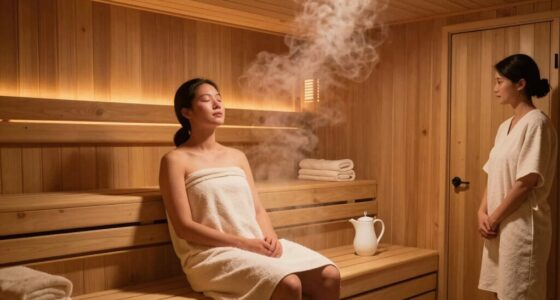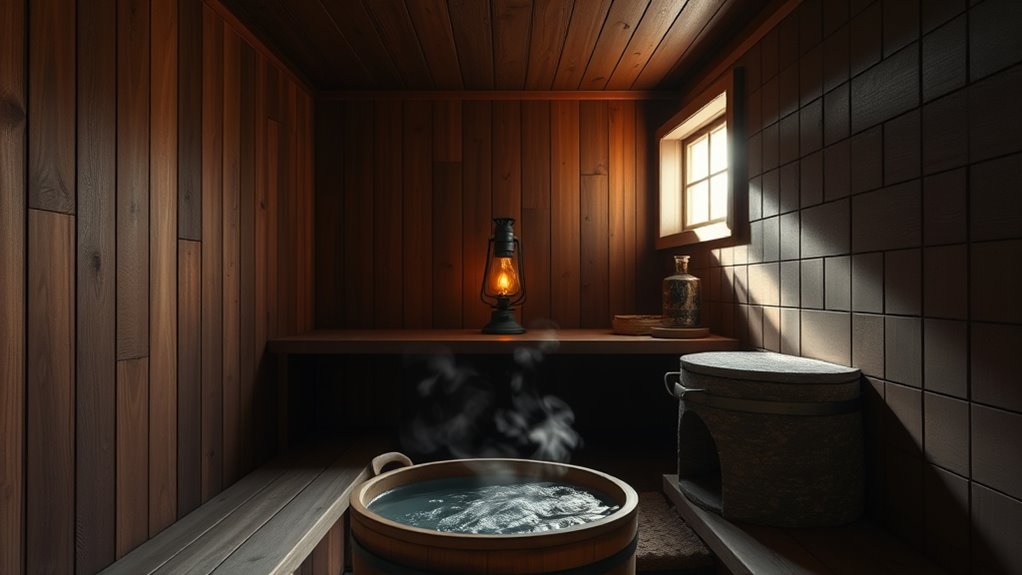

Saunas have a rich history, starting in ancient Finland where they served as sacred spaces for cleansing, healing, and social bonding. Over time, traditional rituals like pouring water over heated stones have remained central, even as modern innovations, such as electric heaters, made saunas more accessible and comfortable. Today, saunas blend old customs with new technology, helping you relax and connect with culture. Explore further to discover how this timeless tradition continues to evolve worldwide.
Key Takeaways
- Sauna origins date back to ancient Finnish communities, serving spiritual, health, and social purposes.
- Traditional rituals involved pouring water over heated stones and using natural elements like herbs.
- In Finland, sauna culture is integral, fostering community bonds and connecting people with nature.
- Modern innovations introduced electric heaters and advanced design, enhancing safety and accessibility.
- Despite technological advances, traditional practices remain vital, blending ancient rituals with contemporary wellness trends.
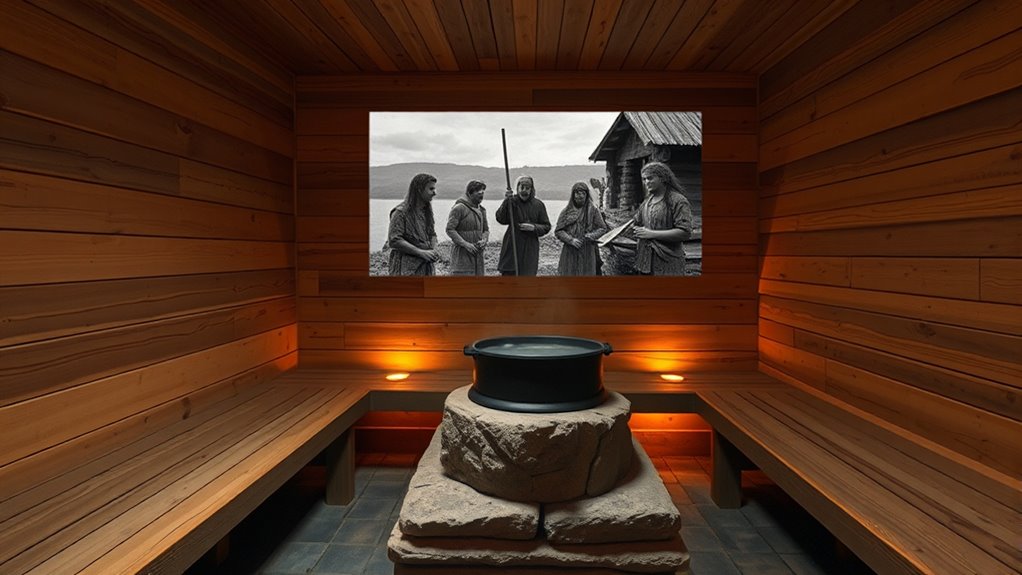
Have you ever wondered where the tradition of saunas began? It’s a question that takes you back centuries to a time when communities gathered around heat and steam, embracing traditional rituals that connected them to nature and each other. In ancient Finland, the sauna wasn’t just a place to clean the body; it was a sacred space for spiritual cleansing, social bonding, and even childbirth. People believed that the sauna held healing powers, and they developed specific rituals to honor its significance. These traditional practices often involved pouring water over heated stones to produce steam, which opened pores and promoted health. Over time, these rituals became deeply embedded in Finnish culture, shaping the way people viewed health and community. Incorporating natural elements like herbs and stones into sauna rituals further enhanced their spiritual and healing properties.
As centuries passed, the sauna’s role expanded beyond spiritual and social functions. Technological innovations transformed the way saunas were built and used, making them more accessible and comfortable. The introduction of electric heaters in the 20th century was a game-changer, replacing traditional wood-burning stoves with more efficient, controllable heat sources. This innovation allowed for precise temperature regulation, making saunas safer and easier to operate. Modern designs incorporate insulation and ventilation systems that improve energy efficiency and user comfort. These technological advancements didn’t just improve functionality—they also expanded the sauna’s reach. Today, you can find a variety of sauna types, from traditional Finnish models to infrared saunas that use advanced technology to heat the body directly, providing a different experience altogether.
Despite these innovations, many people still cherish the traditional rituals that have been passed down through generations. The act of heating the sauna with wood, pouring water over hot stones, and sharing the experience with friends remains a crucial part of the cultural identity for many. These rituals foster a sense of community and connection, anchoring modern practices in their historical roots. What’s fascinating is how technology has enhanced these rituals rather than replaced them, allowing for new ways to enjoy the benefits of the sauna while honoring its ancient origins. Whether you prefer a traditional Finnish steam bath or a modern infrared experience, the history of sauna shows how this practice has evolved, blending timeless rituals with innovative technology to promote health, relaxation, and social bonding.
Top picks for "sauna history ancient"
Open Amazon search results for this keyword.
As an affiliate, we earn on qualifying purchases.
Frequently Asked Questions
How Did Saunas Influence Finnish Culture Historically?
Saunas have shaped Finnish culture by serving as a space for relaxation, socializing, and traditional practices. You’re likely to see saunas as central to family life and community gatherings, reflecting their cultural significance. Historically, Finns used saunas for cleansing and rituals, reinforcing a sense of identity. This deep-rooted tradition continues today, symbolizing Finnish values of simplicity, well-being, and connection to nature.
What Materials Were Used in Ancient Sauna Construction?
In ancient sauna construction, you primarily used wooden interiors for walls and benches, creating a natural, insulating environment. You also incorporated stone heating, where heated stones stored and radiated warmth, making the sauna more effective. These materials were essential for maintaining high temperatures and ensuring durability. Wood’s availability and thermal properties, combined with stone’s heat retention, made these saunas both functional and integral to Finnish tradition.
When Did Sauna Bathing Become Popular Worldwide?
Sauna bathing gained worldwide popularity in the 20th century, thanks to cultural exchange and modern adaptations. You might notice how different countries embraced sauna-like practices, blending traditional methods with contemporary wellness trends. The rise of health consciousness and global travel helped spread this relaxing ritual beyond Finland. Today, you can find modern saunas in gyms, spas, and homes worldwide, celebrating a centuries-old tradition with innovative designs and technologies.
Are There Different Sauna Types Globally?
Think of saunas as a global tapestry, each weaving unique cultural variations and architectural styles. You’ll find traditional Finnish saunas with wood interiors, Russian banya with steam-filled rooms, and infrared saunas with sleek, modern designs. These different types reflect local customs and preferences, making sauna experiences diverse worldwide. No matter where you go, you’ll discover a distinctive way to relax and rejuvenate, shaped by the culture and architecture of each region.
How Has Sauna Technology Evolved Over Time?
Sauna technology has evolved markedly with modern heating systems and insulation innovations. You now enjoy safer, more efficient electric heaters that regulate temperature precisely, replacing traditional wood stoves. Improved insulation keeps heat consistent and reduces energy consumption. You can experience faster warm-up times and increased safety features, making saunas more accessible and comfortable. These advancements allow you to enjoy the health benefits of a sauna while benefiting from modern convenience and sustainability.
Conclusion
As you step into a sauna, think of it as a journey through time—like a warm embrace that connects ancient traditions to modern wellness. Imagine the first Finns, gathering in steaming huts, their laughter echoing like timeless waves. Today, millions worldwide indulge in this centuries-old ritual, proving that no matter where you are, a sauna’s warmth unites us all. It’s a simple yet powerful reminder that some traditions, like heat, only grow stronger with time.