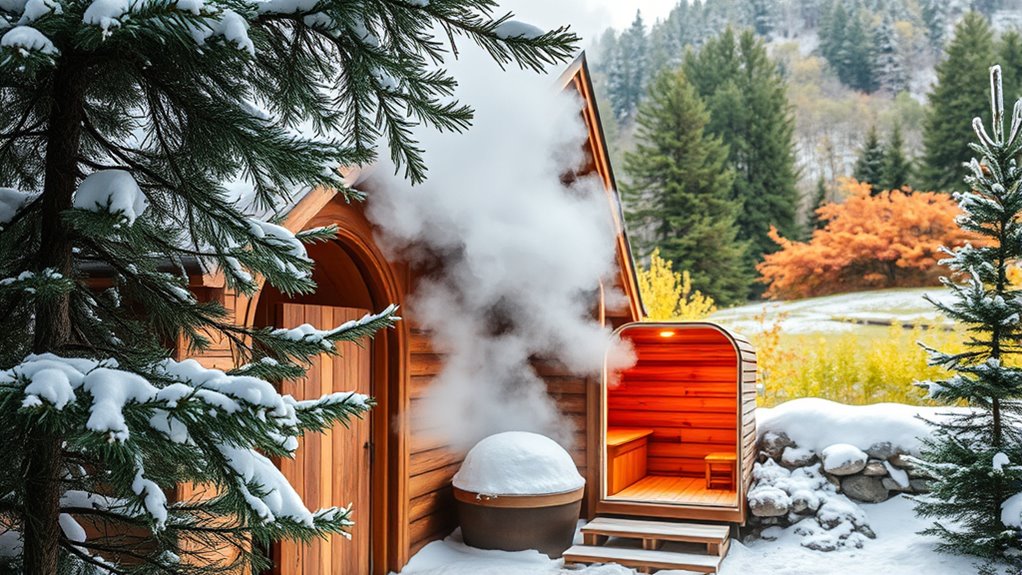

To adapt your sauna use across seasons, listen to your body and make key adjustments. In winter, enjoy longer sessions to warm up and support your immune system, but stay hydrated and cool down gradually. During summer, keep sessions shorter to prevent overheating and dehydration, and always prioritize proper ventilation. Avoid alcohol and watch for signs of fatigue or discomfort. For more seasonal tips, you’ll find useful advice to maximize safety and benefits year-round.
Key Takeaways
- Adjust session length and temperature based on seasonal weather and personal tolerance.
- Prioritize hydration before, during, and after sauna sessions, especially in summer.
- Incorporate gradual cooling methods like cold showers or plunges post-session.
- Use seasonal cues, such as shorter sessions in summer and longer, warmer sessions in winter.
- Monitor your body’s response and modify routines to ensure safety and maximize benefits year-round.
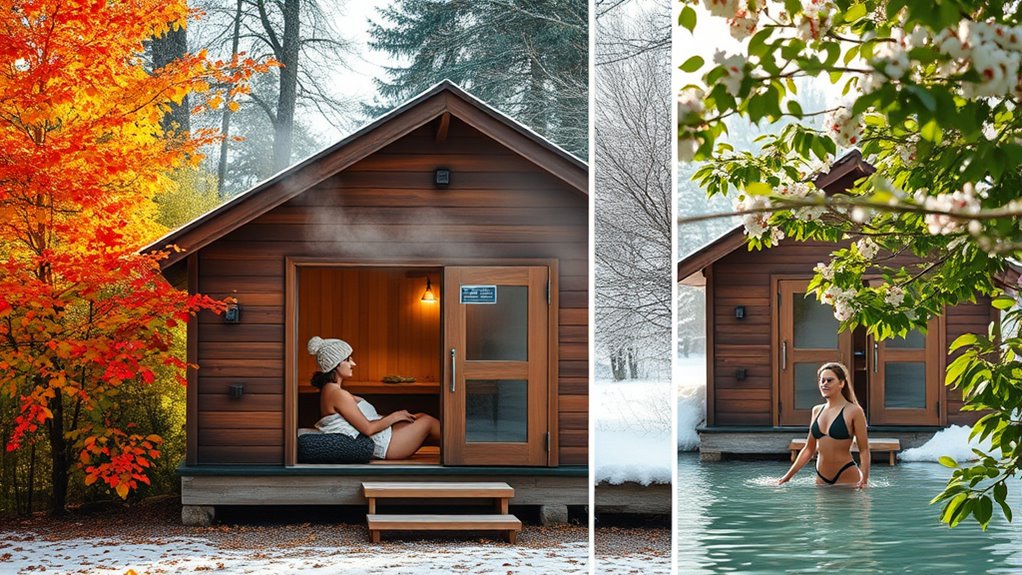
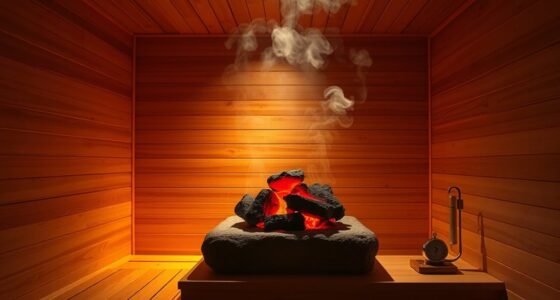
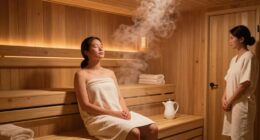
Using a sauna can be beneficial year-round, but the experience and advantages may vary depending on the season. During colder months, a sauna session can help you warm up quickly, soothe muscle soreness, and boost circulation. The heat can also provide seasonal health benefits by supporting your immune system, helping you fight off colds and flu more effectively. Conversely, in the summer, you might use the sauna to relax after outdoor activities or to unwind during the heat. However, it’s important to adapt your sauna routine to the season to maximize safety and benefits.
Sauna use varies seasonally, offering warmth and health benefits in winter, relaxation in summer—adapt routines for safety and maximum advantage.
In winter, you’ll find that sauna use can be a cozy ritual that encourages better circulation and helps you recover from the chill outside. Just be cautious with sauna safety tips—avoid staying in too long, especially if you’re new to the practice, and always hydrate well before and after your session. People often overlook the importance of cooling down gradually afterward, so take time to cool off with a shower or a cold plunge, if available, to prevent dizziness or dehydration. Incorporating seasonal adjustments can enhance your sauna experience and safety throughout the year.
During summer months, the heat from the sauna might feel more intense, so you should adjust your session duration accordingly. It’s wise to start with shorter periods, especially if you’re sensitive to heat, and listen to your body. Keep in mind that hydration becomes even more critical when it’s hot outside, as you’re more prone to dehydration from sweating. Incorporate sauna safety tips such as avoiding alcohol before your session, sticking to recommended time limits, and ensuring proper ventilation to prevent overheating. If you feel dizzy, nauseous, or uncomfortable, it’s best to end your session immediately.
Regardless of the season, always pay attention to how your body responds. The key is to adapt your sauna routine to seasonal changes while prioritizing safety. In colder seasons, the warmth can help you feel more energized and boost your immune defenses, but overdoing it can lead to dehydration or fatigue. In warmer months, it’s all about moderation—keeping sessions short and staying well-hydrated. Remember, sauna safety tips aren’t just guidelines—they’re essential for preventing accidents and ensuring you enjoy the benefits safely. Whether you’re using the sauna to warm up, relax, or recover, adjusting your approach to the season will help you get the most out of this centuries-old wellness practice.

VEVOR Sauna Heater,220V Electric Sauna Stove, Steam Bath Sauna Heater 3h Timer and Adjustable Temp for Max. 176-318 Cubic Feet, (4.5KW) FCC Certification
Fast Heating: This heater is 220-240V AC, a special voltage. The site conditions need to be evaluated before…
As an affiliate, we earn on qualifying purchases.
As an affiliate, we earn on qualifying purchases.
Frequently Asked Questions
Can I Use a Sauna Outdoors Year-Round?
Yes, you can use an outdoor sauna year-round, but make sure to prioritize outdoor sauna safety. Regular sauna maintenance is essential to prevent weather-related damage, especially in winter or rainy seasons. Protect your sauna with proper covers and ensure proper insulation. Be mindful of slippery surfaces during winter. With these precautions, you’ll enjoy your outdoor sauna safely all year long, regardless of the weather.
How Does Humidity Affect Seasonal Sauna Use?
Humidity levels considerably influence your seasonal sauna experience, as indoor humidity can vary from 10% to 60%. During winter, lower humidity helps you stay comfortable, while higher humidity in summer can enhance relaxation. Adjusting humidity for seasonal comfort is key; using a humidifier or venting can optimize your sauna sessions. Being mindful of humidity’s impact ensures you enjoy the benefits year-round, regardless of the season.
Is It Safe to Combine Sauna Use With Winter Activities?
Yes, it’s safe to combine sauna use with winter activities if you follow winter safety guidelines. Make sure to stay hydrated, limit your time in the sauna, and warm up gradually afterward. Use outdoor sauna tips like dressing warmly when outside and avoiding prolonged exposure to cold. Always listen to your body, and if you feel dizzy or unwell, exit immediately. Proper precautions guarantee you enjoy winter outdoor sauna sessions safely.
How Should I Adjust Sauna Duration in Hot Climates?
Picture the scorching sun beating down as you step into your sauna—adjust your duration to avoid overheating. In hot climates, keep sessions shorter, around 10-15 minutes, to prevent dehydration. Use cooling techniques like cooling towels or invigorating showers between sessions. Make sure your sauna is well-insulated to maintain consistent heat, but listen to your body’s signals. Shorter, cooler visits keep you safe while enjoying the relaxing heat.
Are There Benefits to Using a Sauna in Rainy or Humid Seasons?
Using a sauna in rainy or humid seasons offers unique benefits. The humidity effects can enhance relaxation, soothe sore muscles, and improve circulation. The benefits of rainy seasons include increased skin hydration and relief from seasonal mood changes. Just be mindful of the added moisture, which might make you feel more comfortable and refreshed. Adjust your sauna session duration accordingly, and enjoy the relaxing, health-boosting effects regardless of the weather outside.
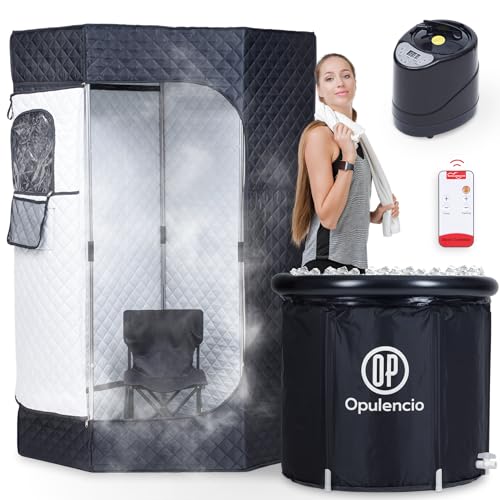
Opulencio Portable Sauna and Cold Plunge Combo – Spacious at Home Sauna Box with Ice Tub, Portable Steam Sauna Tent with 3L Steamer, Fast Heating with 9 Levels, Chair, Remote, 5.9' x 2.9' x 2.9'
✅SPACIOUS DESIGN: Experience the ultimate relaxation with our spacious portable steam sauna tent, offering ample room for comfort….
As an affiliate, we earn on qualifying purchases.
As an affiliate, we earn on qualifying purchases.
Conclusion
No matter the season, your sauna sessions are like tuning a guitar — with adjustments, you find the perfect pitch. I once heard a friend say that after winter’s chill, stepping into the sauna felt like melting away old scars. Just as each season brings its unique rhythm, adapting your sauna routine keeps you balanced and refreshed year-round. Embrace the changes, and let your sauna become your personal sanctuary through every season.
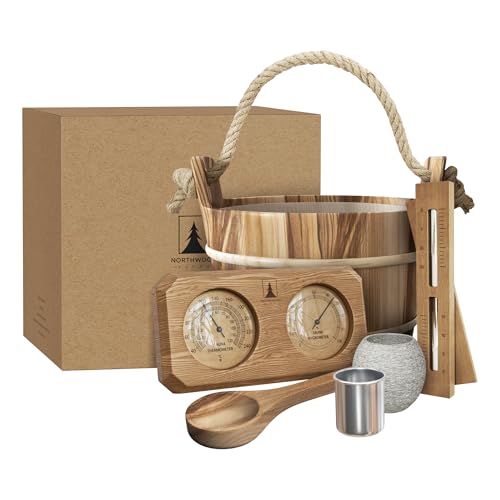
Northwood Sauna – Sauna Accessories Kit – Handmade from Canadian Red Cedar Wood – Core Set (Bucket & Ladle, Thermometer & Hygrometer, Sand Timer, Aromatherapy Cup)
Real Canadian Red Cedar Wood: Our sauna accessories kit is handmade from sustainable knotless wood and polished to…
As an affiliate, we earn on qualifying purchases.
As an affiliate, we earn on qualifying purchases.

Jarvi The Sauna Bottle – 18 oz / 550 ml Icy Cold Water & Cool to Touch even in Hot Saunas – Natural Cork x Neoprene Outer Layer – Double Wall Insulated Steel Bottle. (Deep Blue, Medium)
DESIGNED FOR SAUNAS – stays cool to touch even in a 200° fahrenheit sauna, thanks to our unique…
As an affiliate, we earn on qualifying purchases.
As an affiliate, we earn on qualifying purchases.