
Saunas play a key role in both traditional and modern spa rituals by promoting physical cleansing, mental clarity, and social connection. In traditional practices, they serve as sacred spaces for reflection, renewal, and bonding with community. Today, they blend ancient customs with advanced technology, enhancing relaxation and wellness experiences. Whether through restorative heat or social gatherings, saunas help you connect to a sense of well-being—discover how these rituals continue to evolve and enrich your spa experience.
Key Takeaways
- Saunas serve as sacred spaces for cleansing, reflection, and community bonding across various cultures.
- Traditional sauna rituals emphasize physical detoxification, mental clarity, and spiritual renewal.
- Modern spa practices incorporate advanced technology and diverse sauna types to enhance relaxation and health benefits.
- Rituals often involve alternating heat exposure with cooling methods to invigorate the body and sharpen the mind.
- Saunas foster social interaction and cultural identity, connecting communities through shared wellness traditions.

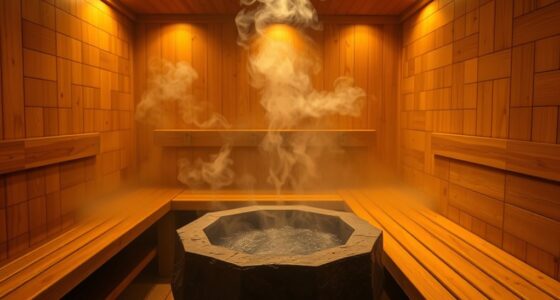
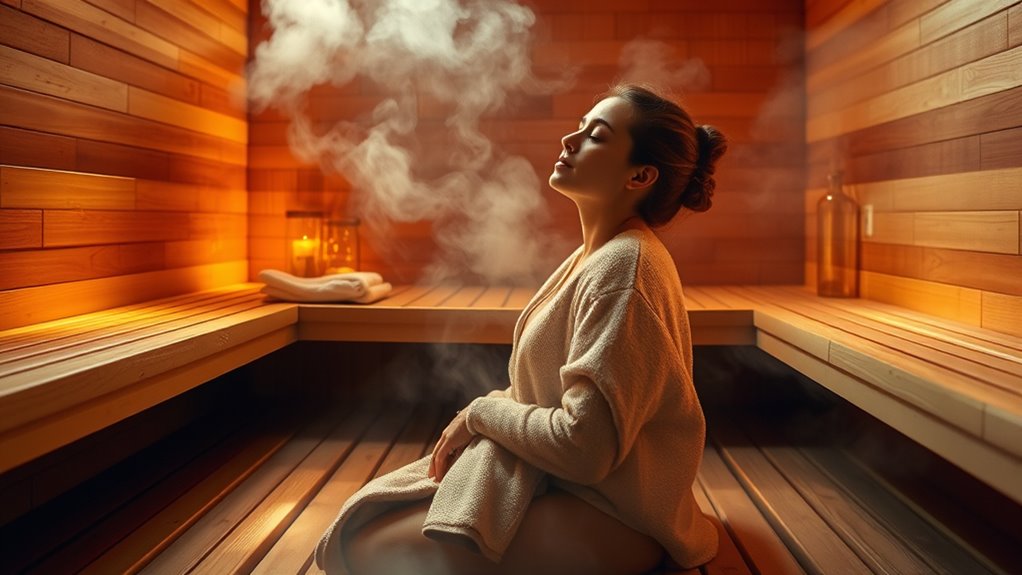
Have you ever wondered why saunas are a staple in many spa rituals? The answer lies in their powerful beneficial effects and deep cultural significance. When you step into a sauna, you’re not just indulging in relaxation; you’re engaging in a practice with centuries of history that promotes both physical and mental well-being. The heat causes your body to sweat profusely, helping to detoxify your skin and improve circulation. This process can relieve muscle tension, reduce stress, and even boost your immune system. These beneficial effects are why saunas have been valued across cultures for generations. From Finnish traditions to Russian banyas and Turkish baths, the sauna’s role extends beyond mere relaxation—it’s a *crucial* part of cultural identity and social connection. In many societies, the sauna is seen as a sacred space for cleansing, reflection, and community bonding. Incorporating portable power technology into sauna facilities is also helping modern spas enhance energy efficiency and safety.
In modern spa rituals, the sauna’s cultural significance continues to thrive, blending tradition with contemporary wellness trends. Today, you might find luxurious spa centers offering various types of saunas—infrared, steam, or dry heat—each designed to maximize health benefits. Despite technological advancements, the core principles remain rooted in age-old practices that emphasize purification and spiritual renewal. Many spa-goers now view the sauna as a holistic experience, where the physical benefits are complemented by mental clarity and emotional balance. The ritual often involves alternating between the intense heat of the sauna and cooling down in a plunge pool or cold shower, which invigorates your body and sharpens your mind.
The cultural significance of saunas also plays a role in shaping your overall spa experience. When you participate in a sauna session, you’re engaging in a tradition that has connected communities for centuries. It’s a moment to disconnect from daily stressors, reflect inward, or socialize with friends and family. This shared experience deepens your appreciation for the ritual, making it more than just a health practice—it’s a *foundational* cultural bond. Whether you’re in a modern wellness center or a traditional setting, the sauna remains a symbol of cleansing, renewal, and connection. Its enduring presence in spa rituals highlights how much value different cultures place on physical health, mental relaxation, and communal harmony. So, when you enjoy a sauna, you’re not only reaping its immediate benefits but also participating in a rich, meaningful tradition that spans generations.
Top picks for "role sauna traditional"
Open Amazon search results for this keyword.
As an affiliate, we earn on qualifying purchases.
Frequently Asked Questions
How Do Sauna Rituals Differ Across Various Cultures?
You’ll notice sauna rituals differ across cultures through unique ritual variations and cultural symbolism. In Finland, you relax in a smoke sauna, emphasizing purification and social bonding. In Russia, banya rituals incorporate birch branches for circulation. Meanwhile, in Korea, jjimjilbangs feature diverse heat baths and massages. Each culture’s ritual reflects its values, history, and spiritual beliefs, creating a rich tapestry of sauna experiences worldwide.
What Are the Health Risks of Sauna Use?
You should be aware that sauna use can pose health risks like dehydration, overheating, or low blood pressure if you don’t follow sauna safety guidelines. Always stay hydrated, limit your time inside, and listen to your body. To avoid health complications, practice proper health precautions, such as consulting your doctor if you have heart issues or pregnant. Knowing these risks helps guarantee a safe, relaxing experience.
Can Sauna Sessions Replace Traditional Medical Treatments?
You can’t replace traditional medical treatments with sauna sessions, even if they feel like a warm, soothing embrace that melts away stress. Saunas may offer some health benefits as alternative therapies, but their medical efficacy is limited. Think of saunas as a complement, not a substitute, for professional care. Rely on your doctor’s advice for serious health issues, while enjoying the relaxation and wellness support saunas provide.
How Do Sauna Materials Impact the Relaxation Experience?
Sauna materials considerably influence your relaxation experience. The wood aroma creates a calming atmosphere, helping your mind unwind, while the stone texture adds to the authentic feel, grounding you in the moment. When you sit in a sauna with quality wood and smooth stones, you’re more likely to relax deeply, enjoying the sensory benefits that these materials provide. This enhances your overall sense of tranquility and wellness during your session.
Are There Eco-Friendly Options for Traditional Saunas?
Yes, there are eco-friendly options for traditional saunas. You can choose saunas made from eco-friendly wood like FSC-certified or sustainably harvested wood, ensuring minimal environmental impact. Additionally, utilizing renewable energy sources such as solar or geothermal power to heat your sauna helps reduce carbon footprints. These choices allow you to enjoy the relaxing benefits of a traditional sauna while staying environmentally conscious.
Conclusion
So, next time you step into a sauna, remember you’re not just relaxing—you’re revealing secrets that could turn you into the most radiant, stress-free person alive! Saunas are the ultimate magic portals, transforming ordinary spa days into legendary experiences. Embrace the heat, feel the ancient power coursing through you, and watch as your worries melt away faster than you can say “ahhh.” Truly, a sauna isn’t just a ritual; it’s your ticket to becoming an unstoppable, glowing superstar!