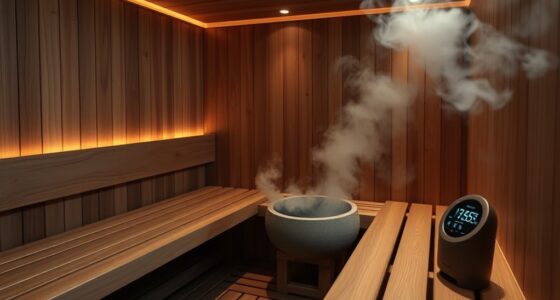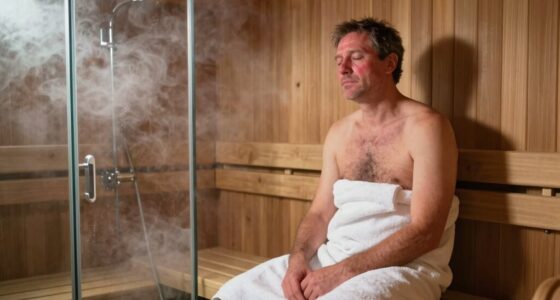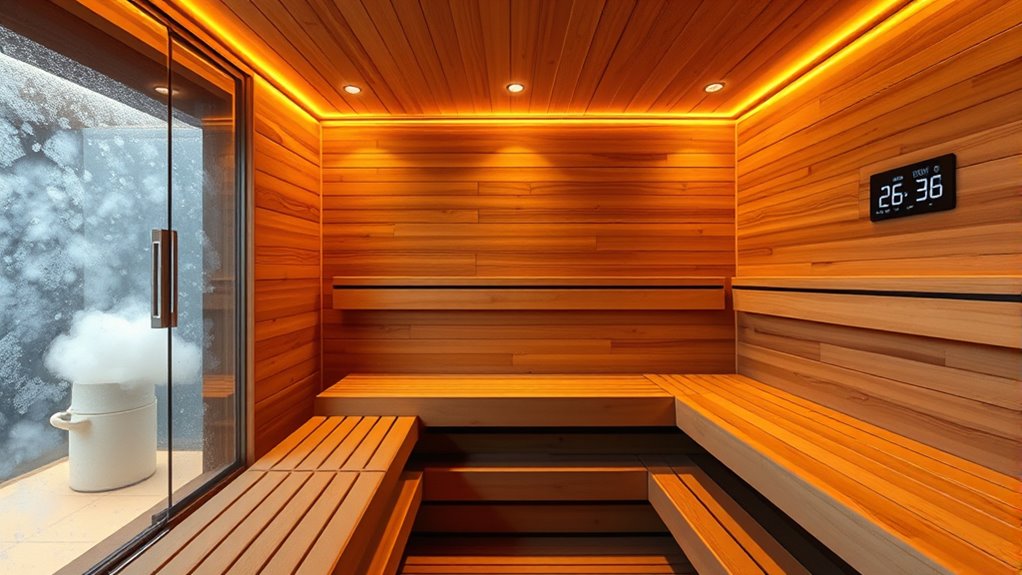
For safe sauna sessions, keep the temperature between 150°F and 195°F and stick to 15-20 minute durations. Starting at the lower end helps your body adjust, and avoid exceeding 195°F, which can be risky. Monitor how you feel, and step out if you experience dizziness or discomfort. Staying within these guidelines helps prevent dehydration and heat stress. Want to learn more about maintaining safety during your sauna sessions? Keep exploring for useful tips.
Key Takeaways
- Keep sauna temperatures between 150°F and 195°F (65°C to 90°C) for safety and comfort.
- Limit sauna sessions to 15-20 minutes to prevent dehydration and heat stress.
- Gradually increase temperature as your body adapts, starting at the lower end if new to sauna use.
- Stay well-hydrated before, during, and after sessions to reduce dehydration risks.
- Listen to your body and exit immediately if feeling dizzy, lightheaded, or uncomfortable.
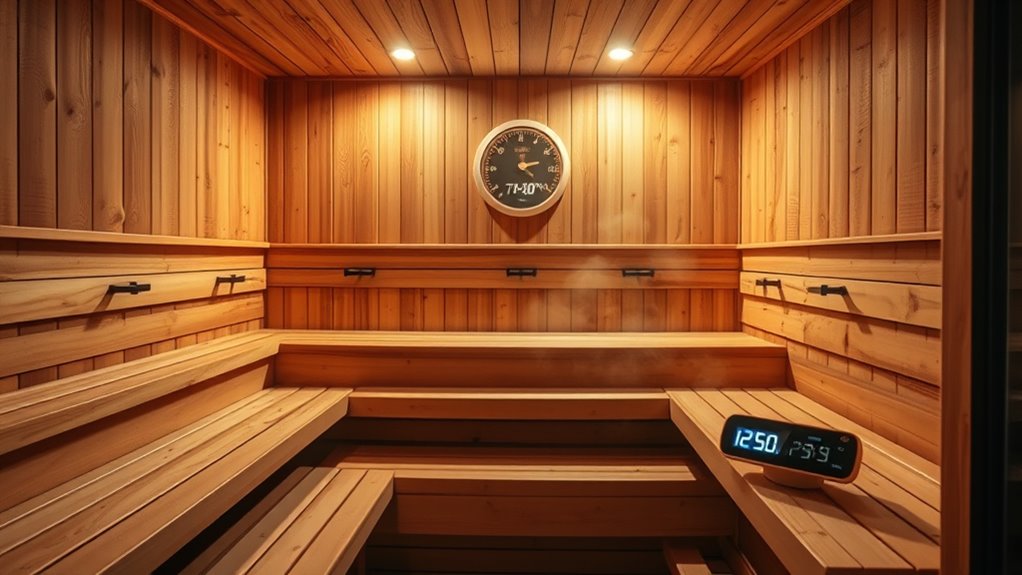
Using a sauna can be a relaxing experience, but it’s important to prioritize safety to prevent health risks. One key aspect of safe sauna use is understanding the recommended temperatures and durations for your sessions. Staying within these guidelines helps you enjoy the benefits without overexposing yourself to heat stress. Typically, sauna temperatures range from 150°F to 195°F (65°C to 90°C). If you’re new to sauna sessions, it’s best to start at the lower end of this spectrum and gradually work your way up as your body adapts. Temperatures above 195°F can be intense and may increase the risk of dehydration or heat exhaustion, especially if you stay too long.
Prioritize safety by staying within recommended sauna temperatures (150-195°F) and limiting sessions to 15-20 minutes.
Duration also matters. Most health experts suggest limiting your time in the sauna to about 15 to 20 minutes per session. If you’re feeling lightheaded, dizzy, or uncomfortable, it’s essential to exit immediately, regardless of your scheduled time. Listening to your body is crucial. Overstaying in the heat can lead to dehydration, so it’s wise to keep your sessions brief, especially if you plan to use the sauna multiple times a week.
Hydration tips are equally important. Before entering, drink a glass of water to start with a hydrated baseline. During your session, take small sips if you feel thirsty, but avoid gulping large amounts of water in the sauna itself, as rapid intake can cause discomfort. After your session, replenish lost fluids with plenty of water or electrolyte drinks to help your body recover. Remember, dehydration is a common risk associated with sauna use, so staying well-hydrated helps you enjoy the experience safely.
Sauna etiquette also plays a role in maintaining a safe and respectful environment. Always shower before entering to keep the sauna clean and prevent bacterial spread. Sit or lie on a towel to avoid direct contact with surfaces, which promotes hygiene. Keep noise levels down, and be considerate of others’ comfort. If you’re sharing the sauna, don’t stay in if you’re feeling unwell or excessively overheated—your health comes first. Respect personal space and avoid excessive movement to maintain a peaceful atmosphere. Additionally, understanding body temperature regulation can help you recognize signs of overheating and prevent heat-related illnesses.
Top picks for "recommend temperatur duration"
Open Amazon search results for this keyword.
As an affiliate, we earn on qualifying purchases.
Frequently Asked Questions
Can I Wear Jewelry During a Sauna Session?
You should avoid wearing jewelry during a sauna session because jewelry safety is important. Sauna metal interactions can cause jewelry to become hot, uncomfortable, or even cause burns. Additionally, heat can damage jewelry, especially if it contains gemstones or delicate materials. For your safety and peace of mind, it’s best to leave all jewelry outside the sauna. This prevents potential injuries and preserves your accessories.
Is It Safe to Sauna While Pregnant?
Pregnancy precautions prevent potential problems, so you should avoid saunas while pregnant. The heat can harm your developing baby, raising risks like dehydration and overheating. For pregnancy safety, steer clear of high temperatures and long sessions. Instead, focus on gentle, cooling activities. Always consult your healthcare provider before trying any new wellness routines. Protect your pregnancy by prioritizing safe, soothing choices over risky heat hazards.
How Often Should I Take Cooling Breaks?
You should take cooling breaks every 15 to 20 minutes during your sauna session. During these breaks, hydrate with water to maintain your hydration routines and help your body cool down safely. Limit your sauna sessions to 15-20 minutes and space them out, ensuring you don’t overdo it. Listening to your body is key—if you feel dizzy or uncomfortable, take a longer break or end your session.
Are There Specific Sauna Types Better for Health?
Looking to enhance your wellness journey? You’ll find that traditional Finnish saunas, made from high-quality cedar or spruce, are often the most beneficial due to their natural properties and effective construction. Infrared saunas, built with specialized panels, offer gentler heat, ideal for sensitive skin. Choose a sauna type based on your comfort and health goals, knowing that well-crafted sauna material and construction can make all the difference in your experience.
Can Sauna Sessions Help With Chronic Health Conditions?
Sauna sessions can help with chronic health conditions by promoting detoxification benefits and muscle relaxation. You might notice improved circulation, reduced muscle tension, and enhanced overall well-being. Regular use can support your body’s natural detox process, easing symptoms like pain and stiffness. Just remember to stay within safe temperature and duration guidelines, listen to your body, and consult your healthcare provider if you have specific health concerns.
Conclusion
Remember, sticking to recommended temperatures and durations can turn your sauna experience from a mild relaxation into an epic adventure for your health. Ignoring these guidelines might turn your peaceful retreat into a fiery furnace, leaving you more exhausted than after running a marathon in the Sahara! Play it safe, listen to your body, and enjoy the soothing warmth without risking turning your serene escape into a blazing inferno. Your health will thank you, and your relaxation will be legendary!