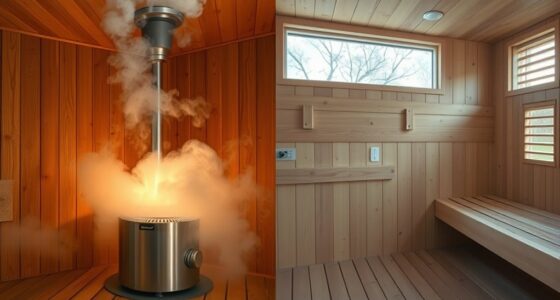
Choosing between a sauna and a steam room depends on your wellness goals and preferences. If you want quick, intense sweating and muscle relaxation, a sauna’s dry heat at high temperatures may suit you best. If you prefer a moist, soothing environment that helps with respiratory health and skin, a steam room could be ideal. Your personal tolerance and cultural influences also play a role. To explore which option aligns with your needs, keep exploring the details below.
Key Takeaways
- Choose a sauna for quick, intense sweating and muscle relaxation; opt for a steam room for prolonged, soothing moisture.
- Consider dry heat if you tolerate dehydration; prefer moist heat if you have respiratory or skin concerns.
- Sauna suits Nordic wellness traditions and social use; steam rooms align with Middle Eastern and Asian detox practices.
- Match your wellness goals: quick recovery with sauna or skin and respiratory benefits with steam.
- Personal tolerance and health conditions should guide your choice between high-temperature dry heat and humid warmth.

When choosing between a sauna and a steam room, understanding their differences can help you make the best decision for your relaxation and health goals. Both offer distinct thermal benefits, but they also reflect cultural differences that influence their design, usage, and perceived health advantages. A sauna typically operates at high temperatures with dry heat, often between 150-195°F, while a steam room maintains lower temperatures around 110-120°F but with nearly 100% humidity. This contrast in thermal benefits affects how your body responds and what you might enjoy most. If you prefer dry heat that promotes sweating and muscle relaxation, a sauna may be more suitable. Conversely, if you favor moist heat that opens your pores and eases respiratory issues, a steam room could be the better choice. Cultural influences significantly shape how these environments are perceived and used worldwide. Saunas originate from Nordic countries like Finland, where they’re deeply embedded in daily life and social traditions. They are often seen as a way to cleanse the body, relax, and connect with others. In many European and Eastern European cultures, saunas are communal spaces used regularly for health and social purposes. Steam rooms, on the other hand, are more common in Middle Eastern, Asian, and Mediterranean regions, where the emphasis might be on detoxification, skin health, and respiratory relief. These cultural nuances shape the design, etiquette, and expectations when using these facilities. Your choice may also hinge on how your body reacts to different thermal environments. Saunas, with their dry heat, tend to cause more sweat in less time, which can help with detoxification and muscle recovery. However, some people find the dry heat too intense or dehydrating. Steam rooms, with their moist heat, provide a soothing environment that is often easier to tolerate for longer periods, especially for those with respiratory issues or sensitive skin. Both environments promote relaxation, but their effects on your body and mind can vary based on your individual health, preferences, and cultural influences. Ultimately, understanding the thermal benefits and cultural differences of saunas and steam rooms helps you weigh your options. Whether you’re looking for a quick, intense sweat session or a prolonged, soothing steam, knowing what each offers makes it easier to choose the environment that aligns with your wellness goals.
Frequently Asked Questions
Can I Use a Sauna or Steam Room if I Have Heart Issues?
If you have heart issues, you should avoid using a sauna or steam room without a medical consultation. These heat environments can affect your heart health by increasing your heart rate and blood pressure. Always talk to your doctor first to ensure it’s safe. They can advise you on whether your heart condition allows you to enjoy these therapies or if alternative options are preferable for your health.
How Long Should I Stay in Each for Safety?
Stay safe by sticking to a sauna session of 15-20 minutes and a steam room session of 10-15 minutes. Prioritize hydration needs before, during, and after your session to prevent dehydration. Listen to your body—if you feel dizzy or uncomfortable, exit promptly. Properly pacing your session duration helps avoid overheating and ensures you enjoy the benefits without risking your health.
Are There Any Skin Conditions That Prevent Use?
If you have skin sensitivities or are prone to allergic reactions, you should be cautious using saunas or steam rooms. The heat and humidity can aggravate conditions like eczema, psoriasis, or dermatitis. It’s best to consult your healthcare provider before use. If you notice redness, itching, or irritation, stop immediately. Protect your skin by staying hydrated and avoiding prolonged exposure to prevent worsening of skin conditions.
Can I Drink Alcohol Before or After Using?
You shouldn’t drink alcohol before or after using a sauna or steam room. Alcohol consumption can dehydrate you and impair your body’s ability to regulate temperature, increasing the risk of heat exhaustion or dehydration. Follow drinking guidelines by avoiding alcohol at least a few hours before and after your session. Instead, hydrate with water to stay safe and support your body’s natural cooling process during and after your sauna or steam room experience.
What Are the Maintenance Differences Between Sauna and Steam Room?
You need to regularly clean and disinfect both saunas and steam rooms, but maintenance differs slightly. Saunas require cleaning protocols to remove sweat and oils from wood surfaces, while steam rooms need thorough sanitation of tiles and grout to prevent mold. Ventilation systems are essential for both; ensuring proper airflow helps prevent moisture buildup and mold growth. Regular maintenance keeps these spaces hygienic, safe, and enjoyable for your sessions.
Conclusion
Whether you prefer the dry heat of a sauna or the steamy embrace of a steam room, both offer unique relaxation experiences. Picture yourself basking in the warm glow of a sauna’s golden light or enveloped in the misty fog of a steam room, each soothing your muscles and calming your mind. Think about what feels right for you — a crisp, dry heat or a moist, humid retreat. Either way, you’re choosing a moment of pure bliss.