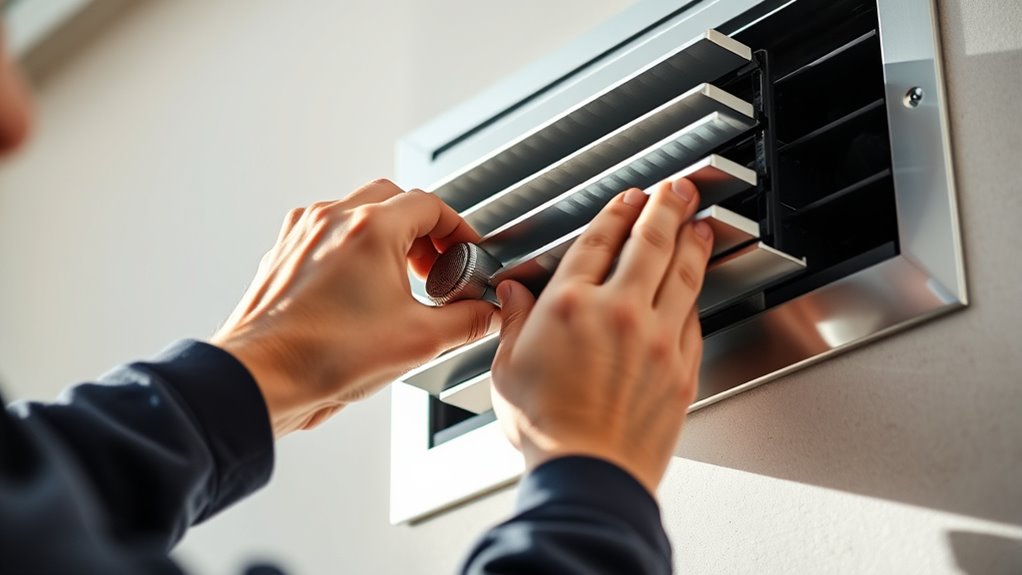
To install and adjust adjustable vents for airflow control, start by selecting the right size vents for each room and turn off your HVAC system. Remove existing vents if necessary, then securely install the new ones in desired locations, ensuring they’re flush and properly aligned. Once installed, use the dampers or louvers to fine-tune airflow, opening or closing vents to balance temperatures. Continuing with these tips can help you master maximum airflow management for a more comfortable home.
Key Takeaways
- Choose appropriate vent sizes and locations based on room size and airflow needs for optimal performance.
- Install vents in strategic positions to enhance circulation and counteract drafts or temperature differences.
- Use dampers or louvers to easily adjust airflow through each vent for personalized comfort.
- Regularly check and clear vents of dust or obstructions to maintain efficient airflow and system function.
- Fine-tune vent settings seasonally or as furniture moves to achieve continuous airflow balance and energy efficiency.
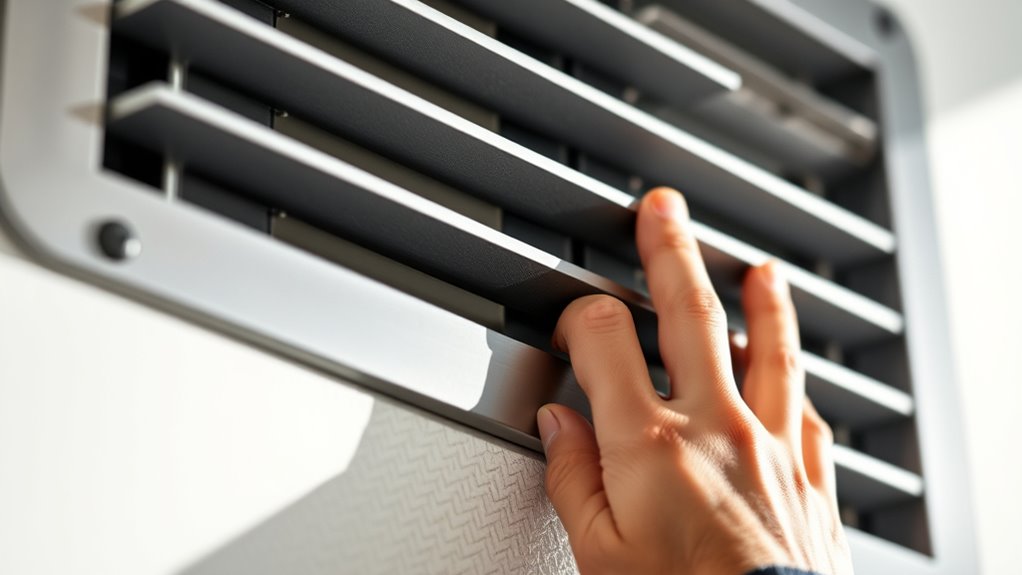
Installing adjustable vents allows you to take control of your home’s airflow, improving comfort and energy efficiency. When you focus on proper vent placement, you can make a significant difference in how well your heating and cooling system functions. Position your vents strategically in rooms that tend to be warmer or cooler than the rest of the house. For example, placing vents near windows or exterior walls helps counteract drafts and uneven temperatures. Additionally, vents should be located where furniture or curtains won’t block airflow, ensuring air circulates freely throughout the space.
Proper vent placement enhances airflow, comfort, and energy efficiency throughout your home.
Achieving ideal airflow balancing starts with understanding how air moves within your home. Once you’ve installed adjustable vents, you can fine-tune the flow of air by adjusting the dampers or louvers. If a room feels stuffy or overly warm, close the vent slightly to reduce airflow. Conversely, if a space feels underheated or cold, open the vent more to allow additional air in. This manual control allows you to customize temperature and airflow to your preferences, creating a more comfortable environment.
Proper vent placement not only enhances comfort but also helps improve your system’s efficiency. When airflow is balanced across rooms, your HVAC system doesn’t have to work as hard to maintain a consistent temperature. This reduces energy consumption and can lower your utility bills. It’s also important to consider the size of the vents relative to the room. Larger vents tend to move more air, so they should be used in larger spaces, while smaller vents are suitable for smaller rooms or areas that need less airflow.
In addition to adjusting individual vents, you should periodically check for any obstructions blocking airflow. Dust buildup, furniture, or curtains can restrict air movement, undermining your efforts to control airflow effectively. Cleaning vents regularly ensures they operate smoothly and continue to provide proper airflow distribution.
Finally, keep in mind that airflow balancing isn’t a one-time task. It’s an ongoing process that involves adjusting vents as seasons change, furniture moves, or your comfort preferences evolve. Experiment with different vent positions and settings until you find the right balance for each room. By paying attention to vent placement and fine-tuning your adjustable vents, you’ll enjoy a more comfortable home environment and better energy efficiency. Remember that understanding airflow dynamics can help you make smarter adjustments and optimize your home’s comfort.
Top picks for "install adjust adjustable"
Open Amazon search results for this keyword.
As an affiliate, we earn on qualifying purchases.
Frequently Asked Questions
Can Adjustable Vents Improve Energy Efficiency in My Home?
Yes, adjustable vents can improve your home’s energy efficiency. By controlling airflow, you enhance temperature regulation, which helps reduce energy consumption. When you direct warm or cool air where it’s needed most, you prevent waste and lower your heating and cooling costs. Using adjustable vents effectively allows you to optimize comfort and save money on your energy bills, making your home more energy-efficient overall.
Are There Safety Concerns With Adjustable Vents?
Yes, there are safety concerns with adjustable vents, especially regarding vent safety for children. To prevent accidents, you should consider installing child-proof vents that are designed to be safe and tamper-resistant. Regularly check that vents are secure and functioning properly. Keep small parts out of reach, and educate family members about vent safety. These steps help make sure your adjustable vents are both effective and safe for everyone in your home.
How Often Should I Clean or Replace Adjustable Vent Components?
Think of your vents like a garden needing regular care. You should clean adjustable vent components every 3 to 6 months to prevent dust buildup and guarantee ideal airflow. Replace worn or damaged parts as needed, typically following the manufacturer’s replacement schedules, usually every few years. Regular vent maintenance keeps your system efficient, much like tending a garden ensures healthy growth and comfort in your home.
Can Adjustable Vents Be Used in Outdoor or Commercial Settings?
Yes, adjustable vents can be used in outdoor and commercial settings, but you need to take into account outdoor compatibility. Look for vents made with weather-resistant materials like stainless steel or coated metals to withstand the elements. For commercial applications, ensure the vents meet industry standards for durability and airflow control. Proper installation and maintenance are key to keeping your outdoor or commercial adjustable vents functioning effectively over time.
Do Adjustable Vents Affect Indoor Air Quality?
Adjustable vents can positively impact indoor air quality by improving ventilation system efficiency. Studies show that proper airflow management reduces indoor pollutants by up to 30%. When you use adjustable vents, you control airflow, helping to ventilate stale air and bring in fresh air. This targeted approach prevents buildup of allergens and pollutants, creating a healthier indoor environment and ensuring your ventilation system works ideally for cleaner, better air.
Conclusion
Now that you’ve installed and adjusted your vents, controlling airflow becomes as easy as turning a dial. Think of your vents as the steering wheel of your home’s comfort—guiding the breeze exactly where you want it. With a little practice, you’ll master the art of perfect airflow, making your space feel just right. So, take control and let your vents be the secret to a cozy, well-ventilated home that responds to your every need.