

To recognize heatstroke in sauna use, watch for symptoms like confusion, a throbbing headache, rapid heartbeat, dizziness, or nausea. If you notice these signs, immediately cool your body with water or a fan, hydrate with electrolyte drinks or water, and get to a cooler place. Don’t delay seeking medical attention if symptoms worsen or persist. Knowing these early signs helps prevent serious health issues. Stay safe by learning more about managing heatstroke effectively.

Get wellness gear delivered free with Prime
- Fast, free delivery on millions of items
- Prime Video, Amazon Music and more included
- Member-only deals all year
Key Takeaways
- Recognize early heatstroke symptoms: confusion, rapid heartbeat, headache, dizziness, and nausea.
- Immediately cool the person with water, a fan, or a cool shower and hydrate with electrolyte drinks.
- Remove the individual from the sauna environment and lie down in a cool, shaded area.
- Seek medical attention promptly if symptoms worsen or do not improve after initial cooling.
- Prevent heatstroke by limiting sauna sessions to 15-20 minutes, staying hydrated, and listening to body signals.
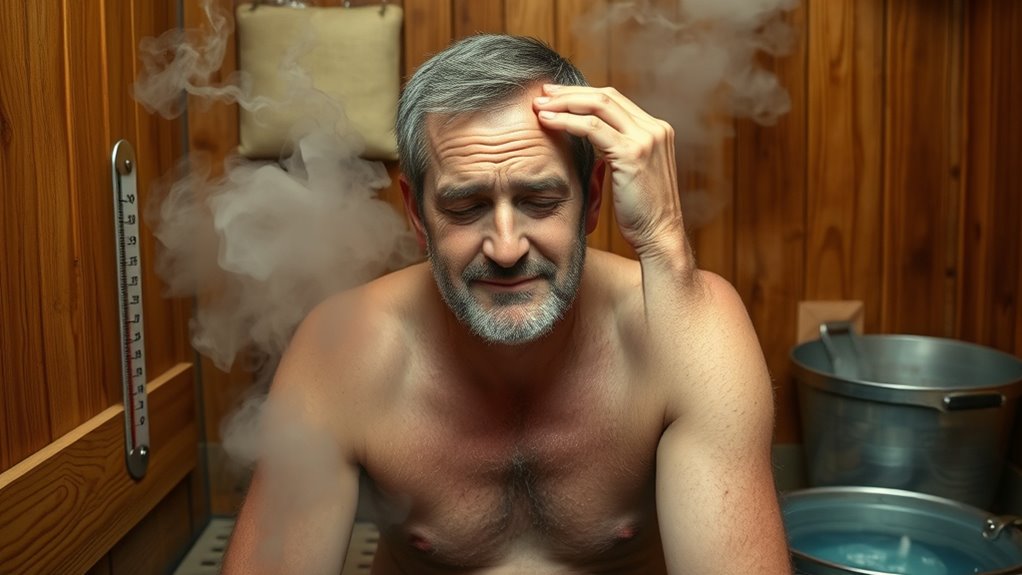
Heatstroke is a serious risk for sauna users who overstay or push their limits. When you’re spending time in high temperatures, your body works hard to regulate its temperature, and if it becomes overwhelmed, heatstroke can occur. Recognizing early signs and knowing how to respond can make all the difference in preventing serious health consequences. One of the most effective ways to reduce your risk is by implementing proper hydration strategies before, during, and after your sauna session. Drinking water helps replenish fluids lost through sweat and keeps your core temperature in check. Avoid alcohol or caffeinated beverages, as they can dehydrate you further. Following sauna safety guidelines, such as limiting session duration, especially if you’re new or sensitive to heat, is essential. Most experts recommend staying in the sauna for no longer than 15-20 minutes at a time, and listening to your body’s signals is crucial. If you start feeling dizzy, nauseous, or excessively sweaty, it’s time to exit immediately.
Your hydration strategies should be tailored to your individual needs, taking into account your health status, age, and the temperature of the sauna. Prioritize drinking water regularly during your session, rather than waiting until you feel thirsty, which can be a late sign of dehydration. Incorporate electrolyte drinks if you plan on multiple sessions or extended periods in the heat, as they help replace essential salts lost through sweating. It’s also wise to prepare your body by hydrating well beforehand—aim to drink a glass of water before entering the sauna. After your session, continue hydrating to restore fluid balance, and consider taking a cool shower to help lower your core temperature gradually. Additionally, understanding the history of heat-related illnesses**** can provide helpful context for recognizing early warning signs and preventing severe outcomes.
Sticking to sauna safety guidelines isn’t just about preventing dehydration; it’s about avoiding heat-related illnesses. Always inform someone when you’re going into the sauna, especially if you’re alone or trying a new routine. If you start experiencing symptoms like confusion, rapid heartbeat, or a throbbing headache, these could be signs of heatstroke. In such cases, you should immediately cool your body with water or a fan, hydrate, and seek medical help without delay. Remember, the key to safe sauna use is respecting your limits, following established safety protocols, and prioritizing hydration strategies. When you do so, you can enjoy the benefits of your sauna experience while minimizing the risk of heatstroke and other heat-related health issues.
electrolyte drinks for hydration
As an affiliate, we earn on qualifying purchases.
As an affiliate, we earn on qualifying purchases.
Frequently Asked Questions
Can Heatstroke Occur During Brief Sauna Sessions?
Yes, heatstroke can occur during brief sauna sessions if your sauna duration is too long or if you experience a sudden onset of symptoms. Even short sessions can be risky if you’re dehydrated or sensitive to heat. Pay close attention to how your body reacts, and don’t push past your limits. If you notice symptoms like dizziness or confusion, exit immediately and hydrate.
Are Children More Vulnerable to Heatstroke in Saunas?
Imagine a delicate flower, easily overwhelmed by the sun’s intense rays. Children’s vulnerability to heatstroke in saunas is similar—they’re more susceptible due to pediatric susceptibility. Their bodies don’t regulate heat as effectively, making heat-related illnesses more likely. As a result, you should be extra cautious, monitor them closely, and limit sauna exposure, ensuring they stay safe and comfortable despite their heightened risk.
Does Hydration Prevent Heatstroke in Sauna Users?
Hydration helps prevent heatstroke by maintaining electrolyte balance and supporting your body’s cooling processes. Drinking water before, during, and after your sauna session is essential, but don’t overdo it—staying within recommended sauna session durations also reduces risks. Remember, proper hydration combined with mindful session lengths helps keep your body safe from overheating, making your sauna experience both enjoyable and secure.
Can Medications Increase Risk of Heatstroke in Saunas?
Yes, certain medications can increase your risk of heatstroke in saunas. Medication side effects like dizziness, dehydration, or impaired sweating can hinder your body’s ability to cool down. Additionally, drug interactions may amplify these effects, making it more dangerous to stay in hot environments. Always check with your healthcare provider about how your medications might affect your heat tolerance, especially if you plan to use a sauna regularly.
What Are Long-Term Health Effects of Heatstroke?
Heatstroke can cause serious long-term health effects, affecting about 10% of untreated cases. You might experience chronic organ damage, such as liver or kidney issues, and long-term neurological effects like memory problems or seizures. These lasting impacts can markedly reduce your quality of life, emphasizing the importance of prompt treatment and prevention. Protect yourself by staying hydrated, monitoring your body’s signals, and avoiding excessive heat exposure.
cooling fan for heatstroke relief
As an affiliate, we earn on qualifying purchases.
As an affiliate, we earn on qualifying purchases.
Conclusion
Remember, recognizing the signs, acting quickly, and cooling the body are your best defenses against heatstroke. Stay alert, stay calm, and stay cool—your safety depends on it. Keep an eye on symptoms like dizziness, confusion, or nausea, and take immediate action if they appear. By staying vigilant, you prevent danger, protect your health, and ensure your sauna experience remains safe and enjoyable. Your awareness and quick response are your strongest tools in this heated environment.
As an affiliate, we earn on qualifying purchases.
As an affiliate, we earn on qualifying purchases.
Halloween Picks
halloween
As an affiliate, we earn on qualifying purchases.