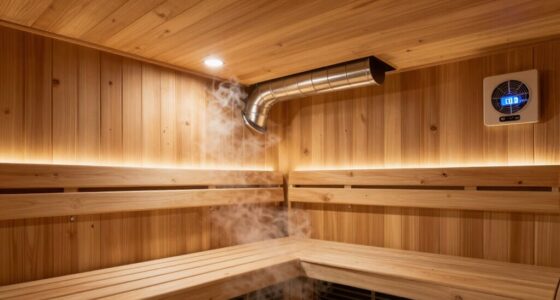
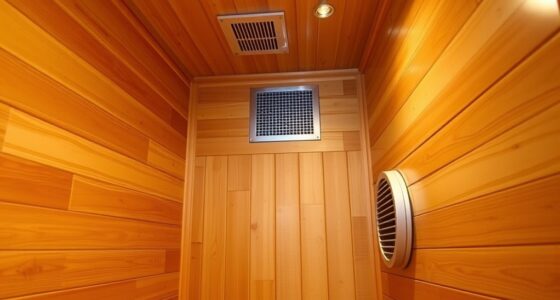
To prevent mold and mildew in your sauna, you should manage moisture carefully by controlling humidity levels and ensuring proper ventilation. Use a hygrometer to monitor moisture, keeping levels around 10-20% when idle and 40-60% during use. Always dry benches and walls after each session, and keep vents open or install exhaust fans to promote airflow. Maintaining a dry environment is key—stay tuned for more tips on keeping your sauna mold-free.

Get wellness gear delivered free with Prime
- Fast, free delivery on millions of items
- Prime Video, Amazon Music and more included
- Member-only deals all year
Key Takeaways
- Maintain humidity levels between 10-20% when idle and 40-60% during use to prevent excess moisture.
- Ensure proper ventilation with exhaust fans, vents, and open windows to promote airflow and reduce humidity buildup.
- Regularly wipe down and dry benches, walls, and surfaces after each session to eliminate residual moisture.
- Use hygrometers to monitor humidity levels and adjust ventilation or dehumidifiers accordingly.
- Conduct routine cleaning of hidden areas, seams, and vents with disinfectants to prevent mold spores from establishing.

Maintaining proper moisture levels is essential for a safe and enjoyable sauna experience. When humidity gets out of control, it creates the perfect environment for mold and mildew to thrive. That’s why understanding ventilation strategies and humidity control is crucial. These techniques help you manage moisture effectively, preventing health hazards and preserving your sauna’s integrity. Proper moisture management not only involves controlling humidity but also ensuring adequate airflow to prevent stagnant, damp conditions. Start by focusing on ventilation strategies. Good airflow is your first line of defense against excess moisture. Ensure your sauna has an effective ventilation system, such as an exhaust fan or vents, that allows moist air to escape and fresh air to circulate. During and after use, keep vents open to promote air exchange. This prevents the buildup of humidity, which can lead to mold growth over time. If your sauna has windows, opening them periodically can further improve airflow. Proper ventilation not only controls humidity but also reduces condensation on walls and benches, which are breeding grounds for mold spores. Humidity control is equally important. Use a hygrometer to monitor moisture levels regularly, aiming to keep humidity between 10-20% when the sauna is not in use and around 40-60% during operation. If you notice humidity climbing too high, consider using a dehumidifier designed for small spaces or installing a dedicated exhaust system that pulls moist air out efficiently. Wiping down surfaces after each session also helps remove moisture before it settles and promotes mold growth. Keep the sauna dry by drying benches and walls with a towel after use, especially if you notice water spots or condensation. Regular cleaning with mild disinfectants prevents mold spores from establishing themselves in hidden corners, especially around vents and seams. Additionally, maintaining a dry environment helps support a healthy humidity balance and prolongs the life of sauna materials.
Products Worth Considering

Oral-B iO5 Rechargeable Electric Toothbrush with 5 Cleaning Modes

Withings BPM Connect Wi-Fi and Bluetooth Blood Pressure Monitor

Oral-B iO Series 9 Limited Rechargeable Electric Toothbrush with 7 Cleaning Modes
As an affiliate, we earn on qualifying purchases.
Frequently Asked Questions
Can Essential Oils Promote Mold Growth in Saunas?
Essential oils can promote mold growth in saunas if they’re not used carefully. Some oils, especially those with organic compounds, can create a damp environment that encourages mold spores to thrive. To avoid this, you should use essential oils sparingly and guarantee proper ventilation. Regular cleaning and moisture control are key, as excess moisture combined with oils can increase the risk of mold growth in your sauna.
How Does Humidity Affect Sauna Wood Longevity?
Humidity impacts your sauna wood’s longevity by influencing wood preservation and durability. When humidity levels are high, wood absorbs excess moisture, leading to warping, cracking, and decay over time. Conversely, proper humidity control keeps moisture levels balanced, preserving the wood’s integrity and extending its lifespan. By managing humidity, you protect your sauna’s structure, ensuring it remains safe, beautiful, and functional for years to come.
Are There Specific Materials That Resist Mold Better?
Yes, certain materials resist mold better. You should look for moisture resistant materials like cedar or thermally modified woods, which naturally repel mold. Additionally, applying mold resistant finishes, such as sealants designed for high humidity, helps prevent mold growth on surfaces. Combining these materials with proper moisture management guarantees your sauna stays cleaner and mold-free, extending its lifespan and maintaining a healthy environment.
How Often Should Sauna Vents Be Cleaned?
You should clean your sauna vents at least once every three to six months, depending on usage. Regular vent maintenance helps prevent mold and mildew buildup by guaranteeing proper airflow and moisture escape. If you notice dust, debris, or musty odors, increase cleaning frequency. Use a mild detergent and a soft brush, and make sure vents are completely dry afterward to maintain ideal ventilation and keep your sauna fresh and mold-free.
Can Plants in the Sauna Help Control Moisture Levels?
Imagine your sauna filled with lush, vibrant plant foliage, their leaves whispering softly as they absorb excess moisture. Plants in the sauna can help control humidity levels by transpiring water, which balances the air. They act as natural humidifiers, reducing mold and mildew risk. Choosing the right sauna foliage ensures plant humidity stays steady, creating a healthier, more inviting space where moisture is naturally maintained through the beauty of thriving plants.
Conclusion
By keeping moisture levels in check, you can enjoy a clean, healthy sauna every time. Regular ventilation, proper humidity control, and quick cleanup prevent mold and mildew from taking hold. Isn’t it worth investing a little effort to maintain a fresh, inviting space? After all, a well-managed sauna not only feels better but also lasts longer. Take charge of moisture today, and your sauna will reward you with lasting comfort and cleanliness.