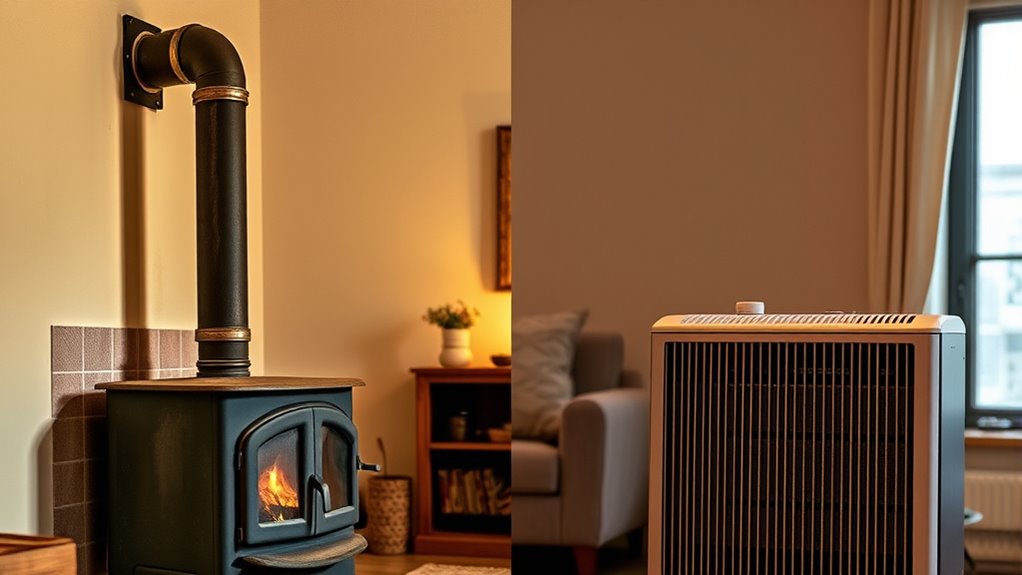
When installing a wood-burning stove, you need to guarantee proper vent placement by following safety regulations, such as positioning the chimney above the roofline and maintaining clearances from windows, doors, and combustibles to prevent smoke or dangerous gases from re-entering your home. Electric heaters, on the other hand, generally don’t require venting but still need proper placement to avoid overheating and electrical hazards. Keep exploring to understand how to optimize safety and efficiency for both options.
Key Takeaways
- Wood-burning stoves require properly placed chimneys and vents to safely expel smoke, gases, and prevent hazards like creosote buildup.
- Electric heaters generally do not need venting, but placement should ensure safety, proper airflow, and prevent overheating.
- Vent placement for wood stoves must follow local safety codes, maintaining clearances from windows, doors, and combustibles.
- Electric heaters’ placement focuses on safety and efficiency, avoiding electrical hazards and ensuring adequate ventilation if vented.
- Proper venting and placement are essential for both types to optimize safety, comply with regulations, and enhance system performance.
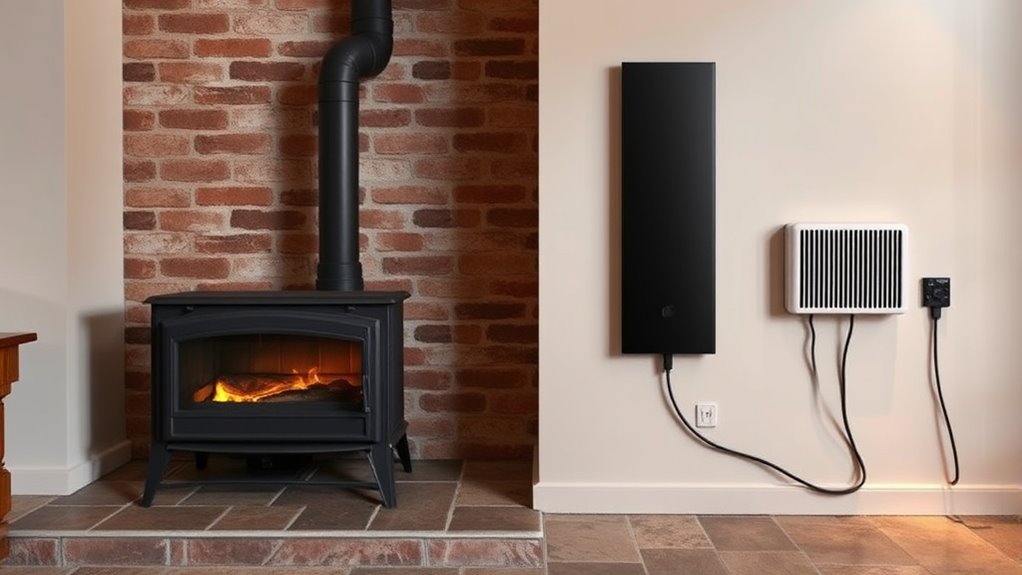
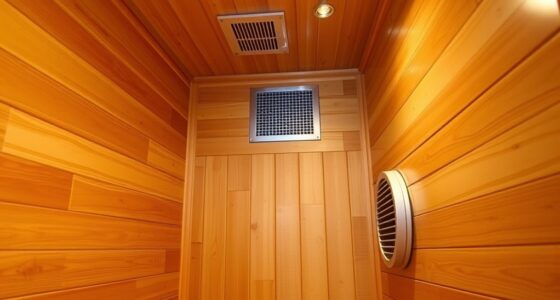
When choosing between a wood-burning stove and an electric heater, understanding proper vent placement is crucial for safety and efficiency. For a wood-burning stove, the chimney design plays a critical role in ensuring smoke, gases, and fumes are safely expelled from your home. The placement of the vent must align with safety regulations to prevent the buildup of dangerous byproducts inside your living space. Proper chimney design involves selecting the right height and diameter to optimize draft and minimize creosote buildup, which can pose fire hazards. You need to ensure the vent terminates well above the roofline, following local codes to avoid smoke drifting back into windows or neighboring properties. Vent placement isn’t just about function—it’s about compliance. Safety regulations specify minimum clearances from windows, doors, and combustible materials, reducing fire risk and exposure to harmful emissions. If these guidelines aren’t followed, you risk carbon monoxide poisoning or accidental fires, which underscores the importance of precise vent positioning. Additionally, affordable venting solutions can help ensure your installation meets safety standards without excessive cost.
For electric heaters, venting is generally unnecessary because they don’t produce combustion byproducts. However, proper placement still matters for safety and efficiency. If your electric heater is part of a larger system, like a vented gas fireplace or a combined setup, the vent placement must be carefully considered. Even without combustion gases, electrical devices can overheat if placed too close to flammable materials or in poorly ventilated areas. Ensuring the heater is positioned according to manufacturer instructions and safety regulations prevents overheating and prolongs its lifespan. Proper clearance around the unit helps maintain safety and allows for adequate airflow, which is essential for efficient operation. While electric heaters don’t require traditional chimneys, some models with venting features for moisture or air circulation still need correct placement to prevent moisture buildup or electrical hazards.
Top picks for "vent placement wood"
Open Amazon search results for this keyword.
As an affiliate, we earn on qualifying purchases.
Frequently Asked Questions
Can Vent Placement Affect Indoor Air Quality Differently for Wood Stoves and Electric Heaters?
Yes, vent placement can affect indoor air quality differently for wood stoves and electric heaters. Proper ventilation strategies guarantee harmful fumes from wood stoves are safely expelled, preventing indoor air contamination. Electric heaters don’t produce combustion byproducts, so vent placement isn’t as critical. You should prioritize good ventilation strategies for wood stoves to maintain healthy indoor air quality, while electric heaters mainly require adequate space and airflow.
Are There Specific Building Codes for Vent Placement of Wood Stoves Versus Electric Heaters?
You’ll want to check local building codes before installing your vent. Specific standards often focus on chimney installation and vent clearance, especially for wood stoves, to guarantee safety and proper ventilation. Electric heaters usually have less stringent requirements but still need proper placement. Always adhere to manufacturer instructions and consult your local codes to prevent problems, promote safety, and ensure proper vent placement for both heating types.
How Does Vent Placement Influence Energy Efficiency in Both Heating Systems?
Proper vent placement directly impacts energy efficiency by preventing vent blockage and promoting ideal air circulation. When vents are correctly positioned, your wood stove or electric heater operates more effectively, reducing energy waste. Avoiding obstructions ensures heat flows smoothly, keeping your space warm without overworking the system. Good vent placement means better air circulation, which enhances the overall efficiency of both systems and helps save energy and costs.
What Safety Considerations Are Unique to Vent Placement for Wood Stoves Compared to Electric Heaters?
Your safety hinges on proper vent placement, especially for wood stoves. You must guarantee ample chimney clearance to prevent fire hazards and use high-quality vent materials to resist heat and corrosion. Unlike electric heaters, improper vent positioning can cause dangerous smoke or carbon monoxide leaks. Always keep vents away from windows and vents, and follow local codes to avoid catastrophe—your home’s safety depends on it!
Does Vent Placement Impact the Lifespan of Either Heating System?
Yes, vent placement can impact the lifespan of your heating system. Proper chimney maintenance and selecting the right vent material are essential. For wood stoves, correct vent placement reduces creosote buildup, preventing chimney damage and prolonging system life. Electric heaters, with less venting, are less affected, but poor placement can cause overheating or inefficiency. Regular inspection and maintenance ensure your system stays efficient and lasts longer.
Conclusion
When choosing between vent placement for wood-burning stoves and electric heaters, remember it’s like directing a race car — precision matters. Proper venting guarantees safety, efficiency, and comfort in your home, preventing dangerous fumes or inefficient heat. Whether you opt for the roaring fire or the quiet hum, correct vent placement is the secret sauce that keeps your heating system running smoothly and your home feeling cozy. Don’t let poor venting turn your warm haven into a dangerous, smoky mess.