To calculate your sauna’s vent size, first find its total volume by multiplying length, width, and height. Then, determine the needed airflow, usually one exchange every 15 minutes—for example, 100 CFM for a 1,500 cu ft sauna. Divide this CFM by the recommended air velocity (around 100 ft/min) to find the vent’s cross-sectional area in square inches. Proper sizing guarantees safe, efficient airflow—keep exploring to learn how to perfect your sauna ventilation setup.
Key Takeaways
- Measure your sauna’s volume by multiplying length, width, and height to determine total cubic footage.
- Use the airflow guideline of one exchange every 15 minutes to calculate the required CFM based on sauna size.
- Divide the needed CFM by the recommended air velocity (100-150 ft/min) to find the vent’s cross-sectional area in square feet.
- Convert the square footage to square inches (multiply by 144) to determine the proper vent size.
- Ensure balanced vent placement and size to maintain efficient airflow, temperature, and humidity levels.
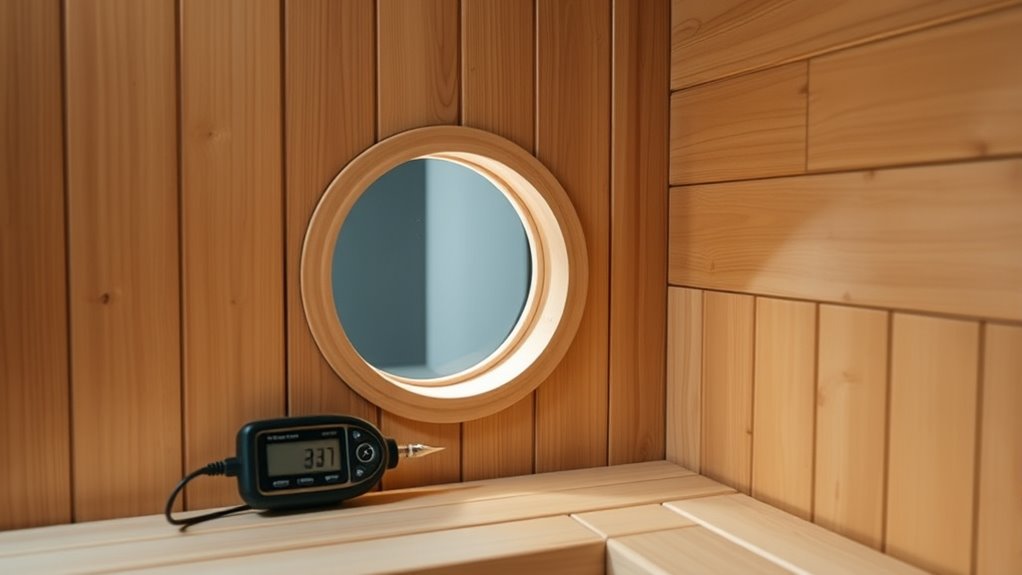
Proper vent sizing is essential to guarantee your sauna maintains safe and efficient airflow. When your ventilation system is correctly designed, it ensures proper ventilation efficiency, which is vital for comfort, safety, and the longevity of your sauna. Without adequate airflow regulation, heat and humidity levels can become uneven, leading to an uncomfortable experience or even potential health hazards. The right vent size allows fresh air to enter and stale air to escape smoothly, creating a balanced environment where the temperature stays consistent and the air remains fresh.
Proper vent sizing ensures safe, efficient airflow for a comfortable sauna experience.
Calculating the appropriate vent size starts with understanding the volume of your sauna. Measure its cubic footage by multiplying length, width, and height. Once you have that number, you can determine the necessary airflow rate, typically expressed in cubic feet per minute (CFM). A general guideline suggests that your ventilation system should exchange the air in the sauna at least once every 15 minutes. For example, if your sauna has a volume of 1,500 cubic feet, you’ll need a ventilation rate that moves at least 100 CFM (1,500 divided by 15). This ensures a steady flow of fresh air and effective airflow regulation.
Next, you’ll want to translate this CFM requirement into vent sizes. The size of your intake and exhaust vents depends on the airflow rate and the recommended air velocity through the vents, usually around 100 to 150 feet per minute. Using these figures, you can calculate the cross-sectional area needed for each vent. For instance, if you aim for an airflow velocity of 100 feet per minute, you divide the CFM by 100, giving you the square footage of the vent opening. Continuing with the previous example, 100 CFM divided by 100 feet per minute equals 1 square foot of vent opening. To convert this to inches, multiply by 144 (since there are 144 square inches in a square foot), resulting in a vent opening of about 144 square inches.
Proper vent sizing isn’t just about meeting a formula; it’s about balancing airflow to optimize ventilation efficiency. Too small vents restrict airflow, causing stale air and uneven heat distribution. Too large vents can lead to excessive airflow, which can cool the sauna too much or cause drafts. Additionally, understanding the types of headphone jacks can be useful if you want to listen to music or instructions while working on your sauna or during relaxation. By calculating the appropriate vent size based on your sauna’s volume and ensuring the vents are properly placed—typically one near the floor for intake and one near the ceiling for exhaust—you can manage airflow effectively. This ensures your sauna stays comfortable, safe, and energy-efficient, providing a consistent and enjoyable experience every time you use it.
Frequently Asked Questions
How Does Ceiling Height Affect Vent Size Requirements?
Ceiling height directly impacts vent size requirements because taller ceilings need more airflow for effective ventilation. You should prioritize airflow optimization by increasing vent size or adding additional vents to guarantee proper air circulation. Proper vent placement is also vital; position vents near the ceiling and floor to promote efficient airflow and prevent heat buildup. Adjusting vent size based on ceiling height helps maintain a comfortable, safe sauna environment.
Can Multiple Vents Improve Sauna Airflow Efficiency?
Yes, multiple vents can improve your sauna’s airflow efficiency. By strategically placing vents, you guarantee better air circulation and even heat distribution. Use durable vent material to withstand high temperatures and humidity. Proper vent placement prevents stagnant air, reduces humidity buildup, and enhances comfort. Installing multiple vents allows fresh air to enter and exhaust air to exit efficiently, creating a safer and more comfortable sauna experience.
What Materials Are Best for Sauna Vents?
You should choose durable, heat-resistant materials like cedar, stainless steel, or aluminum for your sauna vents. These materials withstand high temperatures and moisture without warping or corroding. When installing vents, follow proper vent installation tips, ensuring they’re sealed correctly to prevent air leaks and maintain efficient airflow. Proper material selection and installation help keep your sauna comfortable, safe, and functioning most effectively over time.
How Often Should Sauna Vents Be Cleaned or Inspected?
You should clean and inspect your sauna vents at least once every three to six months. Regular vent cleaning helps prevent dust and debris buildup, ensuring proper airflow. During vent inspection, look for signs of damage, corrosion, or blockages that could hinder ventilation. Maintaining a routine schedule keeps your sauna safe, efficient, and comfortable, ensuring ideal airflow and preventing potential issues caused by poor ventilation.
Are There Specific Regulations for Sauna Ventilation in Different Regions?
You should check regional building codes and ventilation standards for sauna regulations in your area. Many regions have specific ventilation requirements to ensure safety and proper airflow. These standards can vary widely, so it’s essential to verify local regulations before installing or modifying your sauna ventilation system. By following regional codes, you guarantee your sauna remains compliant, safe, and enjoyable for everyone.
Conclusion
Now that you know how to calculate your sauna’s vent size, you’re one step closer to perfect airflow. Proper ventilation guarantees safety, efficiency, and a more enjoyable experience. Did you know that inadequate ventilation can reduce sauna lifespan by up to 30%? So, take your time, do the math, and get those vents right. Your sauna will thank you with consistent heat and a longer life—happy sweating!