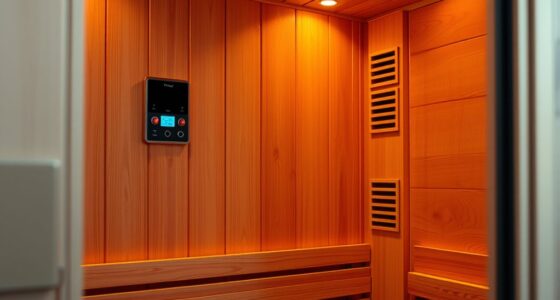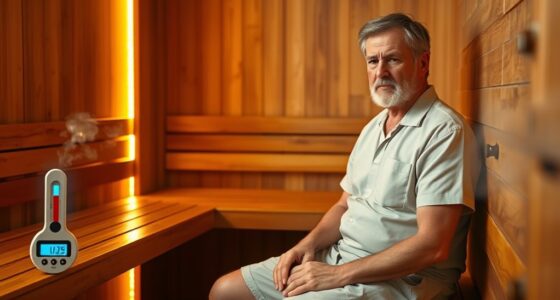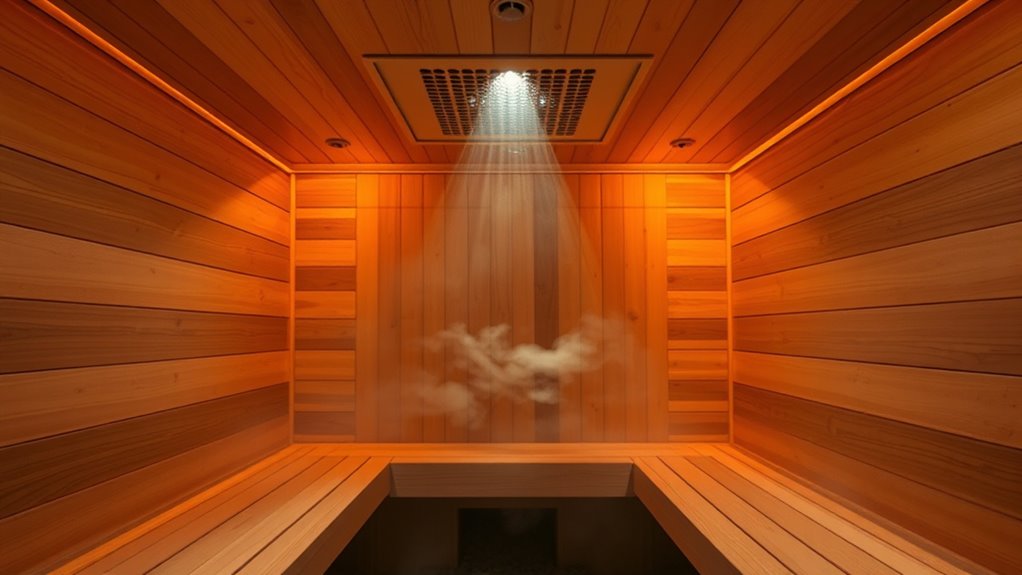
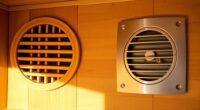
Proper ventilation in your sauna is essential to prevent heat buildup and guarantee safe, comfortable use. It keeps the air fresh by circulating oxygen and removing excess humidity, odors, and toxins. Good airflow prevents uneven temperatures and reduces the risk of mold, bacteria, and structural damage. Without proper ventilation, your sauna can become uncomfortably hot and unsafe. For strategies to improve air quality and maintain ideal conditions, see how ventilation plays a key role.

Get wellness gear delivered free with Prime
- Fast, free delivery on millions of items
- Prime Video, Amazon Music and more included
- Member-only deals all year
Key Takeaways
- Proper ventilation prevents heat buildup, ensuring a safe and comfortable sauna environment.
- It maintains optimal temperature distribution, avoiding hot spots and uneven heat zones.
- Adequate airflow reduces humidity and excess heat, protecting sauna materials from damage.
- Ventilation helps remove toxins and excess moisture, preventing mold and bacterial growth.
- Ensuring proper air exchange enhances safety by reducing dizziness, fatigue, and health risks during use.
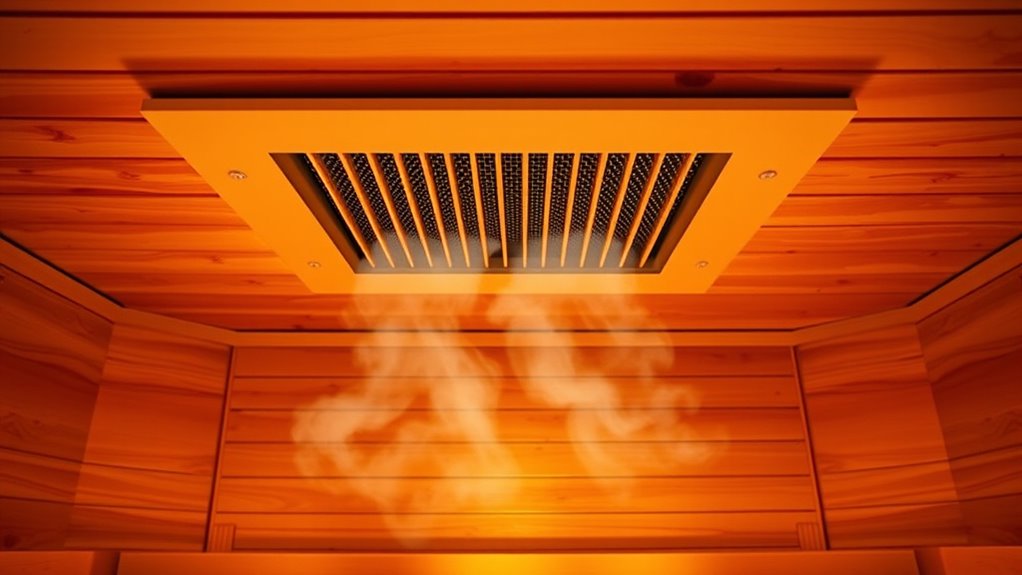
Proper sauna ventilation is vital to guarantee a safe and enjoyable experience. When you step into a sauna, your primary concern should be maintaining the right balance of temperature regulation and air quality. Without proper airflow, heat can quickly become unmanageable, and the air can become stale or filled with excess humidity, making your time inside uncomfortable or even dangerous. Ventilation helps to control the temperature, making sure it stays within a safe range, and it keeps the air fresh, preventing the buildup of unpleasant odors and humidity.
Effective ventilation allows fresh air to circulate continuously, which is essential for maintaining ideal air quality. When you breathe in a well-ventilated sauna, you’re getting oxygen-rich air that helps prevent dizziness or fatigue caused by poor air exchange. Without it, carbon dioxide levels can rise, and the air can become thick and heavy. Proper airflow also helps to remove any toxins or sweat that evaporates during your session, reducing the risk of mold or bacteria growth. By actively managing air quality, ventilation ensures you’re not just comfortable but also safe from potential health hazards. Additionally, using proper ventilation can help prevent heat buildup that could compromise the structural integrity of the sauna over time.
Proper ventilation maintains fresh, oxygen-rich air, preventing dizziness, fatigue, and mold growth for a safer sauna experience.
Temperature regulation is another key aspect that proper ventilation addresses. Saunas generate intense heat, and if this heat isn’t properly vented, it can lead to uneven temperature distribution. You might find some areas excessively hot while others remain cooler, which can disrupt your experience and even cause overheating. Ventilation systems, especially those with adjustable vents or exhaust fans, allow you to regulate the airflow and temperature more precisely. This control helps to keep the sauna temperature consistent and within recommended safety limits, preventing heat buildup that can cause discomfort or health issues.
When you make sure that your sauna has appropriate ventilation, you’re also safeguarding the structure itself. Excess heat and moisture can damage wood and other materials over time, leading to costly repairs or replacements. Good ventilation systems reduce these risks by maintaining a balanced environment, prolonging the lifespan of your sauna. Moreover, proper air circulation minimizes condensation on surfaces, which can otherwise lead to mold and mildew growth, further compromising the integrity and safety of your sauna.
Frequently Asked Questions
How Often Should Sauna Ventilation Be Inspected?
You should inspect your sauna ventilation at least once every three to six months to ensure ideal airflow. Regular ventilation maintenance helps identify any blockages, damage, or buildup that could hinder airflow. By keeping your ventilation system in good shape, you maximize airflow, prevent heat buildup, and maintain a safe, comfortable environment. Frequent inspections are especially important if your sauna is used often or after any renovations.
Can Poor Ventilation Cause Health Issues?
Think of your sauna as a delicate greenhouse, where proper air quality and moisture control keep everything thriving. Poor ventilation can cause health issues like dizziness, respiratory problems, and mold growth, much like a greenhouse with stagnant air and excess moisture. Without fresh air circulation, harmful bacteria and mold can develop, leading to discomfort and health risks. Ensuring good ventilation keeps your sauna safe, healthy, and enjoyable.
What Are Signs of Inadequate Sauna Ventilation?
If you notice poor air quality, excessive moisture, or lingering odors in your sauna, it’s a sign of inadequate ventilation. You might also feel stuffy or notice foggy windows, indicating moisture isn’t being properly controlled. These signs mean your sauna isn’t circulating fresh air effectively, which can lead to discomfort or health issues. Improving airflow with vents or fans can restore proper moisture control and enhance overall air quality.
Is Mechanical Ventilation Necessary in All Saunas?
Mechanical ventilation isn’t necessary in all saunas, but it can be highly beneficial. If your sauna has a ventilation system that facilitates proper air exchange, it helps prevent heat buildup and maintains healthy air quality. In smaller or well-designed saunas, natural airflow might suffice. However, for larger or poorly ventilated spaces, mechanical systems guarantee consistent air exchange, keeping the environment comfortable, safe, and free from excess humidity or odors.
How Does Ventilation Affect Sauna Energy Efficiency?
Good air circulation plays a key role in sauna energy efficiency. When you guarantee proper ventilation, heat regulation improves, leading to less energy waste. Efficient airflow helps maintain consistent temperatures, so your sauna heats up faster and stays warm longer without overworking the heater. By optimizing air circulation, you use energy smarter, saving costs and prolonging your sauna’s lifespan. Proper ventilation isn’t just about comfort—it’s a smart energy choice.
Conclusion
Remember, proper ventilation keeps your sauna safe and comfortable, preventing dangerous heat buildup. Without it, the intense heat becomes overwhelming, risking health and safety. Good airflow might seem simple, but it’s the key to an enjoyable, relaxing experience. Think of ventilation as the quiet guardian—without it, the sauna’s warmth can turn hostile. Prioritize proper airflow, and you’ll enjoy a safer, more pleasant sauna experience every time.
Halloween Picks
halloween
As an affiliate, we earn on qualifying purchases.