This checklist is for people creating a home meditation setup and deciding which technology may support their routine. The picks cover brainwave monitoring, breathing practice, guided sound, and ambient light, alongside advice for choosing a cushion and a focus wearable. Start with your routine and the kind of support you actually want.

Get wellness gear delivered free with Prime
- Fast, free delivery on millions of items
- Prime Video, Amazon Music and more included
- Member-only deals all year
Each section explains why that category may matter, what to check before choosing, and where the named pick fits. The advice-only sections focus on practical selection criteria without recommending a specific product. Fit and compatibility deserve attention: wearable comfort, device controls, and the space where an item will be used can shape whether it works for you.
Use the look-for points to compare options, then read the verdict and suitability notes as a quick screening guide. Product names alone do not establish performance, compatibility, or personal fit, so confirm the details that matter to your setup before buying. Choose for consistency: a tool is most useful when it feels comfortable and easy to include in your practice.
Meditation headband
A meditation headband with EEG monitoring may appeal if you want a wearable component in your practice and are interested in seeing brainwave-related feedback. The key question is whether the device offers a clear, usable experience for the kind of meditation you do. Before choosing the EEG Neurofeedback Headband for Meditation & Brainwave Monitoring, check what it measures, how feedback is presented, and whether any companion app or device is required.
Wearable fit matters during stillness. Check the sizing and adjustment range, where the sensors sit, how the headband is cleaned, and whether its materials feel suitable for longer sessions. Common missteps include assuming a monitoring label guarantees a particular result, overlooking phone or operating-system compatibility, and choosing a device that feels distracting once worn. Look for clear setup instructions and controls you can manage without interrupting your session. If you are sensitive to pressure or prefer a minimal routine, consider whether adding a wearable suits your practice at all. Treat the product name as a category cue, then verify the included features and compatibility directly.
What to look for:
- Sensor placement and adjustment range
- What signals the device reports and how feedback is shown
- Phone, app, and operating-system compatibility
- Cleaning instructions and materials that contact skin
- Setup steps and controls during a session
EEG Neurofeedback Headband for Meditation & Brainwave Monitoring

This portable EEG headband monitors brain activity in real time using advanced sensors, helping users improve focus, relaxation, and sleep through guided meditation and neurofeedback exercises via a companion app. Its comfortable hydrogel sensors ensure stable signal transmission for effective brain training anytime, anywhere.
Pros:
- Real-time brain activity monitoring with advanced sensors
- Guided meditation and neurofeedback exercises via app
- Comfortable hydrogel sensors for stable signals
- Portable and easy to use anywhere
Cons:
- Requires Bluetooth connection to use with app
- Dependent on smartphone compatibility
- Limited information on battery life
Best for: People who want to explore wearable brainwave monitoring during meditation.
Not ideal for: People who prefer an unencumbered, device-free practice.
Bottom line: Check the fit, feedback format, and app requirements before choosing this headband.
Smart meditation cushion
A cushion is a simple but consequential part of an at-home meditation setup because your posture and comfort can affect how readily you settle into a session. Start by considering where you meditate and how you usually sit: cross-legged, kneeling, or on a chair. A cushion should support a position you can maintain comfortably, with stable, comfortable support taking priority over appearance or extra features.
Common buying mistakes include selecting a height without considering flexibility, choosing a shape that does not suit your preferred posture, and overlooking the cover and care instructions. Compare the cushion’s dimensions and height with your body and the floor space available; if possible, try a similar support before committing. Check whether the filling can be adjusted, whether the cover is removable, and how the product is meant to be cleaned. Also consider portability if you store the cushion between sessions. Room to sit naturally is a useful test: your knees, hips, and ankles should not be forced into an uncomfortable position. Since there is no named pick for this slot, use these criteria to compare options and choose the support that best matches your posture and routine.
What to look for:
- Height and dimensions suited to your posture
- Shape that supports your preferred sitting position
- Stable base and appropriate firmness
- Removable cover and clear care instructions
- Portability and storage needs
Biofeedback breathing trainer
A breathing trainer may provide a structured object to use during breathing exercises, but its design and instructions should match the practice you have in mind. The listed pick is the Breathing Exercise Device for Lungs, 3-Ball Breathing Trainer for Reco. Before choosing it, confirm the full product details and intended use; the supplied name is truncated, so it does not establish all features, instructions, or compatibility.
Check how the device is used, what the three-ball mechanism indicates, and whether the instructions are clear for your experience level. Make sure the mouthpiece and other contact surfaces can be cleaned as directed, and review any replacement-part or storage information. A common mistake is assuming that a device labeled for breathing exercise is suitable for every person or every breathing goal. Understand the intended use and follow the product’s own guidance rather than guessing at technique. If you have a health concern or are unsure whether this type of trainer is appropriate for you, seek qualified guidance before incorporating it. Consider the amount of setup and cleaning you are willing to do, since convenience can affect whether a tool becomes part of a routine. Compare the verified instructions and fit with your needs before purchase.
What to look for:
- Complete product name and intended use
- Clear instructions for operating the three-ball design
- Mouthpiece fit and cleaning directions
- Replacement-part and storage information
- Compatibility with your intended breathing practice
Breathing Exercise Device for Lungs, 3-Ball Breathing Trainer for Recovery & Wel

This breathing exercise device features a simple three-ball design to provide visual feedback during inhale, promoting gentle breathing training and respiratory wellness. It is easy to disassemble and clean, making it suitable for daily use at home or in elderly care to support lung health and recovery.
Pros:
- Simple and easy to use with visual feedback
- Supports respiratory health and recovery
- Disassembles easily for cleaning
Cons:
- No precise measurement or resistance control
- Limited to gentle breathing exercises
- Requires manual monitoring of progress
Best for: People seeking a device-based structure for breathing exercises.
Not ideal for: People who want a simple practice without mouth-contact equipment.
Bottom line: Verify the intended use, instructions, and cleaning requirements before choosing this trainer.
Guided meditation speaker
A dedicated sound device can give a meditation session an audible focal point or a guided element, depending on its controls and included content. The listed pick is the Rylaxtones MS-8 Electronic Tibetan Singing Bowl Meditation System. Confirm what the system actually includes, how sound is started and stopped, and whether its operation suits the kind of session you want; the product name alone does not establish its controls or content.
Think about the room where you will use it and how you prefer to listen. Check the available sound controls, power requirements, whether playback is built in or requires another device, and whether headphones or external speakers are supported if that matters to you. Common mistakes include assuming “guided” means particular sessions are included and overlooking how easily the system can be operated from your usual sitting position. Simple session controls help keep attention on practice rather than setup. Consider the speaker’s footprint and where it will sit, especially if your meditation space is shared or needs to be cleared afterward. Review the instructions and included components, then make sure the sound options and setup match your expectations before buying.
What to look for:
- Included sounds or guidance, verified in the product details
- Playback and session controls
- Power requirements and included components
- Headphone or external-speaker support, if needed
- Size and placement in your meditation space
Rylaxtones MS-8 Electronic Tibetan Singing Bowl Meditation System
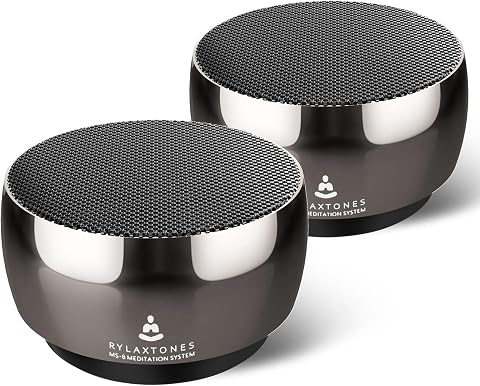
This portable electronic singing bowl system plays stereo meditation tones across eight frequencies and is designed for meditation, yoga, relaxation, and sound therapy. It includes six auto-off timer settings, adjustable volume, and a dual-head USB charging cable; the manufacturer states a full charge takes 120 minutes and provides up to eight hours of use.
Pros:
- Offers eight selectable frequencies for different meditation and relaxation sessions.
- Adjustable volume and six auto-shutoff timer settings provide flexible use.
- Portable design is suited to home, studio, therapy, and travel settings.
- Dual-head USB cable can charge two sound bowl devices simultaneously.
Cons:
- Produces electronic tones rather than requiring or using a traditional physical bowl.
- The dual-head charging cable is intended to charge two devices simultaneously, which may be unnecessary for a single-device setup.
Best for: People who want a dedicated sound device in their meditation space.
Not ideal for: People who prefer silence or use their existing audio setup.
Bottom line: Confirm playback options, controls, and included content before selecting this system.
Focus tracking wearable
A focus-tracking wearable is an optional category for people who want device-based feedback as part of a focus or meditation routine. With no specific product named for this slot, selection should start with what “tracking” means to you: which information you expect to see, how it will be presented, and whether it will help you reflect without pulling attention away. Useful feedback should be understandable and relevant to your routine.
Compare how the wearable fits, how it is charged, whether it needs a phone or app, and how it handles data and account setup. Check compatibility with the devices you already use and whether the reported measures are explained clearly. Common mistakes include treating a tracking label as proof of accuracy, overlooking ongoing app requirements, and choosing a band or sensor that is uncomfortable during stillness. Consider whether you want to review information during a session or only afterward, and check how easily the device can be paused or removed. Comfort and clarity matter more than accumulating measurements. Since this is advice only, use these criteria to evaluate options and confirm details directly with the maker before deciding whether a wearable belongs in your practice.
What to look for:
- Specific information tracked and how it is displayed
- Fit, adjustment range, and comfort during stillness
- Phone, app, and operating-system requirements
- Charging routine and session controls
- Data, account, and privacy details
Ambient light lamp
An ambient light lamp can be considered for a meditation area where lighting is part of the environment you want to create. The named pick is the Circadian Optics Langham Clinical Light Therapy Lamp, 10,000 Lux at 18. Confirm the full listing and intended use, since the supplied product name is cut off and does not describe all controls, dimensions, or setup requirements.
Check the lamp’s size, placement options, power needs, and how its light is controlled. The product name includes a light-output figure and distance, but confirm the manufacturer’s instructions and use guidance rather than assuming that number describes every setup. Common mistakes include choosing a lamp that does not fit the available surface, overlooking glare or room placement, and assuming a light therapy product is automatically appropriate for every person or situation. Placement and instructions deserve careful review. Consider whether the lamp can be positioned without disrupting your meditation posture and whether its controls are easy to reach. If you are evaluating it for a specific health-related purpose, consult qualified guidance and follow the product’s instructions. Compare the verified details with your room and routine before choosing.
What to look for:
- Full product listing and intended use
- Dimensions and placement options
- Power requirements and accessible controls
- Manufacturer guidance on distance and duration
- Light positioning that suits your meditation space
Circadian Optics Langham Clinical Light Therapy Lamp, 10,000 Lux at 18 Inches

This desktop LED light therapy lamp delivers 10,000 lux at 18 inches with full-spectrum, UV-free light at a 5500K color temperature. It has a 22 × 12-inch panel, a dimmable rotary control, and LEDs rated for 50,000 hours.
Pros:
- Provides 10,000 lux at an 18-inch distance.
- Large 22 × 12-inch light panel.
- Full-spectrum, UV-free light with a 98 CRI.
- Dimmable rotary control and LEDs rated for 50,000 hours.
Cons:
- At 15 pounds, it may be heavy to move.
- Designed for desktop mounting.
Best for: People who want a lamp as part of their at-home meditation environment.
Not ideal for: People without a suitable place to position a dedicated lamp.
Bottom line: Verify the full listing, placement needs, and use instructions before selecting this lamp.
Build your setup in a practical order: first choose the basics that make it easy to sit and return regularly, such as a suitable cushion and a comfortable space. Next consider the support you specifically want, whether that is sound, breathing structure, wearable feedback, or a lamp. Prioritize daily usefulness and check compatibility, fit, care, and setup requirements before adding specialized devices.
You do not need every category to create a consistent practice. Pick one change that addresses a real friction point, give yourself time to learn its routine, and adjust if it distracts or feels uncomfortable. A setup that suits you is one you can use with ease and attention.