
After heavy use, you’ll want to first test and balance the water’s pH and sanitizer levels to guarantee ideal conditions. Next, add a recommended amount of shock treatment—either chlorine or non-chlorine—by diluting it in water before pouring evenly across the surface. Run the pump for 15-20 minutes to circulate the chemicals thoroughly. Following these steps helps keep your tub clean and safe, and there’s more to ensure your water stays pristine and balanced.

Get wellness gear delivered free — and shop member deals
- Fast, free delivery on millions of items
- Access to Prime Big Deal Days deals on October 6–7
- Prime Video, Amazon Music and more included
Key Takeaways
- Test water chemistry, ensuring pH is between 7.2–7.8, and sanitizer levels are within recommended ranges.
- Turn on the circulation pump to evenly distribute chemicals during shock treatment.
- Add a non-chlorine or chlorine shock gradually, diluting it in water before pouring into the tub.
- Pour shock chemicals slowly and evenly across the water surface, following product instructions for safety.
- Run the pump for 15–20 minutes post-shock to ensure thorough chemical distribution and water sanitation.
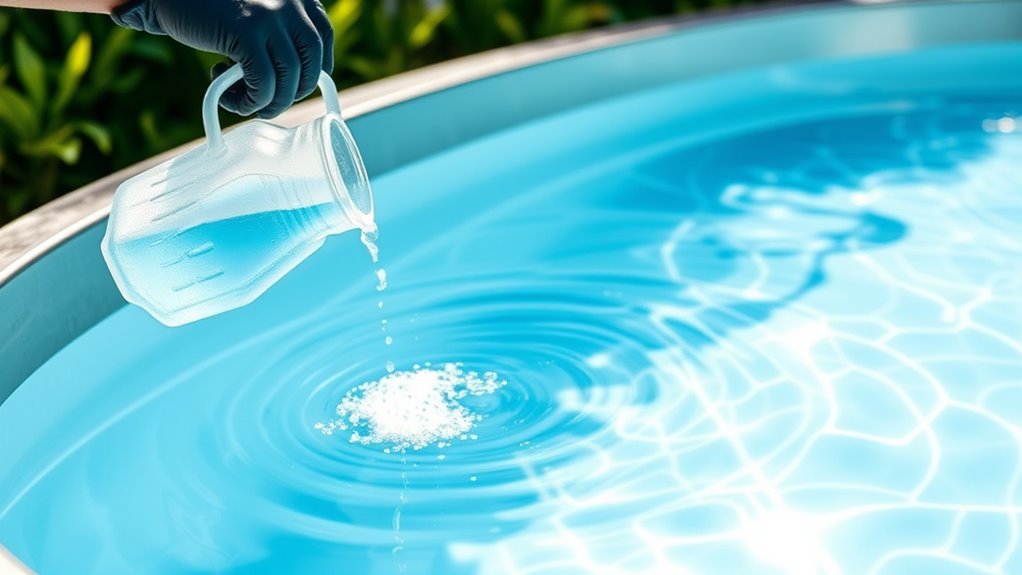
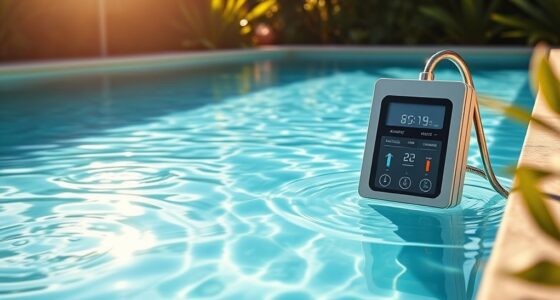
Have you ever wondered how to keep your cold plunge tub clean and safe for regular use? After heavy use, it’s essential to give your tub a proper shock treatment to eliminate bacteria, organic matter, and any buildup that can compromise water quality. The first step is to test the water carefully. Water testing is vital because it lets you gauge the current levels of sanitizer, pH, and other chemicals. Use a reliable test strip or liquid test kit to measure these parameters accurately. You want to guarantee that your water isn’t too alkaline or acidic, as improper chemical levels can lead to cloudiness, algae growth, or skin irritation. Once you’ve identified the current state of your water, you can proceed with the chemical balancing process.
Chemical balancing is the foundation of maintaining a safe, clean cold plunge tub. Before shocking, adjust the pH to the recommended range, typically between 7.2 and 7.8. If the pH is too high or low, add pH increasers or decreasers accordingly, following the manufacturer’s instructions. Proper pH balance maximizes sanitizer effectiveness and helps prevent scaling or corrosion of your equipment. Next, check the sanitizer level—chlorine or bromine—and top it up if necessary. The sanitizer should be within the appropriate range to keep bacteria at bay. Once your water is properly balanced, you’re ready to shock the tub.
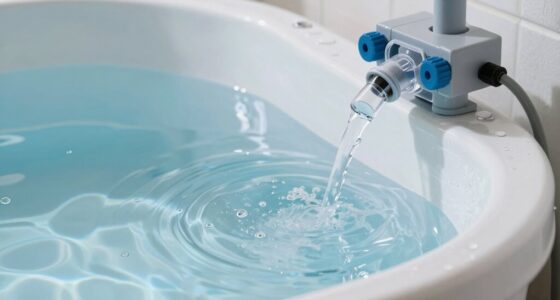
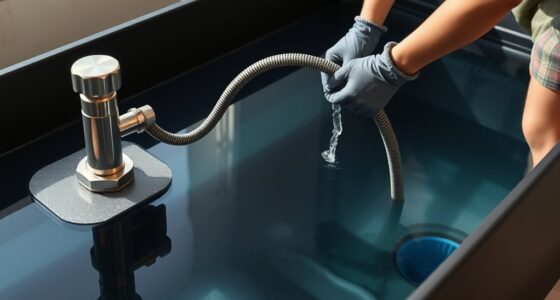
Shocking involves adding a high dose of oxidizer, usually a chlorine-based or non-chlorine shock, to the water. This process rapidly destroys organic contaminants, sweat, oils, and any residual bacteria. To do this safely, turn on your pump and circulation system to guarantee the shock disperses evenly. Follow the instructions on your shock treatment product carefully—most require you to dilute the chemical in a bucket of water before pouring it into the tub. Spread the solution evenly across the surface to achieve uniform distribution. After adding the shock, run the pump for at least 15-20 minutes to circulate the chemicals thoroughly. Regular use of a HEPA filtration system can also help remove airborne contaminants that settle into the water, maintaining overall water clarity and quality.
cold plunge tub water test strips
As an affiliate, we earn on qualifying purchases.
As an affiliate, we earn on qualifying purchases.
Frequently Asked Questions
How Often Should I Shock My Cold Plunge Tub?
You should shock your cold plunge tub weekly, especially after heavy use, to maintain water quality. Use chlorine alternatives or other sanitizers, and always check the pH balance adjustment before shocking. Proper shocking kills bacteria and prevents odors, ensuring safe, clean water. Regular maintenance like this keeps your tub in top shape, making sure every plunge is revitalizing and hygienic.
Can I Use Household Bleach to Shock the Tub?
Imagine you’re cleaning your cold plunge tub after heavy use. Using household bleach might seem quick, but it’s not recommended. Instead, consider bleach alternatives like hydrogen peroxide or specialized spa sanitizers. Always water test your tub after shocking to guarantee safe chlorine or sanitizer levels. This approach keeps your tub safe and clean without risking damage or skin irritation from harsh chemicals.
Is It Necessary to Drain the Tub Before Shocking?
You don’t need to drain your tub before shocking it, but drain maintenance is crucial for ideal cleanliness. Shocking helps eliminate bacteria and buildup, so you can add chemical alternatives like specialized spa shock or chlorine tablets directly to the water. Just ensure your tub’s water is well-mixed, and follow the manufacturer’s instructions for proper dosage. Draining isn’t necessary unless the water is very dirty or contaminated.
How Long Should I Wait After Shocking Before Using the Tub?
You should wait at least 24 hours after shocking your cold plunge tub before using it again. During this time, perform water testing to confirm proper chemical balancing, especially pH and sanitizer levels. Avoid using the tub until test results show safe and balanced water. This waiting period allows the shock treatment to work effectively, ensuring your water stays clean, safe, and comfortable for your next plunge.
What Safety Precautions Should I Take When Shocking the Tub?
When shocking your cold plunge tub, prioritize chemical safety by wearing protective gear like gloves and goggles to prevent skin and eye irritation. Make sure to handle chemicals carefully, following the manufacturer’s instructions. confirm the area is well-ventilated to avoid inhaling fumes. Always keep chemicals out of reach of children and pets. Properly store and dispose of any leftover chemicals to maintain a safe environment and prevent accidents.
pool shock treatment for hot tubs
As an affiliate, we earn on qualifying purchases.
As an affiliate, we earn on qualifying purchases.
Conclusion
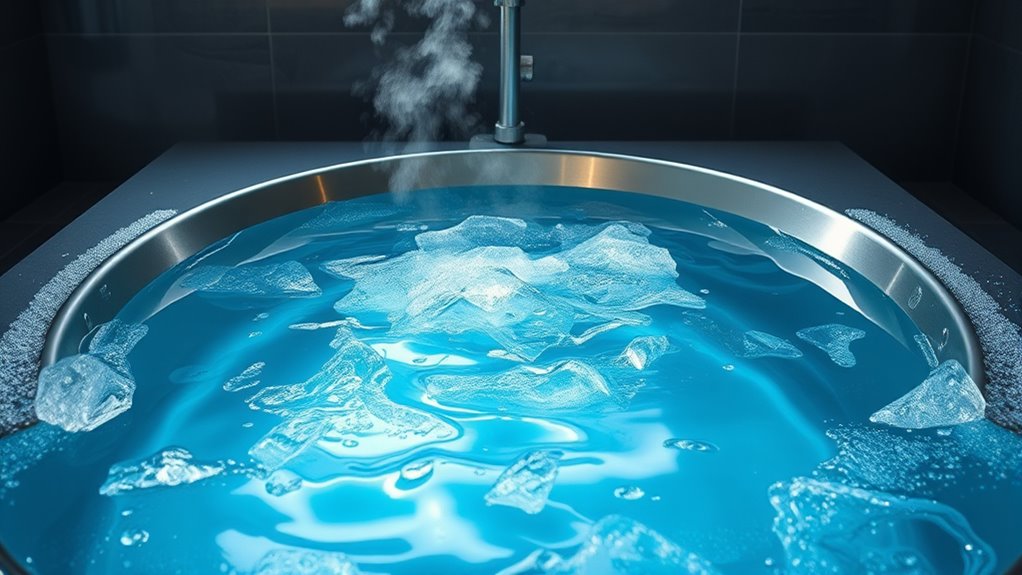
Now that you know how to properly shock your cold plunge tub, imagine the crisp, invigorating splash of water as it clears away residue and impurities. With each shock treatment, your tub becomes a rejuvenating oasis, ready to invigorate your senses after heavy use. Keep the water sparkling and inviting, so every plunge feels like a revitalizing dip into pure, icy clarity. Your tub will thank you with every cool, revitalizing immersion.
As an affiliate, we earn on qualifying purchases.
pH increaser and decreaser for pools
As an affiliate, we earn on qualifying purchases.
As an affiliate, we earn on qualifying purchases.
Fall Picks
fall essentials
As an affiliate, we earn on qualifying purchases.