
To detect leaks in your cold plunge pool, start with visual inspections for cracks, wet spots, or structural issues. Perform a bucket test by comparing water loss in the pool versus a filled bucket to pinpoint leaks. Use dye tests near suspect areas to confirm leak points. Once identified, patch cracks, replace damaged insulation, and seal seams. Proper water chemistry also helps prevent future problems. Keep exploring to discover more detailed methods and repair tips to keep your pool watertight.

Get wellness gear delivered free with Prime
- Fast, free delivery on millions of items
- Prime Video, Amazon Music and more included
- Member-only deals all year
Key Takeaways
- Conduct visual inspections for cracks, wet spots, and surface deterioration to identify potential leak sources.
- Use a dye test near suspect cracks or seams to observe dye absorption indicating leak points.
- Perform a bucket test by comparing water loss in the pool and a submerged bucket for accurate leak detection.
- Address structural issues and replace damaged insulation to prevent further leaks and maintain pool integrity.
- Maintain proper water chemistry to reduce corrosion and material deterioration, minimizing future leak risks.
A leak in your cold plunge pool can quickly turn an invigorating experience into a frustrating problem. When you notice a drop in water level or uneven temperature, it’s easy to suspect a leak. Detecting the source isn’t always straightforward, but understanding how pool insulation and water chemistry play a role can help you pinpoint the issue more efficiently. Your pool’s insulation isn’t just about keeping heat in; it also helps maintain the structural integrity of the pool’s shell. If insulation becomes compromised, it can lead to cracks or weak spots that develop into leaks over time. Checking for damaged or degraded insulation around the pool’s edges and walls should be your first step. Sometimes, insulation issues aren’t immediately visible, so inspecting the pool’s exterior and interior surfaces carefully can reveal cracks or areas where the material has shifted or deteriorated.
Water chemistry also influences leak detection. Imbalanced pH levels or excessive chemicals can corrode pool materials, creating tiny leaks or enlarging existing ones. Maintaining proper water chemistry isn’t just about water quality; it’s a preventative measure that reduces the risk of damage to your pool’s shell. When you’re checking for leaks, consider how your water chemistry might be contributing to the problem. For instance, high acidity can weaken concrete or plaster surfaces, leading to cracks that might leak. Conversely, overly alkaline water can cause mineral buildup, which may obscure small leaks or cause stress points that eventually leak.
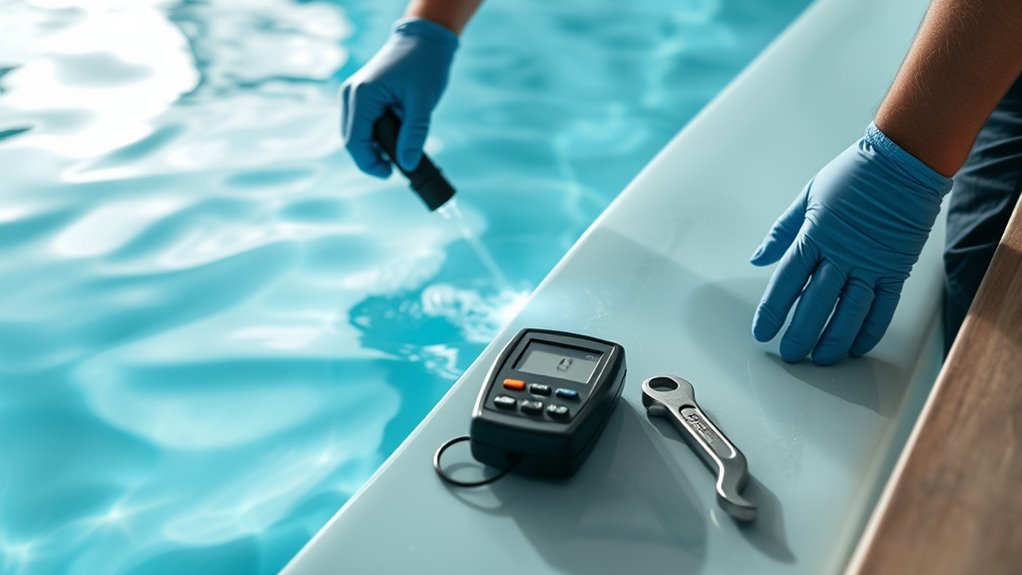
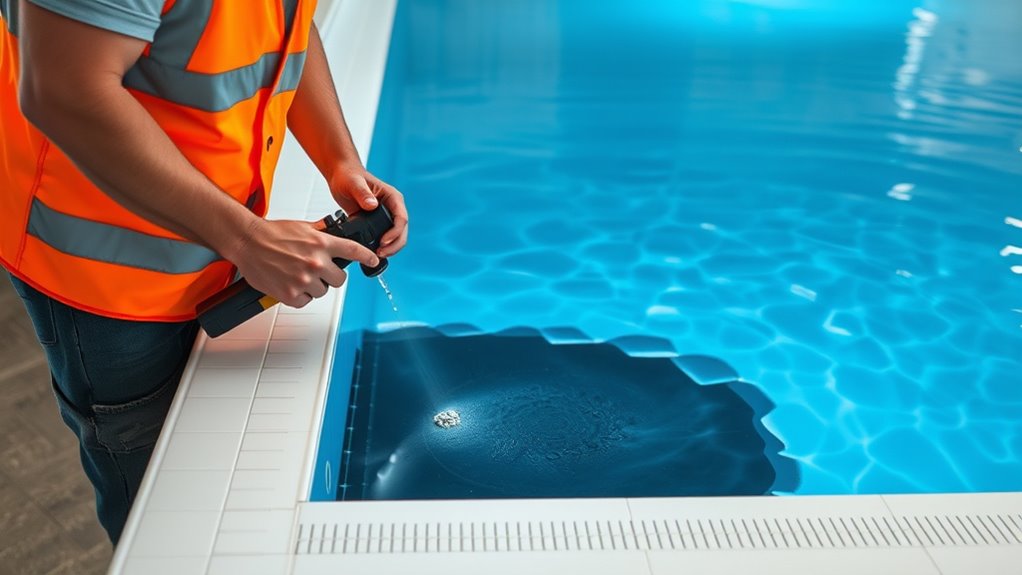
To identify a leak, start by inspecting the pool’s exterior for wet spots or pooling water around the base. Use a simple dye test by adding food coloring near suspicious cracks or seams; if the dye is drawn into the crack, you’ve likely found your leak. Alternatively, you can perform a bucket test: fill a bucket with water, mark the water level, and place it on the pool’s edge. If the pool water drops faster than the water in the bucket, you’re dealing with a leak. When you’ve identified the leak’s location, repairing it might involve patching cracks, replacing damaged insulation, or sealing seams with appropriate pool repair products.
cold plunge pool leak detection kit
As an affiliate, we earn on qualifying purchases.
As an affiliate, we earn on qualifying purchases.
Frequently Asked Questions
How Often Should I Inspect My Cold Plunge Pool for Leaks?
You should inspect your cold plunge pool for leaks at least once a month as part of regular pool maintenance. Regular checks help catch leaks early, preventing costly damage and ensuring leak prevention. Look for signs like unexplained water loss, wet spots around the pool, or changes in water level. Staying vigilant keeps your pool in top shape and avoids surprises, so make leak detection a routine part of your maintenance schedule.
What Tools Are Best for Detecting Hidden Leaks?
Think of yourself as a detective in a noir film, hunting for hidden clues. Use dye testing and electronic sensors to detect leaks effectively. Dye testing involves adding a special dye to pinpoint cracks, while electronic sensors monitor water levels and detect irregular drops. Together, these tools provide a clear picture of leaks, helping you act swiftly. Combining both methods maximizes your chances of finding even the most hidden leaks.
Can a Leak Cause Damage to the Pool’s Foundation?
Yes, a leak can cause damage to your pool’s foundation. As water escapes, it can erode the surrounding soil, leading to foundation instability and compromising the pool’s structural integrity. Over time, this may result in cracks, settling, or even collapse. To prevent foundation damage, it’s essential to detect leaks early and repair them promptly, ensuring your pool remains safe and secure.
Are There Eco-Friendly Methods to Fix Pool Leaks?
Yes, you can use eco-friendly repair methods for pool leaks, such as sustainable leak detection techniques like dye testing or infrared imaging that minimize chemical use. For fixing leaks, eco-conscious options include non-toxic sealants and biodegradable patch materials. These sustainable leak detection and repair methods help protect the environment while maintaining your pool’s integrity, ensuring you enjoy your cold plunge without harming nature.
How Long Does It Typically Take to Repair a Leak?
The repair timeline for a leak varies based on the severity and location, but generally, it takes anywhere from a few hours to a couple of days. First, you’ll need to perform leak detection to pinpoint the issue. Once identified, the actual repair can be quick if it’s a minor fix, or longer if it involves extensive sealing or replacing parts. Planning accordingly guarantees a smoother repair process.
As an affiliate, we earn on qualifying purchases.
Conclusion
Think of your cold plunge pool as a delicate spaceship steering through water. When you spot a leak, it’s like a tiny asteroid threatening your journey. By detecting and fixing it early, you keep your vessel seaworthy and your cool-down sessions uninterrupted. Stay vigilant, act quickly, and your pool will remain a steady, invigorating oasis. With a little care, you’ll guarantee your icy adventure stays smooth sailing every time.
As an affiliate, we earn on qualifying purchases.
As an affiliate, we earn on qualifying purchases.
Fall Picks
fall essentials
As an affiliate, we earn on qualifying purchases.