To remove odors using activated carbon filters, place them in areas with strong smells like kitchens or bathrooms and ensure proper maintenance by replacing them every 1-3 months. Regularly keep surrounding surfaces clean and check that filters aren’t clogged or saturated. Follow the manufacturer’s instructions for installation and care to maximize their effectiveness. Proper placement and upkeep will improve air quality markedly—if you want to learn more about making the most of these filters, keep exploring the tips ahead.
Key Takeaways
- Place activated carbon filters in areas with persistent odors like kitchens or bathrooms for optimal odor absorption.
- Replace filters every 1-3 months or when indicator lights signal saturation to maintain effectiveness.
- Keep surroundings clean by regularly vacuuming or wiping vents to prevent dust buildup that can clog filters.
- Avoid placing filters in high humidity or direct sunlight, which can reduce their odor-neutralizing capabilities.
- Follow manufacturer instructions for installation and maintenance to ensure maximum odor removal and filter longevity.
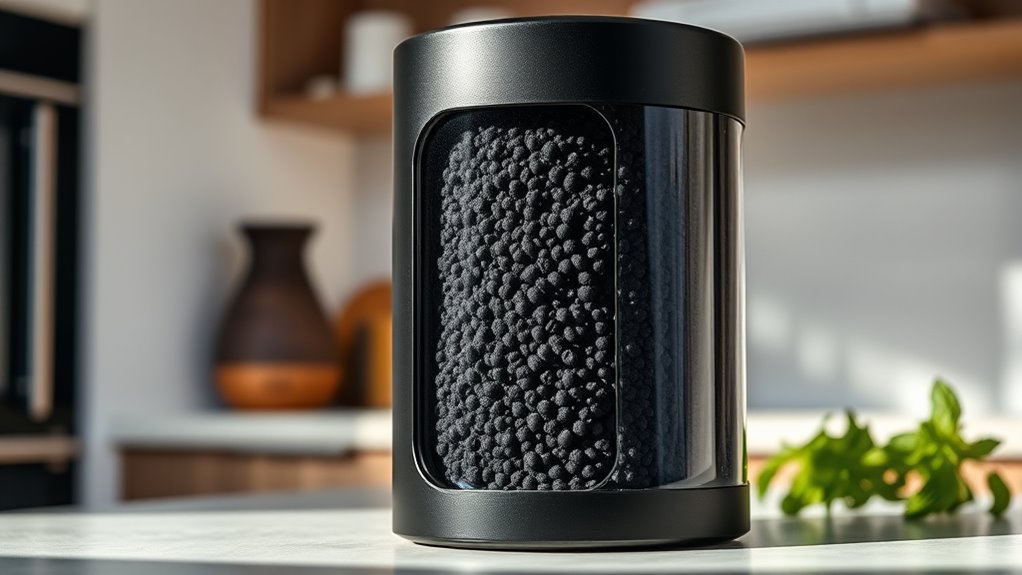
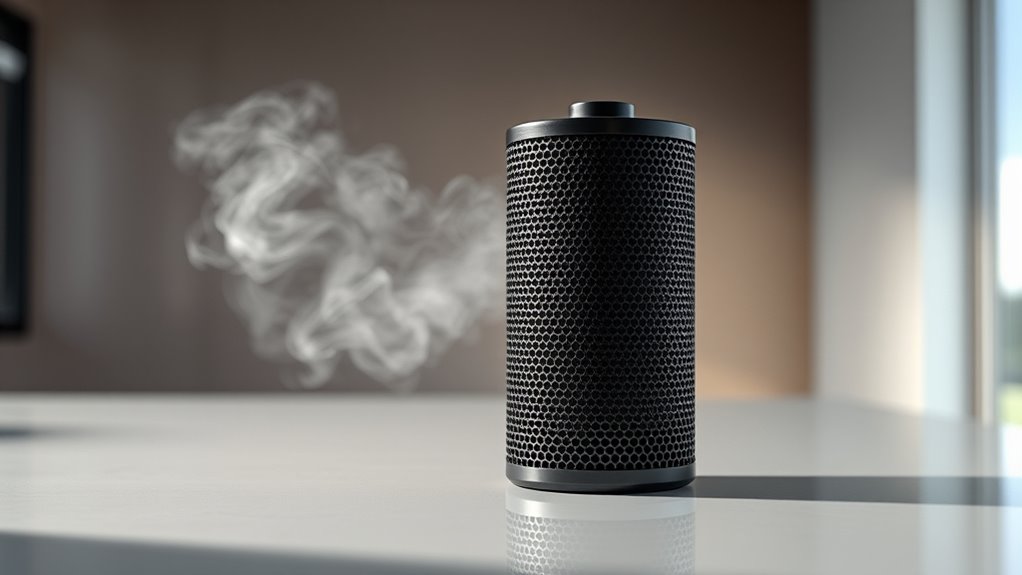
If you’re tired of persistent odors in your home or office, activated carbon filters offer an effective solution. These filters excel at air purification by trapping airborne particles and neutralizing unwanted smells. Unlike sprays or fragrances that mask odors temporarily, activated carbon works on a molecular level to absorb and eliminate odors altogether. This makes them ideal for tackling persistent smells from cooking, pets, smoke, or mold. When considering an activated carbon filter, it’s vital to understand how to maintain it properly to guarantee ideal performance and longevity.
Proper maintenance of your activated carbon filter starts with regular replacement. Over time, the carbon becomes saturated with odor molecules and loses its ability to absorb new odors. Depending on the level of odor and air quality, you may need to change the filter every one to three months. Some units come with indicator lights that signal when it’s time for a replacement, but if yours doesn’t, make a habit of inspecting the filter monthly. An overly saturated filter not only reduces air purification efficiency but can also become a breeding ground for mold or bacteria, which could worsen indoor air quality.
Another key maintenance tip is to keep the surrounding area clean and free of dust and debris. Dust accumulation can clog the filter, decreasing its effectiveness, so vacuum or wipe down vents and surfaces regularly. If your filter is part of a larger air purification system, guarantee that the pre-filters are cleaned or replaced as recommended by the manufacturer. This step prevents larger particles from reaching and clogging the activated carbon, extending the lifespan of your main filter.
Placement also plays an indispensable role in maximizing odor removal. Position your activated carbon filter in areas where odors are most concentrated, such as kitchens, bathrooms, or laundry rooms. Avoid placing it in areas with direct sunlight or high humidity, as excessive moisture can reduce the effectiveness of the activated carbon. Additionally, keep the filter away from sources of pollution or chemical fumes that might overwhelm its capacity.
Lastly, always follow the manufacturer’s instructions for maintenance and replacement. Proper care guarantees that your activated carbon filter continues to provide ideal air purification, effectively removing odors and improving indoor air quality. By staying on top of maintenance tips, you’ll enjoy fresher air and a healthier environment, all while prolonging the life of your filter investment. Remember, regular upkeep is fundamental to harnessing the full benefits of activated carbon filters for odor removal.
activated carbon air filter for odor removal
As an affiliate, we earn on qualifying purchases.
As an affiliate, we earn on qualifying purchases.
Frequently Asked Questions
How Long Do Activated Carbon Filters Typically Last?
Activated carbon filters typically last about 3 to 6 months, depending on usage and air quality. You should check the filter’s lifespan regularly, as the filter’s effectiveness decreases over time. Replacement frequency varies based on how much odor or contaminants you’re filtering, so it’s best to replace it as soon as you notice a drop in performance. Regular maintenance guarantees maximum odor removal and keeps your air fresh.
Can Activated Carbon Filters Remove All Types of Odors?
Think of activated carbon filters as your odor-busting sidekicks; they’re great but not invincible. They can remove many types of odors, like smoke, pet smells, and VOCs, yet they have their limitations. Some strong or persistent odors, such as chemical fumes or certain mold spores, might slip through. So, while they’re versatile, you’ll want to combine them with other solutions for complete odor elimination.
Are Activated Carbon Filters Safe for Pets and Children?
Activated carbon filters are generally safe for pets and children, but you should make sure they are high-quality and properly maintained. They effectively reduce chemical emissions and odors without releasing harmful substances. However, avoid filters with added chemicals or fragrances. Keep filters out of reach of children and pets to prevent ingestion. Regularly replacing the filter helps maintain safety and efficiency, giving you peace of mind about pet safety and indoor air quality.
How Often Should I Replace My Activated Carbon Filter?
You should replace your activated carbon filter every 1 to 3 months, depending on its odor absorption capacity and your air quality. Regular filter maintenance guarantees proper performance and prevents odors from lingering. Check the manufacturer’s guidelines, as filters with higher odor absorption capacity last longer, but all filters eventually become saturated. Keep an eye out for reduced effectiveness or a noticeable decrease in air freshness, and replace accordingly to keep your environment clean.
Do Activated Carbon Filters Affect Air Humidity Levels?
Like a sponge soaking up spilled wine, activated carbon filters mainly absorb odors and gases, so they don’t substantially impact air humidity. They focus on odor absorption, leaving your air’s moisture levels unchanged. You can trust that using these filters will clear out unwanted smells without altering the humidity in your space. Keep in mind, their primary role is odor removal, not humidification or dehumidification.
carbon filter replacement for air purifier
As an affiliate, we earn on qualifying purchases.
As an affiliate, we earn on qualifying purchases.
Conclusion
Think of activated carbon filters as a sponge soaking up odors, leaving your space clean and invigorating. When you use them, you’re effectively turning your environment into a gust of fresh air, free from unwanted smells. Just like a wise gardener tends to their plants, caring for your filter ensures it continues to absorb odors efficiently. With proper use, these filters become your silent guardians, transforming your space into a fragrant sanctuary you can truly enjoy.
kitchen odor absorbing activated carbon filter
As an affiliate, we earn on qualifying purchases.
As an affiliate, we earn on qualifying purchases.
bathroom air purifier with activated carbon filter
As an affiliate, we earn on qualifying purchases.
As an affiliate, we earn on qualifying purchases.