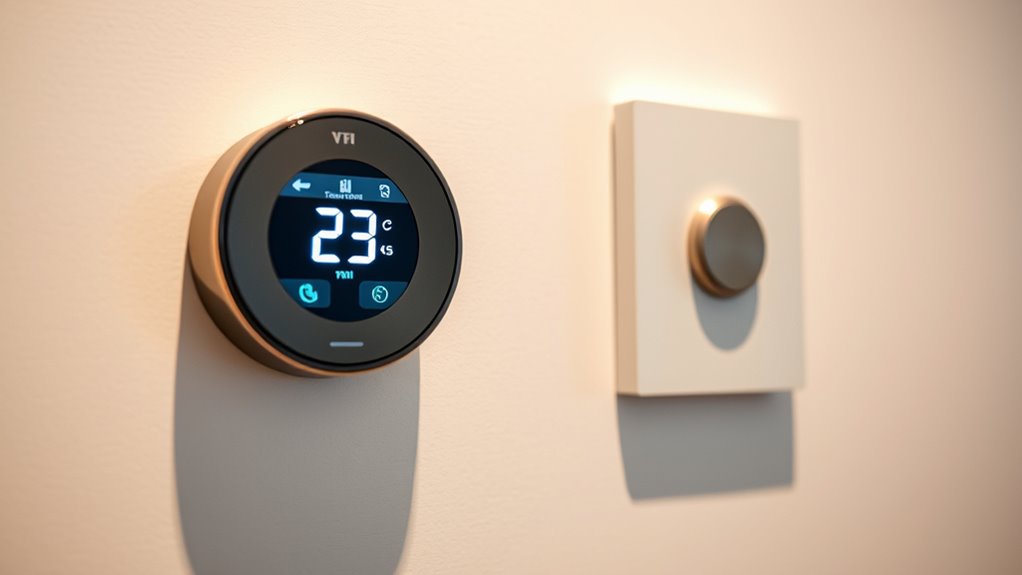

Temperature sensors detect the current environment temperature and send signals to the thermostat. The thermostat compares this data to your desired setting and activates heating or cooling systems accordingly. Modern thermostats, especially smart ones, adjust automatically or can be programmed for efficiency. Proper calibration guarantees accurate readings, preventing discomfort or energy waste. By understanding how sensors and thermostats work together, you’ll gain control over maintaining a comfortable space—exploring further reveals how to optimize your system effectively.

Get wellness gear delivered free with Prime
- Fast, free delivery on millions of items
- Prime Video, Amazon Music and more included
- Member-only deals all year
Key Takeaways
- Temperature sensors detect actual environmental heat levels and send data to the thermostat for decision-making.
- Thermostats compare sensor readings to user-set target temperatures to determine heating or cooling needs.
- Proper calibration of sensors ensures accurate temperature detection, allowing the thermostat to respond correctly.
- Smart thermostats use advanced sensors and algorithms to automatically adjust heat based on habits and conditions.
- The combined operation of sensors and thermostats maintains a consistent, comfortable environment while optimizing energy use.
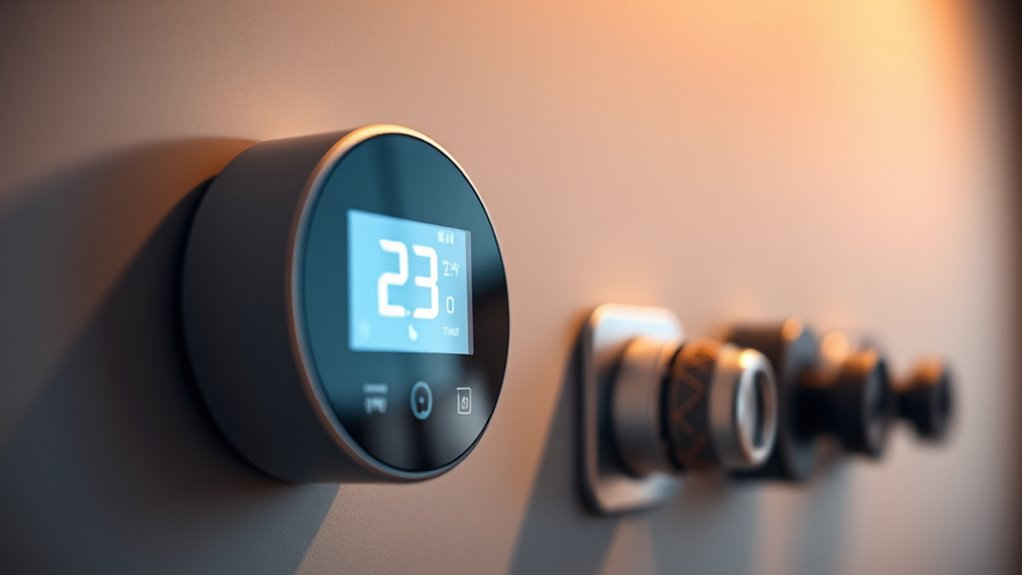
Temperature sensors and thermostats play a essential role in maintaining comfortable and efficient environments by accurately detecting and controlling temperature levels. When it comes to guaranteeing your heating and cooling systems work seamlessly, understanding how these devices function is fundamental. One key aspect is sensor calibration, which involves fine-tuning the sensor to produce precise temperature readings. Proper calibration ensures that the thermostat responds correctly to actual temperature changes, preventing unnecessary energy consumption or discomfort. If your sensor isn’t properly calibrated, you might find your space too cold or too hot, despite the thermostat indicating otherwise. Calibration is often done during installation or maintenance, and some modern sensors have self-calibrating features to keep readings accurate over time.
Proper sensor calibration ensures accurate temperature readings for optimal comfort and energy efficiency.
Thermostats come in various types, each suited for different environments and preferences. Mechanical thermostats, for example, use bimetallic strips or mercury bulbs to regulate temperature, but they can be less precise and more prone to wear over time. Digital thermostats, on the other hand, use electronic sensors that provide more precise readings and allow for programming schedules, making them more energy-efficient and user-friendly. Smart thermostats take it a step further by connecting to Wi-Fi, enabling remote control via smartphone apps and learning your habits to enhance heating and cooling patterns automatically. These different thermostat types cater to a broad range of needs, from simple temperature regulation to complex, energy-saving automation.
The choice of thermostat type also influences how your temperature sensors are integrated and calibrated. For instance, smart thermostats often include advanced sensors that can be calibrated through software updates, ensuring ongoing accuracy. Meanwhile, traditional mechanical thermostats rely on manual adjustments to account for any inaccuracies. Understanding the differences in thermostat types helps you select the right device for your environment, guaranteeing that sensor calibration is correctly performed for top performance. Proper calibration and selection of the appropriate thermostat type are essential steps that can greatly impact comfort, energy savings, and system longevity.
Ultimately, whether you’re upgrading your system or maintaining an existing one, paying attention to sensor calibration and choosing the right thermostat type guarantees your heating and cooling systems operate efficiently. Accurate sensors and well-matched thermostats make a difference in how precisely your environment is regulated, saving you money and enhancing comfort. By understanding these elements, you take control of your climate management, making your space more comfortable and energy-efficient.
digital temperature sensor for HVAC
As an affiliate, we earn on qualifying purchases.
As an affiliate, we earn on qualifying purchases.
Frequently Asked Questions
How Do Temperature Sensors Detect Rapid Temperature Changes?
You can expect temperature sensors to detect rapid temperature changes through their quick sensor response times. They constantly monitor the environment and immediately identify temperature fluctuation detection, allowing the system to react swiftly. This rapid response guarantees your heating or cooling system adjusts promptly to maintain a stable temperature, preventing overheating or overcooling. The sensors’ sensitivity and speed are essential in accurately capturing sudden changes in temperature.
Can Thermostats Be Programmed Remotely via Smartphone Apps?
Yes, many thermostats are smartphone compatible, allowing you to control them remotely via dedicated apps. You can easily adjust your home’s temperature from anywhere, enabling remote temperature adjustment for your comfort. With smartphone compatibility, you don’t need to be home to change settings, making it convenient to optimize your heating or cooling system. Just verify your thermostat supports this feature and that you have a stable internet connection.
What Is the Lifespan of Common Temperature Sensors?
Sensor lifespan tends to vary, but generally, you can expect your temperature sensors to last around 8 to 15 years. You should monitor their durability and regularly calibrate them to maintain accuracy. Proper maintenance guarantees sensors stay precise, preventing premature failure. With careful calibration and consistent care, you extend their life, ensuring your thermostat continues to function flawlessly, providing reliable regulation and keeping your environment perfectly comfortable.
How Do Thermostats Differentiate Between Heating and Cooling Needs?
You set your thermostat to specific temperature points, and it uses sensor calibration to detect whether the space is too hot or cold. When it senses a deviation, it switches between heating and cooling modes, ensuring comfort. You should check thermostat compatibility with your sensors to guarantee proper operation. This way, your system accurately responds to environmental changes, preventing overheating or overcooling, and maintaining a consistent indoor climate.
Are There Eco-Friendly or Energy-Efficient Thermostat Options Available?
Think of eco-friendly options as your home’s smart shield against waste. Yes, plenty of energy-efficient solutions exist, like programmable and Wi-Fi thermostats, that lower energy use while maintaining comfort. These eco-friendly options help you save money and reduce your carbon footprint. Investing in such thermostats makes your home smarter and greener, ensuring you’re doing your part for the environment while enjoying a cozy living space.
As an affiliate, we earn on qualifying purchases.
Conclusion
So, next time you crank up that thermostat or marvel at your fancy sensor, remember—they’re just tiny heroes fighting off the chaos of inconsistent temperatures. Without them, your home’s climate control would be a wild rollercoaster ride. So, give a little nod to those unsung gadgets—without them, you’d be stuck in a never-ending game of hot and cold, probably with fewer snacks and more sweaty socks. Stay cool, or warm, depending on your trusty sensors!
temperature sensor calibration kit
As an affiliate, we earn on qualifying purchases.
As an affiliate, we earn on qualifying purchases.
programmable thermostat with sensors
As an affiliate, we earn on qualifying purchases.
As an affiliate, we earn on qualifying purchases.
Fall Picks
fall essentials
As an affiliate, we earn on qualifying purchases.