
If you have a heart condition, you can still enjoy sauna sessions safely by staying well-hydrated, limiting your time to about 10-15 minutes at temperatures around 150-160°F, and listening carefully to your body. Avoid overexerting yourself and consider starting with lower heat. Always consult your healthcare provider before using a sauna to ensure it’s safe for your specific condition. Continue exploring these safety tips to help you make informed decisions.
Key Takeaways
- Consult your healthcare provider before using a sauna, especially if you have a heart condition.
- Stay well-hydrated before, during, and after sessions to prevent dehydration and support heart health.
- Limit sauna sessions to 10-15 minutes at moderate temperatures (150-160°F) and listen for signs of distress.
- Start with lower heat levels and gradually increase to avoid overexertion and cardiovascular stress.
- Monitor your body’s response and exit immediately if you experience dizziness, chest discomfort, or shortness of breath.
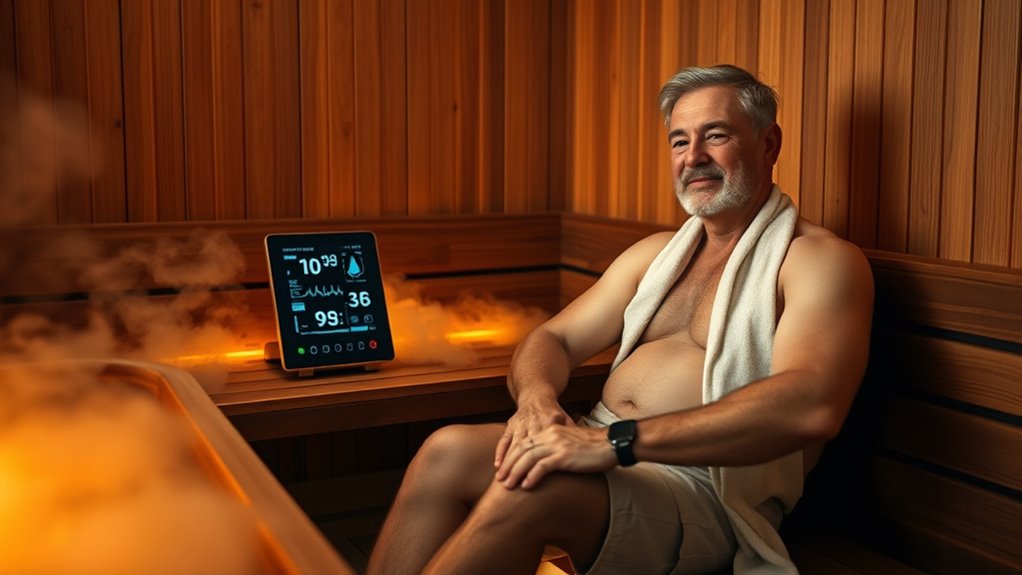
Using a sauna can offer potential health benefits, even for those with certain heart conditions. However, it’s vital to approach sauna use with caution and awareness of your body’s signals. One of the most important aspects is maintaining proper hydration. Hydration tips include drinking plenty of water before, during, and after your session to prevent dehydration, which can be a risk in hot environments. Dehydration can cause blood pressure fluctuations and make your heart work harder, so staying well-hydrated helps support your cardiovascular health. Also, avoid alcohol or caffeine before sauna sessions, as these can contribute to dehydration and impair your body’s ability to regulate temperature effectively.
Stay well-hydrated before, during, and after sauna to support your heart health and prevent dehydration.
Temperature safety is equally paramount. Saunas typically operate at high temperatures, but you should always start with a lower heat setting to see how your body responds. Many health experts recommend keeping the temperature around 150-160°F (65-70°C), especially if you have a heart condition. Never push yourself to stay longer than your comfort allows; limit your sessions to 10-15 minutes initially. Listen carefully to your body—if you experience dizziness, chest discomfort, or shortness of breath, exit the sauna immediately and seek medical advice. Remember, your goal is to enjoy the benefits without overtaxing your heart.
To further guarantee temperature safety, consider using a timer to keep track of your session length and avoid prolonged exposure to intense heat. It’s also helpful to sit on a towel to absorb sweat and maintain comfort, which can help prevent overheating. If you’re new to sauna use, consult your healthcare provider beforehand, especially if you have a history of heart issues, high blood pressure, or other health concerns. Your doctor might recommend monitoring your heart rate during sessions or suggest specific precautions tailored to your condition.
Incorporating these hydration tips and temperature safety measures allows you to enjoy the potential benefits of sauna use while minimizing risks. Be mindful of how your body feels and don’t hesitate to cut your session short if necessary. Regular, cautious use can promote relaxation, improve circulation, and support overall well-being. Additionally, choosing appropriate sauna settings and durations based on your individual health status can further optimize safety and benefits. Just remember, prior consultation with your healthcare provider and diligent attention to hydration and temperature safety are key to making sauna sessions both safe and beneficial for your heart health.
As an affiliate, we earn on qualifying purchases.
Frequently Asked Questions
Can Saunas Help Improve Heart Health?
Saunas can support your heart health by promoting hydrotherapy benefits, like improved circulation and relaxation. The heat helps your blood vessels expand, which can lower blood pressure over time. Plus, sauna detox effects encourage your body to eliminate toxins, enhancing overall cardiovascular function. Just remember to stay hydrated and consult your doctor if you have heart concerns, ensuring safe and effective use to maximize these health benefits.
Are There Specific Sauna Temperatures Safer for Heart Patients?
For heart patient safety, it’s best to keep your sauna temperature moderate, around 150-160°F (65-70°C). Higher temperatures can strain your heart, so avoid exceeding this range. Always listen to your body and consult your doctor before using a sauna. Staying in for shorter periods and cooling down gradually will help you enjoy the benefits safely without overexerting your heart.
How Long Should Heart Patients Stay in a Sauna?
A sauna session shouldn’t last more than 10-15 minutes, even if you’re seeking the incredible hydrotherapy benefits. Staying too long can overexert your heart, risking serious issues. Keep your sauna visits short and sweet, listening to your body. Always consult your doctor for personalized advice, but generally, limited duration helps you enjoy the relaxing effects without overtaxing your heart during the session.
Can Sauna Use Replace Medical Treatment for Heart Conditions?
Sauna use shouldn’t replace medical treatment for heart conditions. While it can be an enjoyable part of alternative therapies, it is crucial to follow sauna safety guidelines and consult your doctor before use. Relying solely on sauna sessions may overlook underlying health issues or necessary medications. Always prioritize professional medical advice and treatment plans, using saunas as a complementary activity rather than a substitute for proven heart care.
Are There Signs to Stop Sauna Use Immediately?
If you notice warning signs like chest pain, dizziness, or shortness of breath while in the sauna, stop immediately—think of it as hitting a red alert button. Your body’s signals are the emergency siren, and ignoring them could be dangerous. Follow emergency procedures by exiting calmly, cooling down, and seeking medical help if symptoms persist. Always listen to your body’s warnings; they’re your safest guide.
hydration water bottle for sauna
As an affiliate, we earn on qualifying purchases.
As an affiliate, we earn on qualifying purchases.
Conclusion
Remember, your heart is like a delicate flame—bright yet sensitive. Using a sauna safely can be a comforting retreat, but always listen to your body and follow your doctor’s advice. Think of it as dancing with a gentle breeze—balancing relaxation and caution. When approached thoughtfully, sauna sessions can become a soothing sanctuary on your journey to wellness, offering warmth and peace without risking the fragile rhythm of your heart.
personal sauna temperature monitor
As an affiliate, we earn on qualifying purchases.
As an affiliate, we earn on qualifying purchases.
As an affiliate, we earn on qualifying purchases.