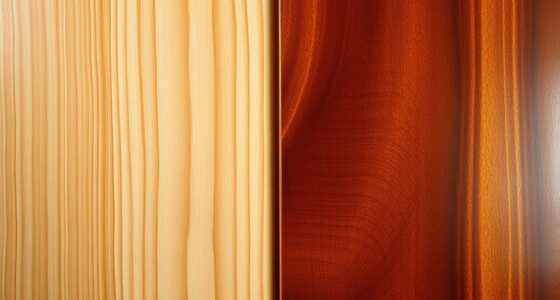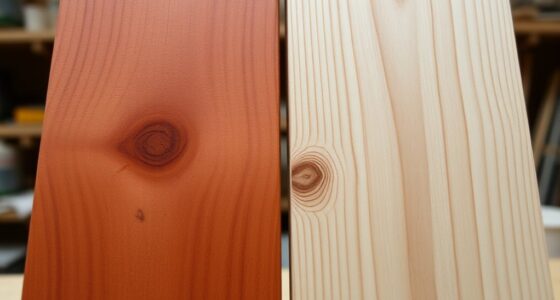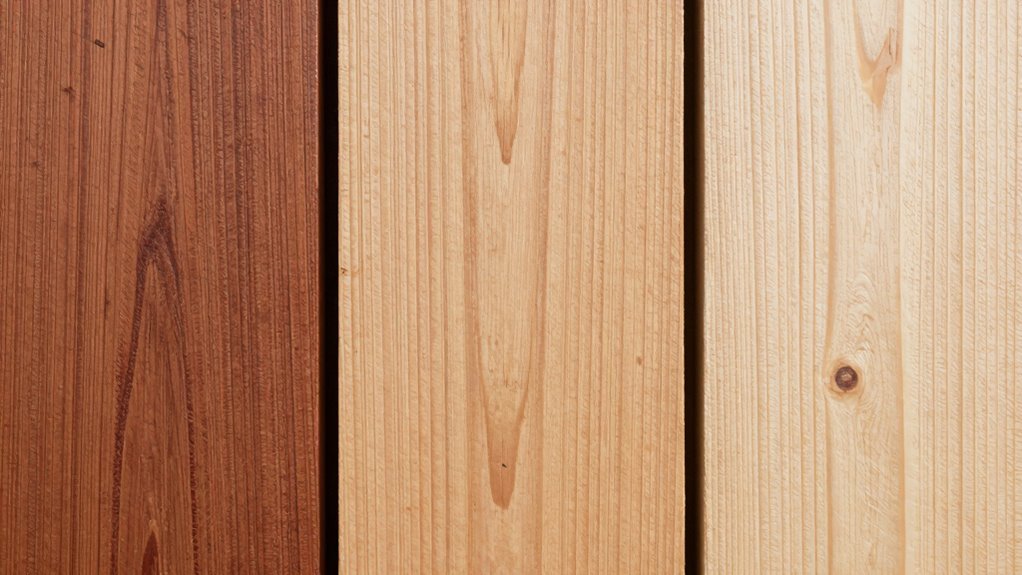
If you want a low-maintenance, long-lasting wood, consider thermowood for outdoor projects because it resists moisture and pests without chemicals. Cedar is affordable and naturally resistant but may need more upkeep over time. Hemlock is softer and better for indoor use, requiring regular treatment to last. Choosing the right wood now can save you years of repairs and costs. Keep exploring to find which option best fits your needs.
Key Takeaways
- Thermowood offers superior durability and moisture resistance, reducing long-term maintenance and replacement costs.
- Cedar’s natural oils provide good decay resistance, making it ideal for outdoor projects with minimal treatment.
- Hemlock is softer and less durable, better suited for indoor use or projects requiring less exposure to weather.
- Higher upfront costs of thermowood are offset by its longer lifespan and lower maintenance needs.
- Choosing environmentally friendly woods like cedar or thermowood contributes to sustainable, long-lasting investments.

Premium Acacia Wood Interlocking Deck Tiles, 9 PCS 12"x12"x0.9" Patio Flooring, Outdoor Waterproof Decking Tiles for Balcony, Backyard & Patio, All Weather Use (Golden Teak – Striped Pattern)
Tool-Free Click Installation – Snap together in minutes. No tools. Easy to remove and re-install.
As an affiliate, we earn on qualifying purchases.
As an affiliate, we earn on qualifying purchases.
Which Wood Is Best for Your Needs? Comparing Durability, Cost, and Maintenance
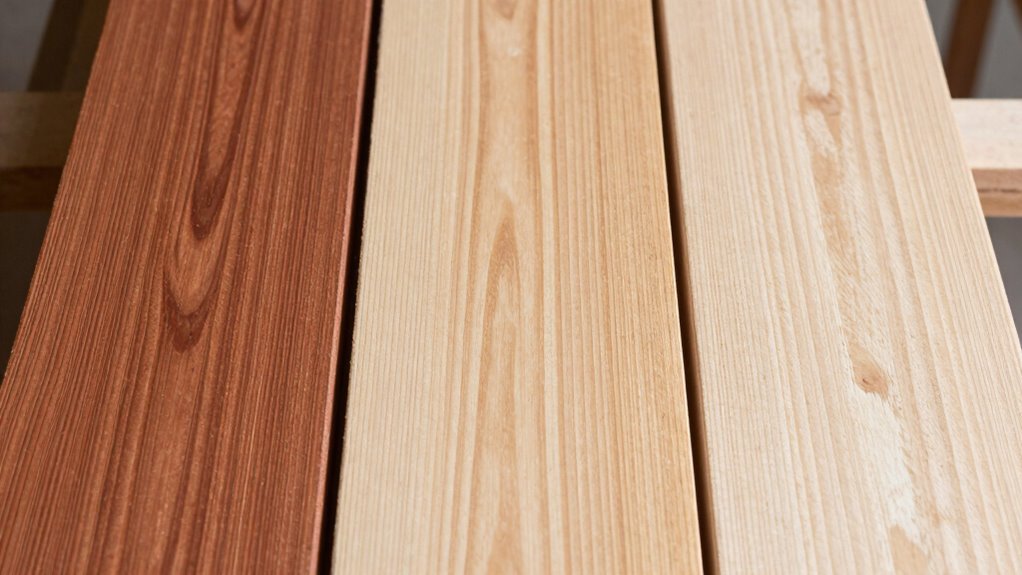
Choosing the right wood depends on your specific needs, as each type offers different advantages in durability, cost, and maintenance. When selecting, consider how wood treatment methods affect the environment, since some treatments can reduce environmental impact, making your choice more eco-friendly. Cedar naturally resists decay without extensive treatment, which benefits both durability and environmental sustainability. Incorporating natural filtration systems can also enhance the longevity of your wooden structures by keeping them free from excess moisture. Thermowood undergoes heat treatment that enhances stability while minimizing chemical use, lowering its environmental impact. Hemlock, though cost-effective, may require more frequent maintenance and treatment to improve its durability. Your decision should balance these factors—considering how treatments influence the environment and the long-term costs—so you choose a wood that aligns with your needs and values. Additionally, exploring new frontiers in digital content can provide further insights into sustainable material choices.

Briwooody 64 Pcs Western Red Cedar Shingles Chips Bulk, Cedar Siding Roof Shingles, Wooden Roof Tiles Covers 20-25 Square ft
Package Contents: receive 64 western red cedar shingles, each measuring 18" in length, 5.8" in width, and 0.6"…
As an affiliate, we earn on qualifying purchases.
As an affiliate, we earn on qualifying purchases.
How Durable Are Cedar, Thermowood, and Hemlock?
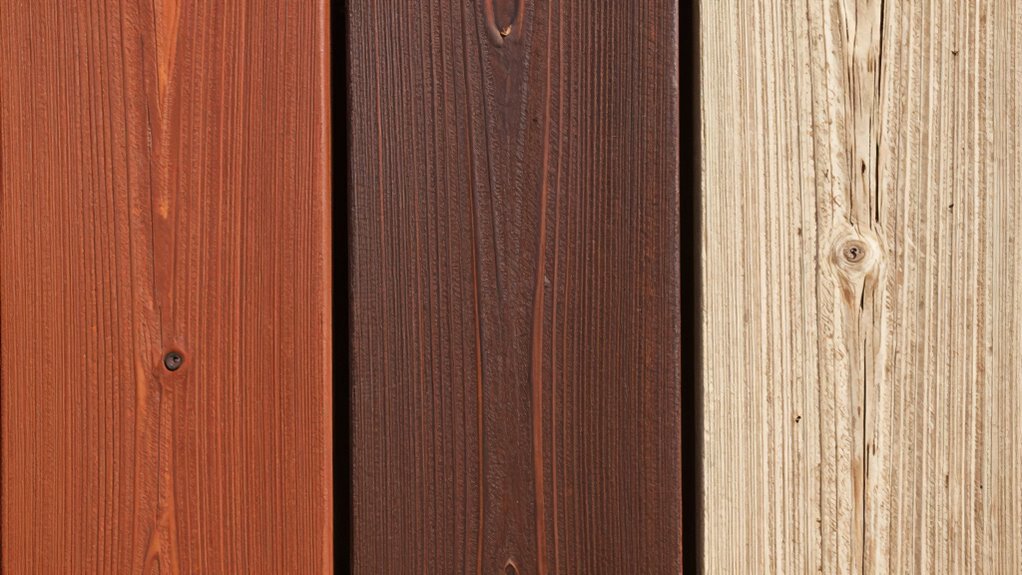
Cedar, Thermowood, and Hemlock each offer different levels of durability, making it important to understand how they hold up over time. Your choice depends on how well the wood resists decay, weather, and pests. Wood treatment can enhance durability, especially for outdoor use. Thermowood, processed with heat, naturally resists moisture and pests, extending its lifespan. Additionally, proper charger settings for battery maintenance can help ensure that your tools remain functional and efficient over time. A well-maintained wood choice can also contribute to the charm of Italian gelato culture, enhancing your outdoor spaces. Cedar’s natural oils provide good resistance, but it may require additional treatment for prolonged exposure. Hemlock is softer and less resistant, so it’s better suited for indoor applications. Furthermore, selecting woods with high trust ratings can lead to better long-term investment outcomes. Keep in mind that durability impacts aesthetic appeal over years, maintaining both appearance and structural integrity. Moreover, choosing woods with long-lasting properties can significantly reduce the need for frequent replacements. Additionally, astrophotography gear can be affected by environmental factors, making durable wood choices essential for long-term use.
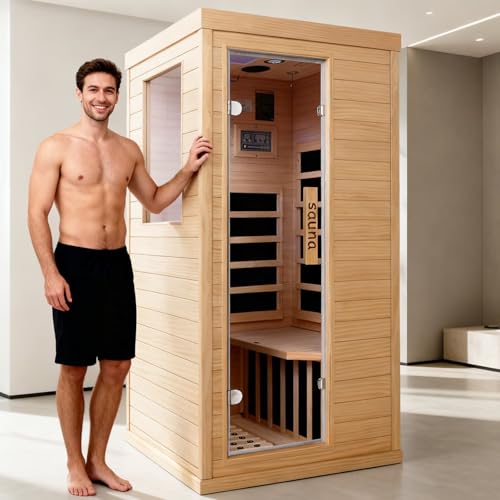
DWKWE Far Infrared Sauna Room for Home Use – 1350W Natural Hemlock Indoor Personal Wooden Personal Dry Sauna with Rapid Heating, Perfect for Athletes, Busy Professionals & Arthritis Sufferers
Advanced Far Infrared Technology – The DWKWE Sauna Room uses deep-penetrating infrared heat to promote detoxification, improve circulation,…
As an affiliate, we earn on qualifying purchases.
As an affiliate, we earn on qualifying purchases.
What Is the Long-Term Cost of Each Wood?
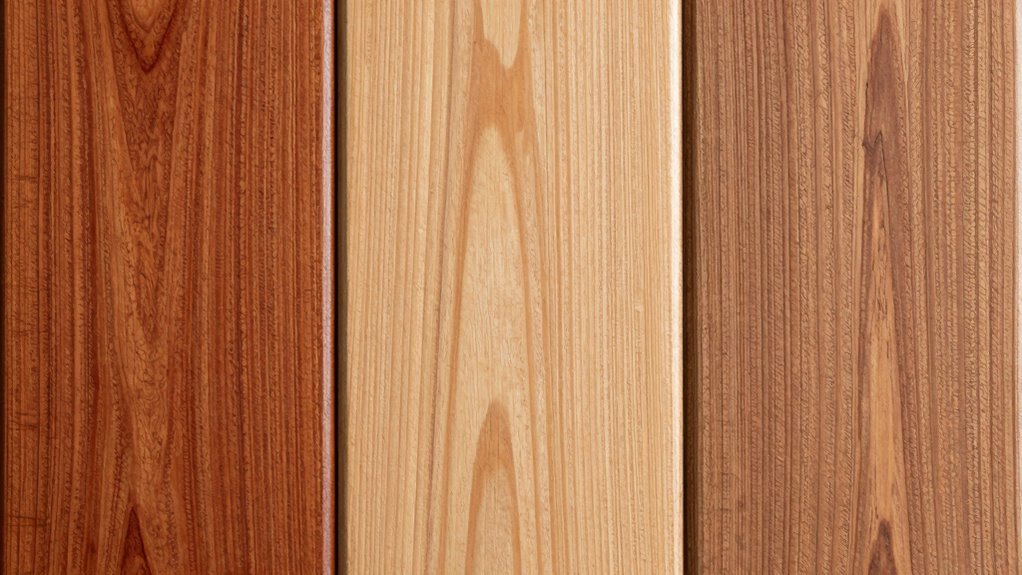
When evaluating the long-term cost of wood options, it’s important to take into account not just the initial purchase price but also how much you’ll spend over time on maintenance, treatments, and replacements. Cedar tends to be affordable initially but may require regular wood treatment to prevent decay, increasing costs over time. Thermowood, though more expensive upfront, offers enhanced durability, reducing the need for frequent treatments and replacements, which can save you money long-term. Additionally, thermowood features advanced durability, making it an excellent investment for long-lasting projects. Hemlock is usually cheaper initially but may need more frequent maintenance, raising costs later. Moreover, using wood with high contrast ratios can improve the visual appeal of your projects. Furthermore, creating organized spaces can lead to better wood care and maintenance routines. Additionally, consider the environmental impact of your choices; some woods require less chemical treatment, which can lower environmental and disposal costs. For instance, data storage solutions can also benefit from durable materials, ensuring longevity in their application. Overall, thermowood’s longevity often makes it the more economical choice over time. Incorporating accessibility features in your projects can also enhance usability and cost-effectiveness.

DEFY Ultra Semi-Transparent Outdoor Wood Stain and Sealer – UV & Moisture Resistant, Butternut – 1 Gallon
ALL-IN-ONE DECK STAIN: Combines stain and sealer for comprehensive protection and enhanced natural wood beauty. Easy to apply…
As an affiliate, we earn on qualifying purchases.
As an affiliate, we earn on qualifying purchases.
How Easy Is It to Maintain These Woods Over Time?
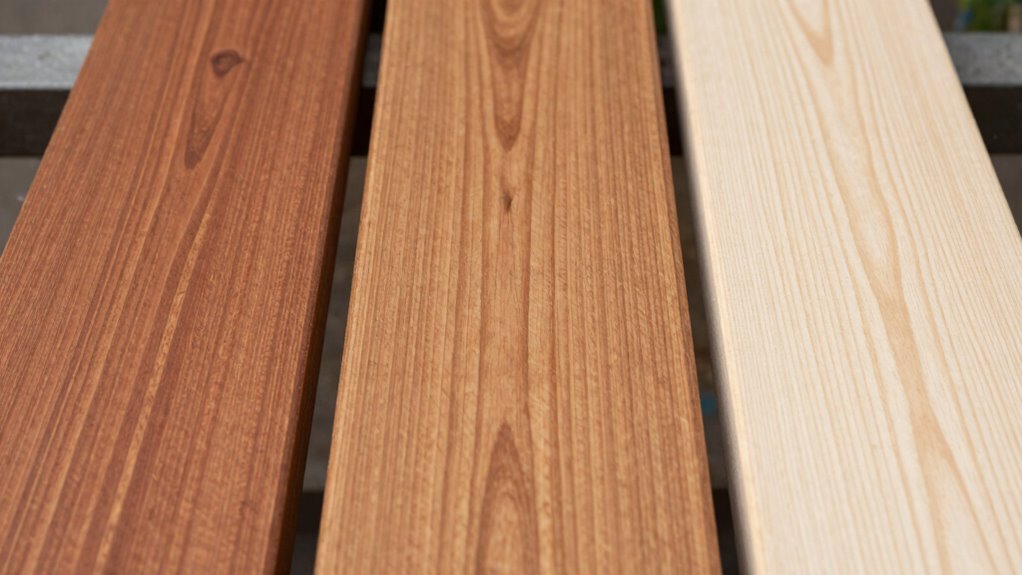
Maintenance needs vary considerably among cedar, thermowood, and hemlock, affecting how much effort you’ll need to keep your wood surfaces looking their best. Cedar generally requires minimal wood treatment due to its natural oils, making it easier to maintain over time. Regular gear care tips can also apply to maintaining wood surfaces, ensuring they stay in top condition. Additionally, incorporating music therapy can enhance your focus while performing maintenance tasks. Furthermore, practicing mind-body healing can improve your overall well-being, making maintenance tasks feel less burdensome. Thermowood is quite stable and resistant to decay, but occasional treatments can enhance its longevity and environmental impact. Furthermore, using AI trends can help you discover innovative maintenance solutions tailored to your specific wood type. Hemlock, on the other hand, is more sensitive and may need regular sealing or staining to prevent deterioration.
- Proper wood treatment extends lifespan and reduces environmental impact.
- Regular cleaning minimizes the buildup of damaging dirt and moisture.
- Choosing environmentally friendly products supports sustainability and health.
- Incorporating crisping techniques can help maintain the aesthetic appeal of your wood surfaces over time.
Choosing the Right Wood for Outdoor and Indoor Projects
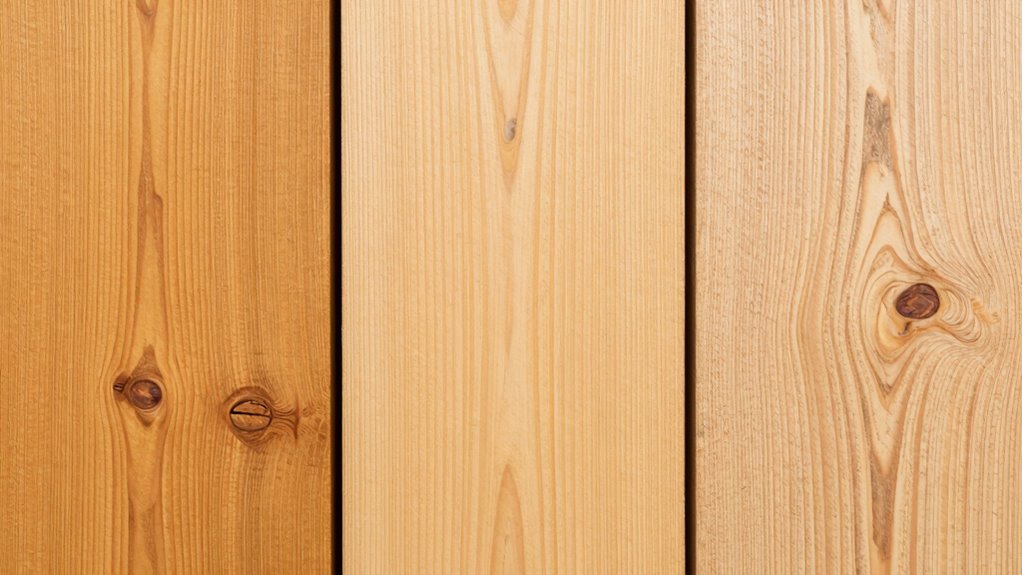
Choosing the right wood for your project depends on where it will be used and how it will be exposed to the elements. For outdoor projects, select wood that withstands moisture and weather, like cedar or thermowood, which also accept decorative finishes well. Hemlock can be used outdoors but needs proper treatment. Indoor projects offer more flexibility; woods like hemlock and thermowood work well and can be finished to highlight their natural beauty. Additionally, many homeowners are discovering fresh pop culture recommendations that inspire creative uses for these materials. Consider the environmental impact of each option—thermowood is eco-friendly due to its sustainable processing, while cedar is naturally resistant and requires less chemical treatment. Furthermore, integrating smart pool automation can enhance your outdoor experience, making your pool area more enjoyable. Interestingly, the choice of wood may also reflect cultural beliefs often intertwined with astrological compatibility, ensuring your project looks good and lasts long with the right wood. New dads can also benefit from support networks that help them manage home projects alongside family responsibilities. Understanding debt management strategies can also aid in budgeting for quality materials, ensuring a successful outcome for your projects.
Frequently Asked Questions
Which Wood Type Is Most Environmentally Sustainable?
You’ll find thermowood the most environmentally sustainable choice because it uses eco-friendly harvesting methods and requires no chemical treatments. Its carbon footprint is lower compared to cedar and hemlock, as it’s processed through heat treatment rather than chemical preservation. By choosing thermowood, you support eco-conscious practices, reducing environmental impact while enjoying durable, eco-friendly wood that helps preserve forests and minimizes pollution.
How Do Weather Conditions Affect Each Wood’s Lifespan?
Weather conditions considerably impact each wood’s lifespan by affecting weather resilience and seasonal durability. Cedar naturally resists moisture and decay, making it excellent in humid or rainy climates. Thermowood’s heat treatment enhances its stability and resistance to weather fluctuations, prolonging its durability. Hemlock, however, is less weather-resistant; it’s more vulnerable to rot and warping in harsh conditions. Your climate determines which wood offers the best seasonal durability and weather resilience for lasting performance.
Can These Woods Be Easily Stained or Painted?
You can stain or paint cedar, thermowood, and hemlock easily, thanks to their surface adhesion. Cedar’s open grain allows good color penetration, enhancing stain richness. Thermowood’s smooth surface ensures even paint application, while hemlock’s fine grain provides decent adhesion. For best results, prep each wood properly by cleaning and sanding. This way, you achieve durable, vibrant finishes that last longer, safeguarding your wood investment.
Are There Specific Treatments Recommended for Each Wood?
For wood preservation and surface finishing, each type requires specific treatments. Cedar benefits from sealants to prevent rot and enhance color, while Thermowood needs thorough sealing due to its heat treatment. Hemlock responds well to staining and sealing to preserve its appearance. Always follow manufacturer recommendations for treatments, and apply protective finishes evenly to extend your wood’s lifespan and maintain its aesthetic appeal.
How Do These Woods Perform in High-Humidity Environments?
Like a seasoned sailor steering stormy seas, you’ll find cedar, thermowood, and hemlock handle high-humidity environments differently. Cedar and thermowood excel with their moisture resistance, minimizing wood expansion even when humidity rises. Hemlock, however, is more prone to swelling and warping. You’ll want to prioritize cedar or thermowood for longevity in damp settings, as they’re better equipped to stay stable and resist moisture’s relentless push.
Conclusion
Choosing the right wood depends on your needs and budget, but remember, “A stitch in time saves nine.” By investing in durable materials like cedar, thermowood, or hemock now, you’ll save yourself time, money, and hassle down the line. Think about how much easier maintenance will be and how long your project will last. Making an informed choice today guarantees your work stands the test of time, saving you years of future repairs.