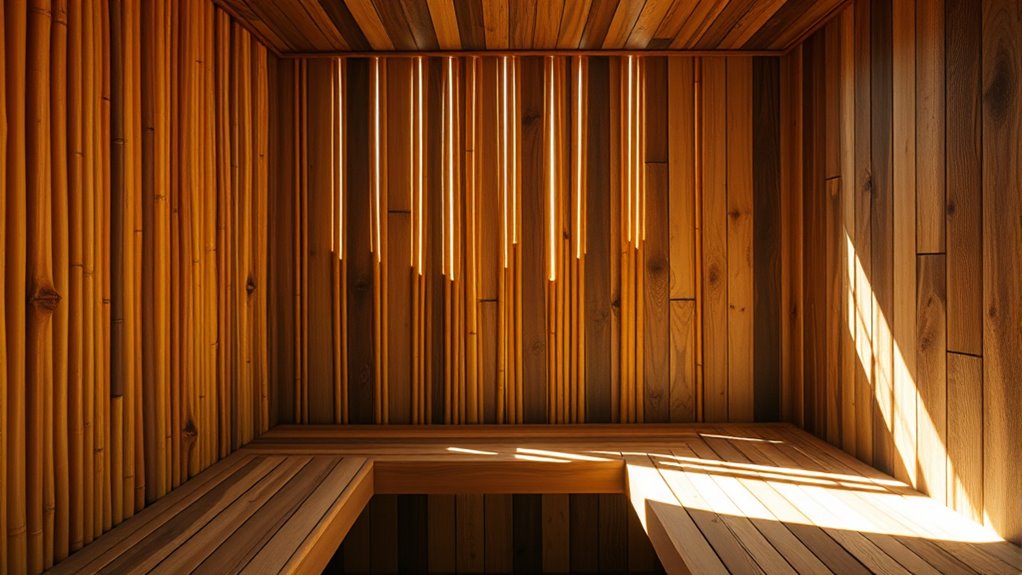

Using bamboo and reclaimed wood in sauna design not only boosts sustainability but also creates a beautiful, inviting space. Bamboo’s sleek, bright appearance adds a modern touch, while reclaimed wood offers warmth and rustic charm. Both materials are durable and eco-friendly, helping reduce waste and deforestation. Their textures and tones balance beautifully, enhancing the overall aesthetic. If you keep exploring, you’ll discover how to combine these materials to craft a stylish, eco-conscious sauna that encourages relaxation and wellness.
Key Takeaways
- Incorporate bamboo and reclaimed wood to create eco-friendly, sustainable sauna interiors that reduce environmental impact.
- Use bamboo for a sleek, bright aesthetic and reclaimed wood for warmth and rustic charm, achieving a balanced design.
- Select durable bamboo and reclaimed wood materials to ensure longevity in high-humidity sauna environments.
- Enhance visual appeal by combining bamboo paneling with reclaimed wood accents for contrasting textures and tones.
- Utilize natural materials to promote wellness, improve acoustics, and create a calming, authentic sauna atmosphere.
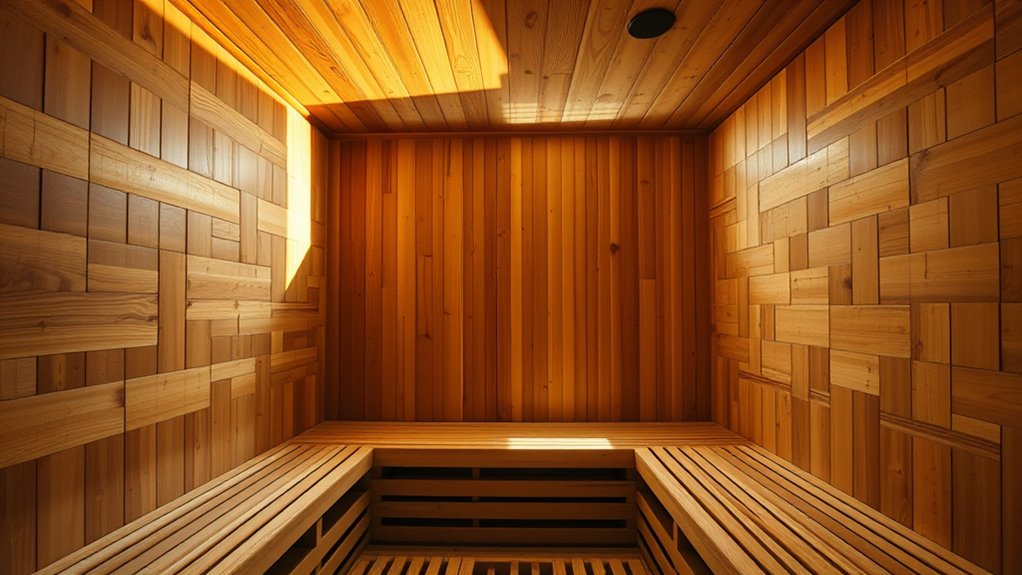
Incorporating bamboo and reclaimed wood into sauna design offers a sustainable way to create a warm, inviting space while reducing environmental impact. These materials not only support eco-friendly practices but also add unique visual qualities that elevate your sauna’s aesthetic appeal. When you choose bamboo and reclaimed wood, you’re making a conscious decision to prioritize sustainable sourcing, which helps conserve natural resources and reduce waste. Bamboo, in particular, grows rapidly and regenerates quickly, making it an excellent renewable resource. Reclaimed wood, on the other hand, breathes new life into materials that might otherwise be discarded, giving your sauna a sense of history and character.
Using bamboo in your sauna interior introduces a fresh, modern look that’s both sleek and natural. Its smooth texture and light color can brighten up the space, making it feel larger and more open. Plus, bamboo’s durability under high humidity conditions ensures that it remains beautiful over time, resisting warping and cracking. Its sustainable sourcing means you’re reducing the need for new timber, which helps lower deforestation rates and minimizes ecological footprints. When you combine bamboo with reclaimed wood, you get a design that’s not only eco-conscious but also visually engaging. Reclaimed wood adds warmth and authenticity, with its rich grain patterns and weathered finish offering a rustic charm that contrasts beautifully with the clean lines of bamboo.
Bamboo’s sleek, natural look brightens your sauna, while reclaimed wood adds warmth and rustic charm for a sustainable, stylish design.
This combination allows you to craft a sauna that feels both modern and timeless. The aesthetic appeal of reclaimed wood lies in its imperfections—knots, cracks, and uneven surfaces tell stories of their past life, giving your space a sense of history. Bamboo’s sleek, uniform appearance balances this out, creating a harmonious blend of textures and tones. By integrating these materials thoughtfully, you can design a sauna that’s visually engaging and environmentally responsible. You might choose bamboo paneling paired with reclaimed wood accents or create a feature wall with reclaimed planks topped with bamboo trim. Each choice reinforces your commitment to sustainability while elevating the visual interest of your sauna.
Additionally, understanding the sound vibrations associated with natural materials can enhance the calming atmosphere of your sauna, contributing to a more holistic wellness experience. Ultimately, using bamboo and reclaimed wood transforms your sauna into a space that’s eco-friendly and uniquely beautiful. You benefit from sustainable sourcing, which reduces your environmental impact, and enjoy the aesthetic appeal that these materials naturally provide. This approach doesn’t just create a functional retreat; it crafts a sanctuary that reflects your values and appreciation for natural, timeless design. With thoughtful selection and placement, your sauna becomes a tribute to sustainable craftsmanship and aesthetic elegance, offering you comfort and peace of mind every time you step inside.
Frequently Asked Questions
How Does Bamboo Withstand High Heat and Humidity in Saunas?
Bamboo’s heat resistance allows it to handle high temperatures in saunas, though it needs proper treatment to prevent cracking or warping. Its natural properties make it durable under humid conditions, especially when kiln-dried. Reclaimed wood also withstands heat and humidity well, thanks to its established durability. With proper sealing and maintenance, both materials can safely endure sauna environments, providing a sustainable and attractive option for your design.
Are Reclaimed Woods Safe and Free From Harmful Chemicals?
Reclaimed woods can be safe if sourced from reputable suppliers that follow strict sourcing standards and prioritize chemical safety. Always ask for documentation showing the wood’s treatment history and any chemical use. Look for woods that are free from harmful chemicals andHeavy metals. When you choose reclaimed wood, you’re supporting eco-friendly practices while ensuring your sauna remains safe and chemical-free.
What Maintenance Is Required for Bamboo and Reclaimed Wood in Saunas?
You should regularly clean bamboo and reclaimed wood with gentle routines, avoiding harsh chemicals that can damage the material. Use a damp cloth and mild soap, then dry thoroughly to prevent moisture buildup. Periodically, apply a suitable wood treatment or sealant to protect against humidity and wear. Consistent maintenance keeps these eco-friendly materials looking great, extends their lifespan, and preserves the sauna’s beauty and safety over time.
How Do These Materials Affect Sauna Insulation and Energy Efficiency?
Think of bamboo and reclaimed wood as the warm embrace of a cozy blanket; they influence your sauna’s insulation and energy conservation. While bamboo offers decent thermal insulation, reclaimed wood’s natural properties help maintain heat effectively. Both materials reduce heat loss, making your sauna more energy-efficient. Their sustainable nature also means you’re contributing to eco-friendly design, keeping your space warm and inviting while conserving energy.
Can Reclaimed Wood Be Customized for Unique Sauna Designs?
Yes, reclaimed wood can be customized for unique sauna designs. You can incorporate custom woodwork to highlight its natural character, creating one-of-a-kind finishes that enhance your sauna’s aesthetic. Work with skilled artisans to select and shape reclaimed wood, ensuring it fits your vision. This approach not only adds a personal touch but also celebrates sustainability, giving your sauna a distinctive look that reflects your style.
Conclusion
Incorporating bamboo and reclaimed wood in your sauna isn’t just eco-friendly—it’s a way to connect with nature and promote healing. Many believe that using sustainable materials can enhance your well-being and foster a deeper bond with the environment. By choosing these natural elements, you’re not only creating a beautiful space but also supporting a healthier planet. Imagine experiencing pure relaxation, knowing you’ve made a positive impact—proof that sustainable choices truly transform your sanctuary.