
TL;DR

Get wellness gear delivered free — and shop member deals
- Fast, free delivery on millions of items
- Access to Prime Big Deal Days deals on October 6–7
- Prime Video, Amazon Music and more included
Infrared therapy mats are products that deliver heat, light, or both, and those technologies are not interchangeable. A heated mat can provide temporary warmth and relaxation, while evidence for specific light-based benefits depends on the device and treatment parameters; broad claims about detox, lasting weight loss, or disease treatment are not well established. Check product specifications, follow the manual, and start with a short, low-intensity session.
A mat can glow red, feel hot, and promise a lot—but those details don’t tell you what it actually delivers. An infrared therapy mat may use heat, near-infrared light, or both, and that difference matters when you’re weighing comfort against health claims.
This guide explains what they are, what research can and can’t support, and how to read product specifications without getting swept up in phrases like “full spectrum.” You’ll also get practical safety steps and a shopping checklist, so you can decide whether a mat fits your routine—or whether a simple heating pad would do the job.
The phrase “infrared therapy mat” may describe a heat-only mat, a near-infrared light device, or a combination product.
Temporary warmth and relaxation are more reasonable expectations than detoxification, lasting weight loss, or disease treatment.
For light-based features, look for wavelength and irradiance at the treatment surface; for heat, check the temperature range, timer, and shutoff.
Start with a low setting and short session, stay awake unless the device is designed for sleep use, and stop if you feel unwell or develop painful redness.
Ask a healthcare professional first if you’re pregnant, have an implanted device, have relevant health conditions, or take medication that increases light sens…
What an infrared therapy mat actually delivers
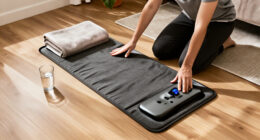
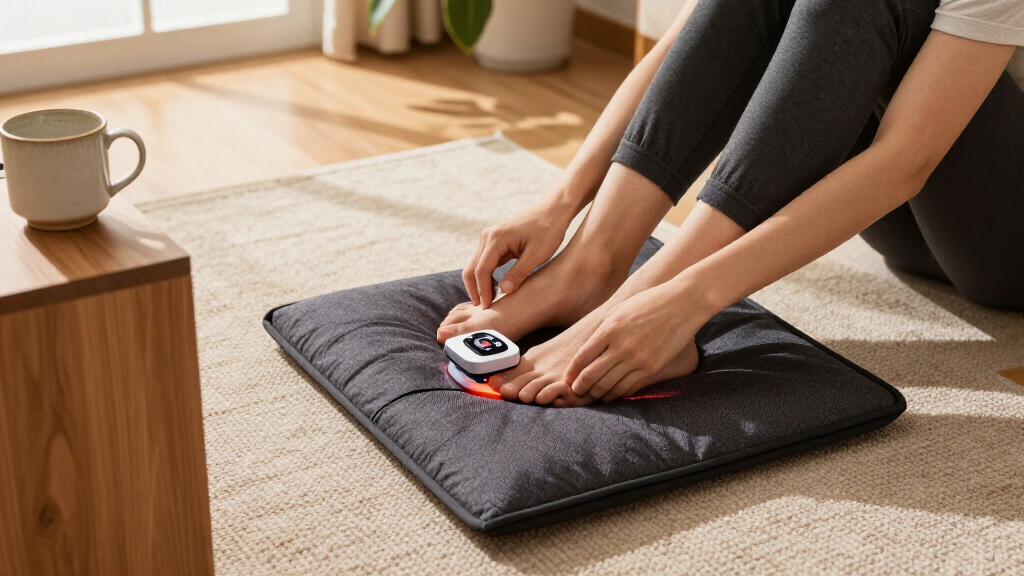
An infrared therapy mat is a broad marketing term for a mat that delivers heat, light, or a combination of features. Some use heated mineral layers such as jade or tourmaline; others use near-infrared LEDs or lamps, and some add ordinary heating elements, vibration, or magnetic-field devices.
Those features aren’t interchangeable. A warm mineral mat mainly gives you heat and physical comfort; a near-infrared device delivers light at specified wavelengths. A combined mat may do both, but each part needs its own specifications. The name on the box doesn’t tell you the wavelength, light output, treatment area, or dose.
Imagine two mats on the same living-room rug: one warms your back like a cozy blanket, while the other shines near-infrared light from LEDs. They may look similar, but they don’t perform the same job. Claims that jade or tourmaline add special health effects need evidence beyond the fact that the stones feel warm.
That’s why “infrared therapy mat” is best understood as a product category, not a precise technical description. Before comparing promises, find out whether you’re looking at heat, light, or both. A basic heated mat may suit someone seeking a relaxing warm-up, while someone researching light therapy needs measurable light details instead.
infrared therapy mat with near-infrared LEDs
As an affiliate, we earn on qualifying purchases.
As an affiliate, we earn on qualifying purchases.
What benefits you can reasonably expect
An infrared therapy mat’s clearest everyday benefit is temporary warmth and relaxation, not a guaranteed treatment for a health condition. Heat may ease stiffness or short-term aches for some people, while light-based therapies have research for particular uses that can’t automatically be applied to every mat.
Evidence varies with the device, treatment method, and outcome studied. Research on infrared sauna-style treatments suggests possible benefits for some symptoms, but studies differ in size, quality, and protocol. Research on red and near-infrared light also points to potential benefits in specific settings; a study of one device does not prove that a mat with different wavelengths or output will have the same effect.
For example, you might use a heated mat after a long afternoon at a desk and find that the warmth helps your shoulders feel more relaxed. That’s a reasonable comfort goal. It is not proof that the mat treats the cause of persistent pain or provides lasting circulation changes.
Be cautious when a seller promises detoxification, substantial weight loss, or chronic disease treatment. Sweating helps regulate body temperature; it isn’t evidence that toxins have been removed. A session may lower the number on the scale briefly through water loss, but that weight returns when you rehydrate. Use a mat as a wellness tool, not a replacement for medical care.
heated mineral infrared therapy mat
As an affiliate, we earn on qualifying purchases.
As an affiliate, we earn on qualifying purchases.
How to tell far-infrared heat from red-light therapy
Far-infrared heat and red or near-infrared light therapy describe different ways a device delivers energy. Far-infrared mats primarily warm the body, while red and near-infrared products use light at stated wavelengths; a product that combines them should identify both features clearly.
| Feature | Far-infrared or heated mat | Red or near-infrared device |
|---|---|---|
| Main output | Warmth, often from emitters or heated layers | Light from LEDs or lamps |
| Useful details to check | Temperature range, timer, shutoff | Wavelength, irradiance at the surface, treatment area |
| What the sensation may be like | A warming pad or heated blanket | Light may be visible, but warmth alone doesn’t show dose |
| Common mix-up | Assuming mineral layers prove extra health effects | Assuming one study applies to every light device |
Picture a product page that advertises “full-spectrum infrared” but gives no wavelength or output information. That phrase doesn’t let you compare the light dose with a study or another product. For a light feature, look for wavelength ranges and irradiance at the treatment surface; for heat, check temperature controls and safety features.
More detailed product information is becoming common, including app controls, timers, and separate heat and light settings. Those details help you understand what the device does, but they don’t prove a health benefit on their own. A clear specification is a sign of transparency—not a guarantee of clinical results.
full spectrum infrared therapy mat
As an affiliate, we earn on qualifying purchases.
As an affiliate, we earn on qualifying purchases.
How to try a mat without overdoing the heat
To try an infrared therapy mat safely, follow its manual, begin with a low setting and short session, and stop if you feel unwell. There is no single session length that fits every model because heat, light output, and intended use vary from product to product.
- Read the instructions. Check the recommended settings, session limit, and whether the mat is designed for use while you lie on it.
- Start conservatively. Choose a low setting and brief session rather than turning the heat up and staying on until you sweat.
- Check how you feel and how your skin looks. Stop if you feel dizzy or overheated, or if skin becomes painful or unusually red.
- Stay awake unless the maker says otherwise. Don’t fall asleep on a heated mat unless the manufacturer explicitly states that the model is designed for that use.
For example, if you get home chilled after a winter walk, you might begin with a short, low-heat session while awake, then stop to see how your skin feels. More heat is not automatically better. Drink water as you normally would, and don’t use sweating as a target or proof that the mat is working.
Heat can cause burns, overheating, dehydration, or dizziness, especially if you have reduced skin sensation, poor circulation, or difficulty responding to heat. Avoid using the mat over damaged skin or where you can’t reliably feel temperature without professional advice. If you have a health condition affected by heat or light, ask a healthcare professional first.
infrared light therapy device for pain relief
As an affiliate, we earn on qualifying purchases.
As an affiliate, we earn on qualifying purchases.
What to check before you spend money
Before buying an infrared therapy mat, look for specific, measurable product details instead of relying on claims about minerals, “full spectrum,” or impressive-sounding output. You want to know whether the mat uses heat, LEDs, or both, and what settings and safety features it offers.
- Technology: Is it a heated mat, a near-infrared light device, or a combination?
- Light specifications: If it uses LEDs or lamps, does the maker state wavelength ranges and irradiance measured at the treatment surface?
- Coverage and use: What area does it treat, and how long does the maker recommend for a session?
- Heat controls: Does it provide a temperature range, timer, and automatic shutoff?
- Safety and support: Are safety certifications appropriate for your location, and are the warranty and return terms clear?
Imagine comparing two listings: one promises “deep detox” without naming its output, while another gives a temperature range, timer, and light specifications. The second is easier to evaluate, even though its details still don’t prove that it treats a condition.
Also check whether claims are backed by research on the same kind of device and intended use. A result from a clinical study using a particular light device can’t be carried over to a mat with different wavelengths or output. If a product’s promises sound bigger than its evidence, a conventional heating pad may be a simpler choice for warmth and relaxation.
When a mat calls for a conversation with your clinician
Ask a healthcare professional before using a mat if you’re pregnant, have an implanted medical device, have a condition affected by heat or light, or take medication that increases light sensitivity. The right advice depends on your situation and on what the specific mat emits.
That doesn’t mean every person in these groups will have a problem. It means a product label cannot account for your full health picture. For instance, if you take a medication that makes your skin more sensitive to light, ask whether a mat with near-infrared LEDs is appropriate rather than assuming a heat setting makes every feature harmless.
People with reduced sensation or poor circulation may also have trouble noticing heat injury early. If that describes you, don’t test the mat on a numb area or rely on how warm it feels as your only safety check. Get tailored guidance before use, and follow any advice about areas or settings to avoid.
A mat can be one part of a comfortable routine, but it should not delay care for persistent symptoms or replace treatment you’ve been advised to follow. If you feel dizzy, overheated, or unwell during a session, stop using the device. Simple boundaries keep a comfort tool in its proper place: supportive, not curative.
Frequently Asked Questions
Do infrared therapy mats actually work?
They deliver heat, light, or both, and a heated mat can provide temporary warmth and relaxation. Some light-based treatments have research for specific uses, but results depend on the device and treatment details. A general wellness claim is not proof that a mat treats a disease.
What’s the difference between far-infrared heat and red-light therapy?
Far-infrared products primarily warm the body, while red and near-infrared devices deliver light at specified wavelengths. Some mats combine both, so check the heat and light specifications separately rather than treating them as one feature.
How long should I use an infrared therapy mat?
Follow the manufacturer’s directions; there is no single session duration that applies to every model. Temperature, light output, and intended use differ, so start with a low setting and short session. Stop if you feel unwell or your skin becomes painful or unusually red.
Can an infrared therapy mat help with pain or sleep?
Warmth may temporarily soothe some muscle aches or help you relax, but evidence for lasting pain relief or improved sleep from mats specifically is limited and varies by condition. Treat comfort as a possible benefit, not a promise, and seek care for persistent symptoms.
Do infrared therapy mats detox or help you lose weight?
There is no good basis for treating sweat from a mat as meaningful detoxification or sustained fat loss. Sweating regulates body temperature, and any short-term scale drop from water loss returns with rehydration.
Are infrared therapy mats safe to use every day?
Safety depends on the device, the session intensity, and your health. Repeated heat exposure can cause overheating or skin injury, so follow the manual and ask a healthcare professional if you have reduced sensation, poor circulation, a relevant condition, or a medication that affects light sensitivity.
What should I look for when buying an infrared therapy mat?
Check whether it uses heat, LEDs, or both; for light features, look for wavelength and irradiance at the treatment surface. For heated mats, review the temperature range, timer, and automatic shutoff, along with relevant safety certifications, warranty, and return terms. Be cautious when big health claims come without measurable details.
Conclusion
Choose an infrared mat for what it can clearly deliver: warmth, light, or both—not for promises the product label can’t support. Compare measurable specifications, start gently, and get professional guidance if your health or medication could affect safe use.
A mat can make a chilly evening feel softer, like a warm patch of sun across your back. Let that comfort be enough; don’t ask a glowing product page to prove more than it does.
Halloween Picks
halloween
As an affiliate, we earn on qualifying purchases.