Using a sauna regularly can help your respiratory health by loosening mucus, reducing inflammation, and improving airflow. The warm, moist air relaxes your bronchial muscles and thins mucus, making it easier to clear congestion. Techniques like steam infused with herbs or essential oils amplify these benefits. Good indoor air quality also supports your efforts. If you keep exploring, you’ll discover deeper ways to maximize these soothing effects for your lungs.
Key Takeaways
- Sauna heat and humidity loosen mucus and reduce inflammation, easing congestion and improving airflow.
- Hydrotherapy with steam infused with essential oils enhances respiratory clearing and bronchial relaxation.
- Regular sauna sessions increase blood flow to lung tissues, promoting healing and respiratory health.
- Alternating sauna use with cold showers stimulates circulation and supports mucus clearance.
- Maintaining good indoor air quality maximizes sauna benefits by reducing pollutants that aggravate respiratory issues.
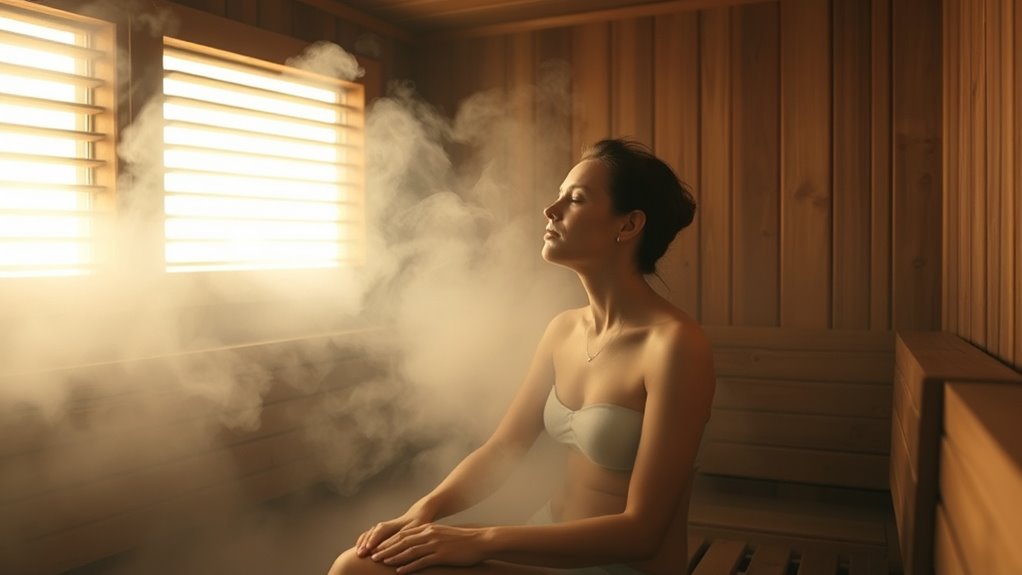
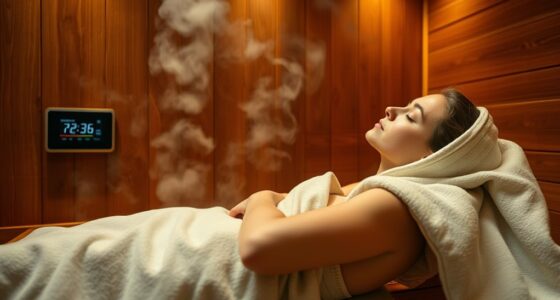
Many people turn to saunas not just for relaxation but also for their potential to support respiratory health. When you spend time in a sauna, you’re exposing your respiratory system to warm, moist air that can help loosen mucus and clear congestion. One way to enhance these benefits is by incorporating hydrotherapy techniques, which involve the strategic use of water and steam to improve breathing. For example, adding steam infused with essential oils or herbs can boost the humidifying effect, making it easier for you to breathe deeply. These hydrotherapy methods can stimulate your mucous membranes, reducing inflammation and promoting better airflow. Optimizing humidity levels further enhances the soothing effects of the sauna on your respiratory passages, ensuring you get the most benefit from each session.
Equally important is the quality of indoor air, as it directly influences the effectiveness of your sauna experience. Ensuring good indoor air quality means minimizing pollutants, allergens, and irritants that could aggravate respiratory issues. Regularly ventilating your space, using air purifiers, and avoiding tobacco smoke help keep the air clean, allowing you to breathe more freely during and after your sauna sessions. When your indoor environment is optimized for air quality, the moist, warm air of the sauna can work more effectively to soothe your respiratory passages.
During your sauna session, the combination of heat and humidity encourages blood flow to the respiratory tissues, which can accelerate healing and reduce congestion. The moist heat helps thin mucus secretions, making it easier to expel them. Additionally, the warmth relaxes your bronchial muscles, reducing spasms and easing breathing difficulties often associated with congestion. This process can be especially beneficial if you’re suffering from colds, allergies, or sinus infections.
To maximize these benefits, it’s essential to incorporate hydrotherapy techniques thoughtfully. For example, alternating between hot sauna sessions and cold showers can stimulate circulation and improve lymphatic drainage, helping your body clear out irritants. Combining sauna use with proper indoor air management ensures you’re not inhaling pollutants that could counteract the positive effects. Creating a clean, humidified environment amplifies the soothing impact of the sauna on your respiratory system, making each session more effective in reducing congestion and promoting overall lung health.

Relax Far Infrared Sauna – Featuring Unique Far Infrared Generators
Unique far infrared generators
As an affiliate, we earn on qualifying purchases.
As an affiliate, we earn on qualifying purchases.
Frequently Asked Questions
Can Sauna Use Improve Chronic Asthma Symptoms?
Using a sauna may help improve your chronic asthma symptoms by promoting breathing improvement and airway relaxation. The warm, humid environment can loosen mucus and reduce inflammation, making it easier to breathe. However, always consult your doctor before regular sauna use, especially if your asthma is severe. Keep sessions short and monitor your symptoms closely to avoid any adverse reactions, ensuring you enjoy potential benefits safely.
Are There Risks for People With COPD Using Saunas?
Think of a sauna as a gentle voyage across a calm, warm sea. For people with COPD, risks can arise if sauna temperature regulation isn’t maintained or humidity control falters, leading to breathing difficulties. You should consult your doctor before entering, ensuring the environment remains safe. While moderate use may be beneficial, overly hot or humid conditions could exacerbate symptoms, making caution essential on this journey.
How Often Should I Sauna for Respiratory Benefits?
You should sauna 2-3 times a week for respiratory benefits, but always listen to your body. Keep the sauna temperature moderate, around 150-170°F, to avoid overexertion. Hydration is essential, so drink plenty of water before and after each session to prevent dehydration. Regular, moderate sessions can help clear congestion and improve breathing, but consult your healthcare provider if you have any health concerns or conditions like COPD.
Can Sauna Therapy Replace Medication for Congestion?
Sauna therapy isn’t a replacement for medication when it comes to congestion. Think of it as an alternative therapy that complements your treatment, much like herbal remedies support overall wellness. I once found relief after a cold by combining sauna sessions with herbal teas, but I still relied on my doctor’s advice for severe symptoms. You shouldn’t skip prescribed meds; instead, consider sauna as a helpful addition to your health routine.
Is Sauna Safe During Respiratory Infections?
Sauna safety during respiratory infections isn’t recommended because heat can worsen symptoms or cause dehydration. When you’re battling respiratory infections, your body needs rest and proper hydration instead of heat exposure. It’s best to avoid saunas until you fully recover. Always consult your healthcare provider for personalized advice, especially if you have underlying health conditions. Prioritize rest and follow medical guidance to guarantee safe recovery.

Essential Oil Breathe Blend for Diffuser, Humidifier, Aromatherapy & Rub with Peppermint & Eucalyptus Oils | for Headache, Allergy & Congestion
Respiratory Support: Discover relief for your airways with our congestion drops. Combat dry sinuses using natural, safe ingredients….
As an affiliate, we earn on qualifying purchases.
As an affiliate, we earn on qualifying purchases.
Conclusion
By embracing regular sauna sessions, you can open a respiratory powerhouse within you. Imagine breathing so freely that even the tiniest breath feels like a gust of fresh mountain air, clearing congestion like a tornado sweeping through. Your lungs will thank you as they become unstoppable, fighting off colds and allergies with superhero strength. Don’t just dream of better breathing—make it a reality and transform your respiratory health into an unstoppable force!

Air Purifiers for Home Large Room up to 1200ft², LUNINO H13 True HEPA Air Purifier for Bedroom with Fragrance Function, Air Quality Sensor, Sleep Mode, Air Cleaner for Pet Dander, Odor, Dust, Smoke
【High-Performance H13 HEPA Filter & 360° Air Intake】LUNINO H13 HEPA air purifiers for home is equipped with a…
As an affiliate, we earn on qualifying purchases.
As an affiliate, we earn on qualifying purchases.

UpNature Breathe Essential Oils Blend (Large 2oz) Breath Relief Eucalyptus and Menthol Blend – Essential Oils for Diffusers for Home Humidifier – Vaporizer Liquid Aromatherapy Oils
Breathe Essential Oil Blend – Eucalyptus (Eucalyptus globulus), Peppermint (Mentha piperita), Australian Tea Tree (Melaleuca alternifolia), Pine Needle…
As an affiliate, we earn on qualifying purchases.
As an affiliate, we earn on qualifying purchases.