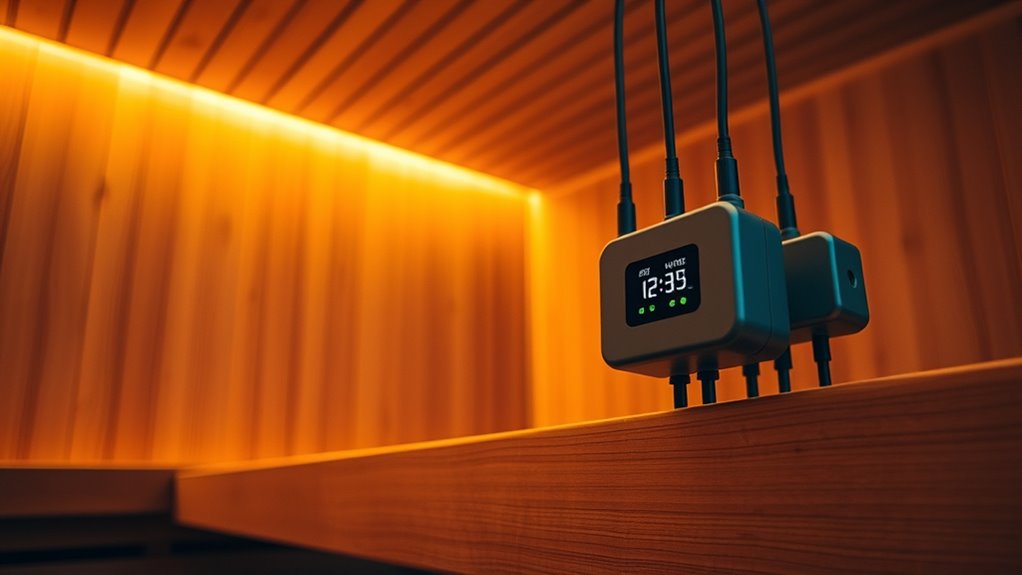

Monitoring CO2 levels in your sauna with sensors helps you guarantee a safe, comfortable environment by detecting elevated levels that can cause dizziness or health issues. Proper calibration of these sensors is essential for accurate readings, enabling you to adjust ventilation as needed. Automated systems can respond quickly, maintaining ideal conditions. Staying on top of sensor maintenance and understanding environmental influences ensures long-term effectiveness. Keep exploring to learn how you can enhance your sauna experience further.
Key Takeaways
- Deploy CO2 sensors to continuously monitor indoor air quality and detect elevated CO2 levels in saunas.
- Regularly calibrate sensors to ensure accurate readings and account for environmental factors.
- Use sensor data to automate or manually adjust ventilation, maintaining comfortable and safe CO2 concentrations.
- Implement scheduled maintenance and recalibration to sustain sensor accuracy and long-term effectiveness.
- Integrate CO2 monitoring with ventilation control systems to proactively manage air quality and comply with safety standards.
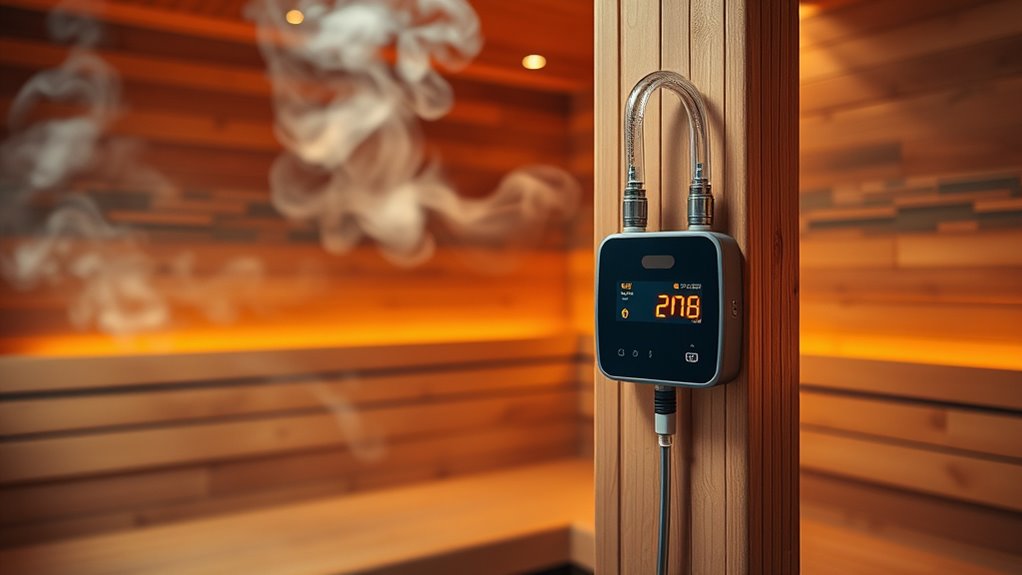
Monitoring carbon dioxide levels in saunas is essential for ensuring a safe and comfortable environment. Elevated CO2 concentrations can lead to discomfort, dizziness, or even health risks if not properly managed. Using sensors to track these levels allows you to maintain optimal conditions and ensures that your sauna remains a safe space for everyone. To get accurate readings, you need to focus on sensor calibration. Proper calibration involves adjusting the sensor to match known CO2 concentrations, so it provides precise measurements over time. Regular calibration is vital because sensors can drift or become less accurate due to environmental factors or age. By establishing a routine calibration schedule, you ensure your sensor’s readings stay reliable, giving you confidence in your ventilation management decisions.
Effective ventilation management is crucial once you have accurate sensor data. When CO2 levels rise beyond safe thresholds, proper ventilation helps remove stale, CO2-rich air and replaces it with fresh air. Automated systems can be integrated with sensors to adjust airflow dynamically, ensuring that the environment remains comfortable without over-ventilating, which could waste energy or lower the temperature too much. On the other hand, insufficient ventilation can cause CO2 buildup, leading to discomfort and potential health issues. Monitoring sensors provide real-time data, so you can make timely adjustments to your ventilation system, whether manually or automatically. This proactive approach not only enhances user comfort but also preserves the longevity of your sauna equipment by preventing excessive humidity or stale air buildup.
Implementing a reliable sensor calibration process and integrating it with your ventilation management system creates a balanced environment. You’ll be able to respond quickly to changes in CO2 levels, avoiding discomfort and health hazards. Keep in mind that environmental factors like temperature and humidity can influence sensor performance. Periodic checks and recalibration ensure your system remains accurate and effective. Additionally, understanding the importance of automotive water spot removers can help you maintain the exterior of your property, ensuring a clean and inviting appearance. By doing so, you establish a consistent environment that promotes well-being and safety. Furthermore, monitoring CO2 levels with calibrated sensors can help you meet health and safety standards, especially if your sauna operates commercially or in shared spaces.

VETOUCH Plug in CO2 Detector Wall, 3-in-1 Air Quality Monitor CO2 Alarm, Digital Display CO2 Monitor, Household Temp Humidity Meter, Real-Time CO2 Level Sensor Alert for Home Office School Garage
- Plug & Play Design: No batteries needed, instant setup
- 3-in-1 Air Quality Monitoring: CO2, temperature, humidity tracking
- Large Color Display: Bright 1.83-inch screen for easy reading
As an affiliate, we earn on qualifying purchases.
As an affiliate, we earn on qualifying purchases.
Frequently Asked Questions
How Often Should Sauna CO2 Sensors Be Calibrated?
You should calibrate your sauna CO2 sensors at least every six months to guarantee accuracy. Incorporate sensor calibration into your maintenance schedule, checking for drift or inaccuracies regularly. If your sauna experiences high humidity or rapid temperature changes, consider calibrating more frequently, like quarterly. Proper maintenance, including timely calibration, helps maintain reliable CO2 readings and ensures a safe, comfortable environment for users.
Are There Safety Standards for CO2 Levels in Saunas?
Think of CO2 safety in saunas as a delicate dance—you need to stay within the rhythm of sauna standards for safe air quality. While specific CO2 levels aren’t universally mandated, maintaining good ventilation is key. Following sauna standards helps make certain your environment remains safe, preventing excessive CO2 buildup. Always monitor levels with reliable sensors, and if you notice high readings, improve airflow to keep your sauna experience safe and enjoyable.
Can CO2 Sensors Detect Other Gases in Sauna Environments?
Yes, CO2 sensors can detect other gases in sauna environments, but sensor selectivity is key. Many sensors are designed to target specific gases, minimizing gas interference from substances like humidity or volatile organic compounds. However, some sensors may experience cross-sensitivity, so choosing a sensor with high selectivity guarantees accurate CO2 readings without false signals caused by other gases present in saunas.
What Is the Typical Lifespan of a Sauna CO2 Sensor?
A sauna CO2 sensor typically lasts about 2 to 5 years, depending on sensor durability and usage conditions. You should monitor its performance regularly, as decreased accuracy indicates it’s time for sensor replacement. Proper maintenance can extend its lifespan, but eventually, sensor replacement becomes necessary to guarantee reliable CO2 level readings. Keep an eye on calibration needs to maximize the sensor’s longevity and accuracy.
How Does Humidity Affect CO2 Sensor Accuracy in Saunas?
Humidity interference can subtly influence your sensor’s performance, making it less accurate over time. High humidity levels in saunas may cause condensation, which affects sensor calibration and can lead to false readings. To guarantee reliable measurements, you should regularly check and calibrate your CO2 sensor, especially in humid environments. Proper maintenance helps your sensor adapt to the sauna’s moisture, preserving accuracy and ensuring a safe, enjoyable experience.

16 in 1 Air Quality Monitor Indoor 7" Wildfire CO2 Monitor, 9 AQI+7 Alerts
- 16-in-1 Air Quality Monitoring: Detects 9 key air parameters and 7 AQI alerts
- Large 7-inch LED Display: Clear, instant air quality readings with adjustable brightness
- High-Precision External Sensors: Accurate to 0.001 units for reliable detection
As an affiliate, we earn on qualifying purchases.
As an affiliate, we earn on qualifying purchases.
Conclusion
By keeping an eye on CO₂ levels with sensors, you’re like a vigilant lighthouse guiding your sauna experience. Just as a lighthouse warns ships of unseen dangers, sensors alert you to potential risks before they become real. This simple device becomes your silent guardian, ensuring your relaxation isn’t overshadowed by unseen hazards. With sensors, you create a safe haven—where breath and bliss intertwine—making every sauna session a truly invigorating journey for both body and mind.

DAOTAILI 4-Inch Grow Tent Inline Duct Fan, Automatic Temperature & Humidity Sensing Control, Ventilation System for Grow Tents, Greenhouses
- Smart Temperature & Humidity Control: Adjusts from 1-99% RH and 50-140°F
- Real-Time LCD Display: Shows current temperature and humidity
- Flexible Mode Options: Manual or automatic fan operation
As an affiliate, we earn on qualifying purchases.
As an affiliate, we earn on qualifying purchases.
VETOUCH Plug in CO2 Detector Wall, 3-in-1 Air Quality Monitor CO2 Alarm, Digital Display CO2 Monitor, Household Temp Humidity Meter, Real-Time CO2 Level Sensor Alert for Home Office School Garage
- Plug & Play Design: No batteries needed, instant setup
- 3-in-1 Air Quality Monitoring: CO2, temperature, humidity tracking
- Large Color Display: Bright 1.83-inch screen for easy reading
As an affiliate, we earn on qualifying purchases.
As an affiliate, we earn on qualifying purchases.