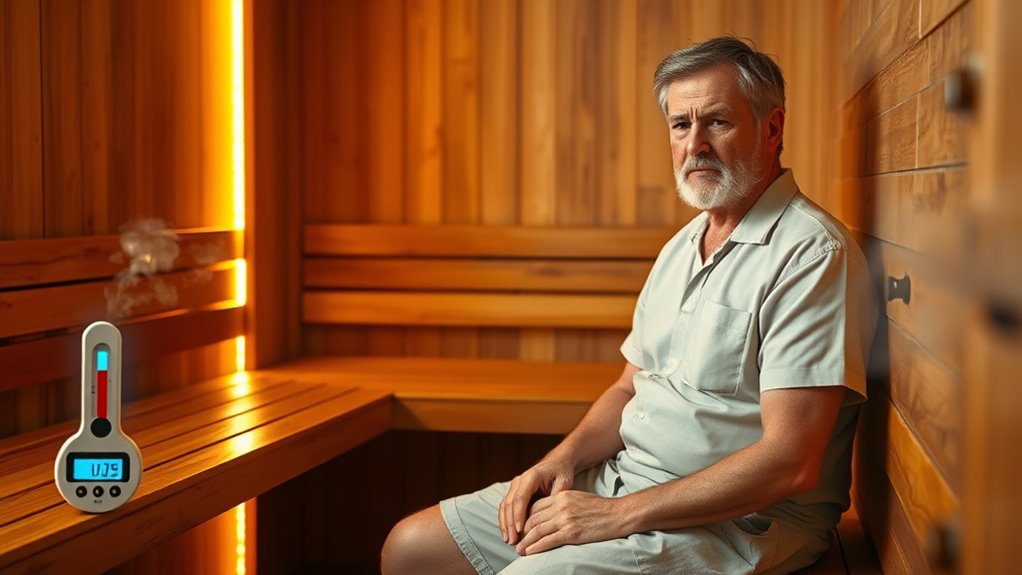

To recognize heat exhaustion in the sauna, watch for heavy sweating, dizziness, nausea, and muscle cramps. To prevent it, hydrate well before, during, and after your session, limit your time to 15-20 minutes, and listen to your body. If you notice symptoms, exit immediately, find a cool space, and hydrate. Staying alert to early signs and taking quick action helps guarantee a safe, enjoyable experience—learn more to stay healthier.
Key Takeaways
- Stay well-hydrated before, during, and after sauna sessions to prevent dehydration and heat exhaustion.
- Recognize early symptoms such as dizziness, weakness, headache, or muscle cramps for prompt action.
- Limit sauna sessions to 15-20 minutes and listen to your body to avoid overheating.
- Exit immediately and cool down if experiencing symptoms like dizziness or nausea.
- Avoid alcohol and caffeine, which can increase dehydration risk, and seek medical help if symptoms worsen.

Spending time in a sauna can be relaxing, but it also poses risks if you’re not careful—particularly heat exhaustion. When you’re immersed in high temperatures, your body works hard to cool itself down, and without proper precautions, you could start to feel unwell. To prevent this, it’s imperative to prioritize hydration strategies. Before entering, drink plenty of water to make sure your body has enough fluids to handle the heat. During your session, keep sipping water regularly, and after you leave, continue hydrating to replenish lost fluids. Avoid alcohol or caffeine, as they can dehydrate you further, increasing your risk of heat-related issues.
Being aware of symptoms is equally critical. Heat exhaustion can develop gradually, so paying close attention to how you feel helps you catch problems early. Common signs include heavy sweating, weakness, dizziness, nausea, headache, and muscle cramps. If you start to experience any of these symptoms, it’s necessary to act quickly. Step out of the sauna immediately, sit or lie down in a cool space, and hydrate with water or an electrolyte drink. Rest is fundamental to allow your body to recover, and if symptoms worsen or persist, seek medical attention without delay. Recognizing these early warning signs can make a significant difference in preventing more severe conditions like heatstroke.
Pay attention to symptoms like heavy sweating, dizziness, nausea, and cramps to prevent heat exhaustion.
Limiting your time in the sauna is a simple but effective way to reduce heat exhaustion risk. Experts recommend staying in for no more than 15-20 minutes at a time, especially if you’re new to sauna use. Listen to your body’s signals; if you feel overly hot, dizzy, or uncomfortable, it’s best to exit sooner rather than pushing through. Cooling down gradually after your session helps stabilize your body temperature, so avoid sudden cold showers immediately afterward, which can cause shock. Instead, opt for a lukewarm rinse or a cool, damp cloth on your forehead and neck. Incorporating proper ventilation can also help regulate temperature and improve safety during your sauna experience.
Combining these practices—hydration strategies, symptom awareness, and sensible time management—empowers you to enjoy the benefits of the sauna safely. Always remember that your body gives you signals, so stay attentive to how you’re feeling throughout your session. Taking proactive steps ensures you can relax and rejuvenate without risking heat exhaustion or other heat-related health issues.
Top picks for "recogniz prevent heat"
Open Amazon search results for this keyword.
As an affiliate, we earn on qualifying purchases.
Frequently Asked Questions
Can Heat Exhaustion Occur During Brief Sauna Sessions?
Yes, heat exhaustion can occur during brief sauna sessions if you’re not careful. Even short sauna sessions with brief heat exposure can cause your body to overheat, especially if you’re dehydrated or have underlying health issues. It’s important to listen to your body, stay hydrated, and limit your time inside. Recognizing early signs of heat exhaustion helps prevent serious health problems, no matter how brief the heat exposure is.
Are Certain Medical Conditions More Risky in Saunas?
Certain medical conditions do increase your risk in saunas. If you have cardiovascular issues, diabetes, or respiratory problems, you should perform a risk assessment and consult your doctor first. Medical contraindications can make sauna sessions unsafe, especially if your condition worsens with heat exposure. Always listen to your body, stay hydrated, and avoid prolonged sessions if you’re at higher risk, ensuring your safety and well-being.
How Does Hydration Impact Heat Exhaustion Prevention?
Did you know that proper hydration can reduce heat exhaustion risk by up to 50%? Hydration importance can’t be overstated; it helps your body regulate temperature and replace lost fluids. Drinking adequate fluid intake before, during, and after sauna use guarantees your body stays cool and prevents overheating. Staying well-hydrated is one of the simplest, most effective ways to protect yourself from heat exhaustion while enjoying the sauna.
Can Sauna Use Cause Long-Term Health Issues?
Sauna use can cause long-term health issues if you’re not careful. Poor sauna safety practices, like staying too long or ignoring hydration, may lead to dehydration, skin problems, or cardiovascular stress. Over time, these risks could contribute to long-term damage, especially if you have existing health conditions. To prevent this, always listen to your body, limit your sessions, and consult a healthcare professional for personalized advice.
What Are Effective Cooling Methods After Overheating?
Imagine your body as a melting candle after overheating. To protect it, use effective cooling techniques for post overheat recovery. Splash cold water on your skin, take a cool shower, or apply a damp cloth to your neck and wrists. Rest in a shaded, cool area, hydrate with water or electrolyte drinks, and breathe deeply. These steps help your body reset, preventing further harm and restoring balance.
Conclusion
Remember, your body’s signals are like a lighthouse guiding you safely through the heat. If you feel dizzy, nauseous, or excessively sweaty, don’t ignore these signs—act quickly. Staying hydrated and listening to your body helps you enjoy the sauna without risking heat exhaustion. Think of it as a dance; when you lead with caution, you’ll keep the rhythm going smoothly. Prioritize your well-being, and the warmth will be a comfort, not a danger.