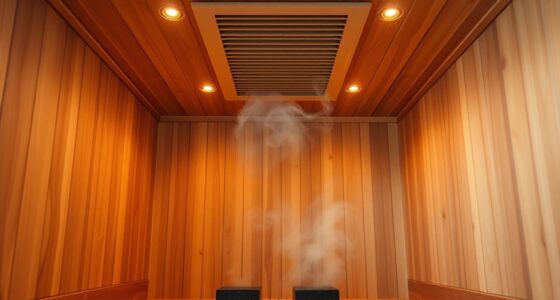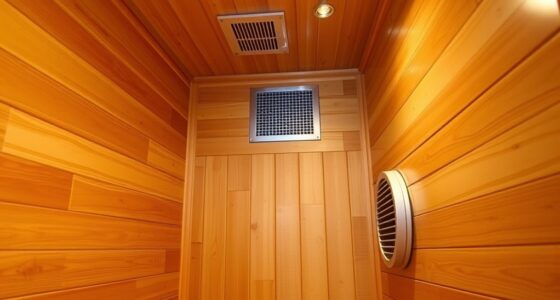
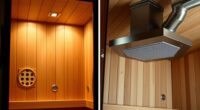
To design sauna intake and exhaust vents, place the intake low near the door or on a lower wall to bring in fresh air without cold drafts, and position the exhaust higher on the opposite wall or ceiling to let warm, humid air escape efficiently. Guarantee vents are properly sized for your sauna’s dimensions, and consider adjustable vents for better control. Proper placement promotes even heat and humidity, and if you continue, you’ll discover more tips for ideal airflow.
Key Takeaways
- Place intake vents low near the sauna door or wall for cold air intake; position exhaust vents higher, preferably on the ceiling or opposite wall.
- Ensure airflow moves from the bottom intake to the top exhaust to promote proper circulation and humidity removal.
- Adjust vent size based on sauna dimensions to facilitate efficient air exchange and prevent drafts or stagnation.
- Use adjustable vents to control airflow volume, allowing customization for comfort and optimal air quality.
- Avoid placing vents near heat sources to maintain even temperature distribution and prevent airflow disruption.

Creating effective sauna vents is essential for maintaining proper airflow and ensuring a safe, comfortable experience. When designing your sauna’s ventilation airflow, you want to make sure fresh air enters efficiently while stale air exits smoothly. This balance prevents stuffiness, reduces humidity buildup, and keeps the heat evenly distributed. To achieve this, pay close attention to vent placement, as where you position your intake and exhaust vents will directly impact how well air circulates inside the space.
Start with vent placement. You should install the intake vent near the bottom of the sauna, ideally close to the door or on a lower wall. This allows cool, fresh air to enter at a level where it can naturally warm up as it moves across the room. Positioning the intake vent low also helps prevent cold drafts while encouraging airflow to rise naturally. The exhaust vent, on the other hand, should be placed higher up, preferably across from the intake vent or on the ceiling. This setup encourages warm, humid air to rise and exit efficiently, maintaining a steady airflow. Proper vent placement ensures that the airflow pattern moves from the intake at the bottom to the exhaust at the top, creating a continuous circulation loop that keeps the air fresh and prevents stagnation.
When planning your ventilation airflow, consider the size of your sauna. Larger spaces need larger or multiple vents to promote effective air exchange, while smaller saunas require only a single set of well-placed vents. Keep in mind that vents shouldn’t be too close to the heating source, as this can disrupt airflow or cause uneven heat distribution. Instead, aim for a layout that promotes smooth, directional flow from the fresh air intake across the room toward the exhaust. This setup ensures that heat and humidity are evenly distributed, making your sauna more comfortable and energy-efficient. Additionally, incorporating vertical storage solutions can help optimize space around your vents and improve overall airflow.
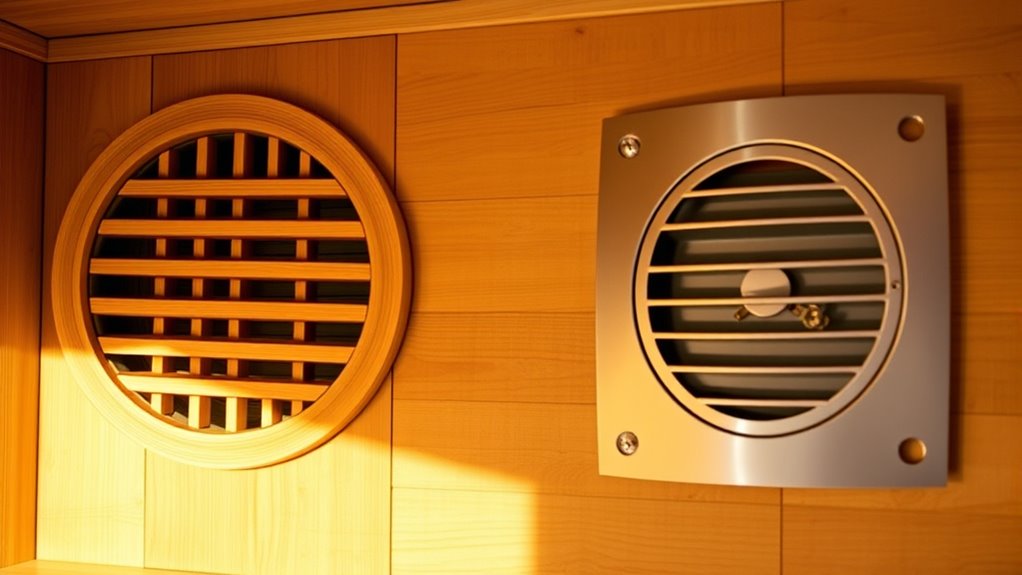
Lastly, think about the design and construction of your vents. Use adjustable vents if possible, so you can control how much air flows in and out. This flexibility allows you to fine-tune the ventilation airflow based on your preferences and sauna usage. Also, ensure your vents are properly sealed around edges to prevent leaks or drafts that could compromise the sauna’s temperature or humidity levels. When you pay attention to vent placement and ventilation airflow, you’re creating a balanced environment where heat, humidity, and fresh air work together to give you a safe, enjoyable sauna experience.
Top picks for "design intake exhaust"
Open Amazon search results for this keyword.
As an affiliate, we earn on qualifying purchases.
Frequently Asked Questions
What Materials Are Best for Sauna Vents?
You should choose materials like stainless steel or cedar for sauna vents, as they resist high heat and moisture well. Proper vent placement ensures good airflow, while vent sealing prevents leaks and drafts. Using durable, moisture-resistant materials helps maintain the vents’ integrity over time, guaranteeing efficient ventilation. Focus on sealing around the vents to avoid air leaks, and position them correctly for ideal airflow and comfort in your sauna.
How Do Vents Affect Sauna Humidity Levels?
Vents play a vital role in humidity control by regulating airflow and moisture levels. Proper vent placement guarantees fresh air enters and moist air exits efficiently, preventing excess humidity or dryness. If vents are positioned correctly, they help maintain consistent humidity, making your sauna more comfortable. Conversely, poor placement can lead to uneven humidity, causing discomfort or mold. So, strategic vent design is key to balancing humidity for an ideal sauna experience.
Can Adjustable Vents Improve Sauna Airflow?
Yes, adjustable vents can improve sauna airflow by giving you better control over vent placement and airflow. You can easily modify the vent openings to regulate fresh air intake and exhaust, ensuring proper ventilation and comfortable humidity levels. This flexibility helps maintain consistent temperatures, prevents stuffiness, and enhances your sauna experience. With adjustable vents, you’re actively managing airflow control, making your sauna more efficient and enjoyable.
How Often Should Sauna Vents Be Cleaned?
Did you know sauna vents can accumulate dust and bacteria quickly? You should clean your vents at least once every three to six months to keep airflow ideal. Regular vent cleaning is essential for ventilation maintenance and to prevent unpleasant odors or mold growth. If you use your sauna frequently, consider cleaning more often. Proper ventilation maintenance ensures your sauna remains safe, hygienic, and enjoyable every time you use it.
Are There Different Vent Designs for Traditional and Infrared Saunas?
Yes, there are different vent designs for traditional and infrared saunas. Traditional saunas often feature larger, adjustable vents to optimize vent placement strategies for better airflow and humidity control, while infrared saunas typically use smaller, fixed vents. You should consider ventilation noise control by choosing vent styles that minimize sound transmission. Proper vent placement enhances air circulation, ensuring your sauna remains comfortable and well-ventilated regardless of the design.
Conclusion
Think of your sauna’s ventilation as its breath—without it, the heat can’t circulate or refresh properly. Good intake and exhaust vents are like lungs, bringing in fresh air and releasing stale, hot air. When you design them well, your sauna becomes a living space that breathes easily, ensuring comfort and safety. Remember, proper ventilation isn’t just a detail; it’s the heartbeat that keeps your sauna alive and inviting.