
When choosing materials for sauna vents and ductwork, opt for metal options like aluminum or stainless steel, since they withstand high heat, resist corrosion, and don’t emit harmful fumes. Avoid plastics or low-quality materials that may soften or degrade. Proper insulation and durable metal ducts ensure safety, prevent leaks, and handle moisture well. If you want to learn more about selecting the best materials for your sauna, keep exploring these key factors.
Key Takeaways
- Use heat-resistant metals like aluminum or stainless steel for vents and ductwork to ensure durability and safety.
- Avoid plastics or coated metals that may emit harmful fumes or degrade under high temperatures.
- Select insulation materials like mineral wool or foil-backed insulation that tolerate high heat and prevent condensation.
- Ensure all components meet safety standards and building codes for humid, high-temperature environments.
- Opt for corrosion-resistant materials to withstand moisture and prolong the system’s lifespan.

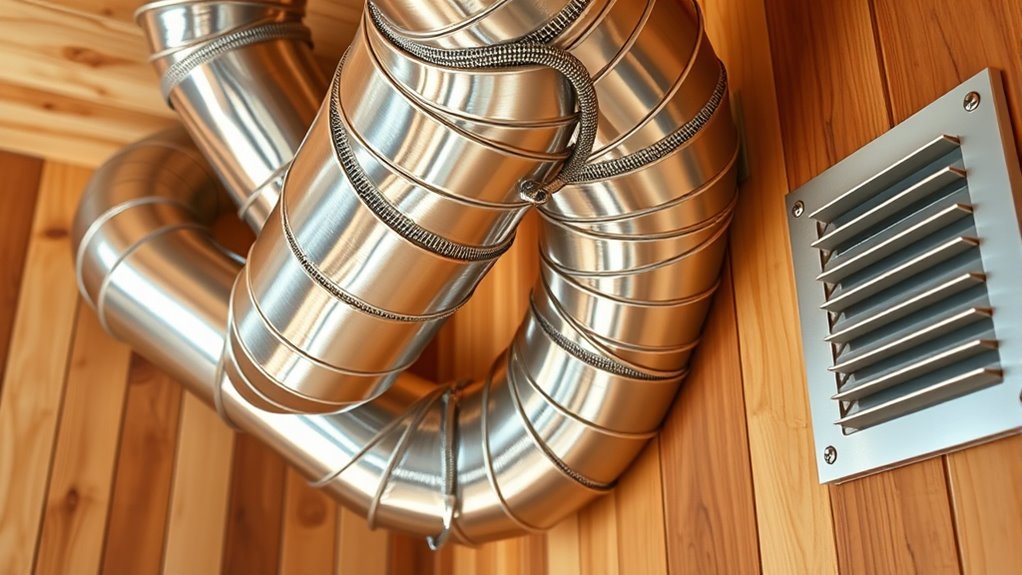
When selecting materials for sauna vents and ductwork, ensuring durability, heat resistance, and safety are vital. The choices you make directly impact the longevity and performance of your sauna’s ventilation system. Vent material options vary widely, and each comes with its own set of advantages and considerations. Metal vents, such as aluminum or stainless steel, are popular because they withstand high temperatures without warping or deteriorating over time. They’re also resistant to rust and corrosion, making them ideal for the humid environment of a sauna. On the other hand, some builders consider using heat-resistant plastics or composites for certain components, but these must be carefully evaluated for long-term stability under sustained heat exposure.
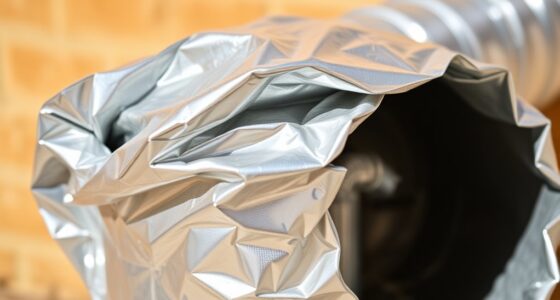
Ductwork durability considerations are equally important when selecting materials. The duct system needs to handle hot, moist air without degrading or developing mold. Metal ductwork, especially galvanized steel or aluminum, offers excellent durability and heat resistance. These materials won’t warp or crack under high temperatures, ensuring the system remains airtight and efficient. Plastic ductwork, such as PVC, is generally not suitable for sauna environments because it can soften or release fumes when exposed to extreme heat. If you opt for flexible ducting, ensure it’s made from materials rated for high temperatures and humidity, and check that it’s installed correctly to prevent leaks and airflow issues.
Safety is also paramount, so you should avoid materials that release harmful fumes when heated. Poor-quality plastics or coated metals might emit fumes that compromise indoor air quality and pose health risks. Always verify that your chosen vent materials meet local building codes and standards for sauna installations. Proper insulation of ductwork is another key consideration; it minimizes heat loss and prevents condensation, which can lead to mold or structural damage. Insulation materials like mineral wool or foil-backed insulation are often recommended because they tolerate high temperatures and resist moisture. Additionally, selecting materials with fire-resistant properties can further enhance the safety of your sauna ventilation system.
Top picks for "choos material sauna"
Open Amazon search results for this keyword.
As an affiliate, we earn on qualifying purchases.
Frequently Asked Questions
Can I Use Recycled Materials for Sauna Vent Ductwork?
You can use recycled materials for sauna vent ductwork, but you need to be cautious. Make certain these recycled options are durable, heat-resistant, and safe for high temperatures and moisture. While recycled materials are a sustainable choice, not all are suitable for sauna environments. Look for certified, high-quality recycled options that meet safety standards, so you maintain a safe, efficient, and eco-friendly sauna ventilation system.
How Do I Prevent Corrosion in Sauna Vent Systems?
To prevent corrosion in your sauna vent system, you should focus on effective moisture control and regular vent cleaning. Guarantee your vents are made from corrosion-resistant materials like stainless steel or aluminum. Keep the system dry by maintaining proper ventilation and promptly address any leaks or excessive moisture. Regularly clean the vents to remove buildup and prevent corrosion, helping your sauna stay safe and efficient over time.
Are There Eco-Friendly Options for Sauna Vent Materials?
Are eco-friendly options for sauna vent materials worth considering? Absolutely! You can opt for natural alternatives like bamboo or recycled metal, which are sustainable and durable. Look for non-toxic finishes that won’t emit harmful fumes under heat. These choices help reduce your environmental impact while ensuring safety and longevity in your sauna. Isn’t it rewarding to create a healthier, greener space that’s good for you and the planet?
How Do Material Choices Affect Sauna Air Quality?
Your material choices substantially impact sauna air quality by influencing ventilation efficiency and durability. Using high-quality, non-toxic materials guarantees better air circulation and reduces harmful emissions, keeping the air cleaner and safer. Durable materials resist wear and prevent leaks, maintaining proper airflow over time. Choosing eco-friendly, sturdy options helps you sustain good air quality, minimizes maintenance, and creates a healthier sauna environment for everyone.
What Are the Cost Differences Between Material Options?
You’ll find that the cost comparison between materials varies widely; stainless steel tends to be about 50% more expensive than aluminum. Durable materials like copper or galvanized steel cost more upfront but last longer, reducing replacement costs. While cheaper options may save you money initially, their lower durability could lead to higher maintenance costs over time. Consider your budget and long-term needs to choose the best material for your sauna’s vents and ductwork.
Conclusion
Ultimately, selecting the right materials for your sauna vents and ductwork guarantees safety, durability, and ideal performance. When you choose high-quality, heat-resistant options, you’re not just investing in functionality—you’re creating a space that naturally complements your well-being. It’s almost poetic how the right choices blend seamlessly into your sauna’s design, proving that sometimes, the best decisions are those that seem to align perfectly, turning practicality into a quiet art of harmony.