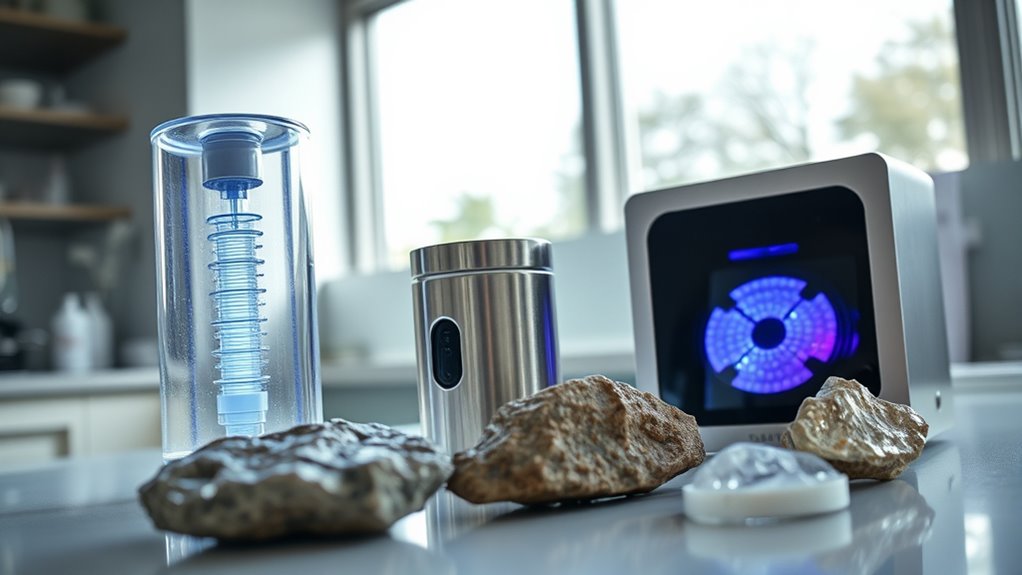

Natural alternatives like ozone, UV, and mineral systems provide effective, chemical-free ways to disinfect your environment. Ozone gas destroys germs without residues, while UV light deactivates microorganisms quickly and safely. Mineral systems use natural extracts to clean and disinfect without harsh chemicals. These solutions promote healthier indoor air, reduce ecological impact, and are safe for vulnerable populations. If you want to explore more about these eco-friendly options, you’ll find useful insights ahead.

Get wellness gear delivered free with Prime
- Fast, free delivery on millions of items
- Prime Video, Amazon Music and more included
- Member-only deals all year
Key Takeaways
- Ozone systems generate strong oxidizing gas to disinfect surfaces, air, and water without chemical residues.
- UV sterilization uses ultraviolet light to deactivate pathogens rapidly, providing chemical-free surface and air sanitation.
- Plant-based sanitizers utilize essential oils and botanical extracts to naturally eliminate germs, offering a chemical-free alternative.
- These methods promote health and environmental benefits by reducing chemical exposure and supporting eco-friendly practices.
- Integration of ozone, UV, and mineral systems into cleaning routines enhances safety and sustainability in residential and professional settings.
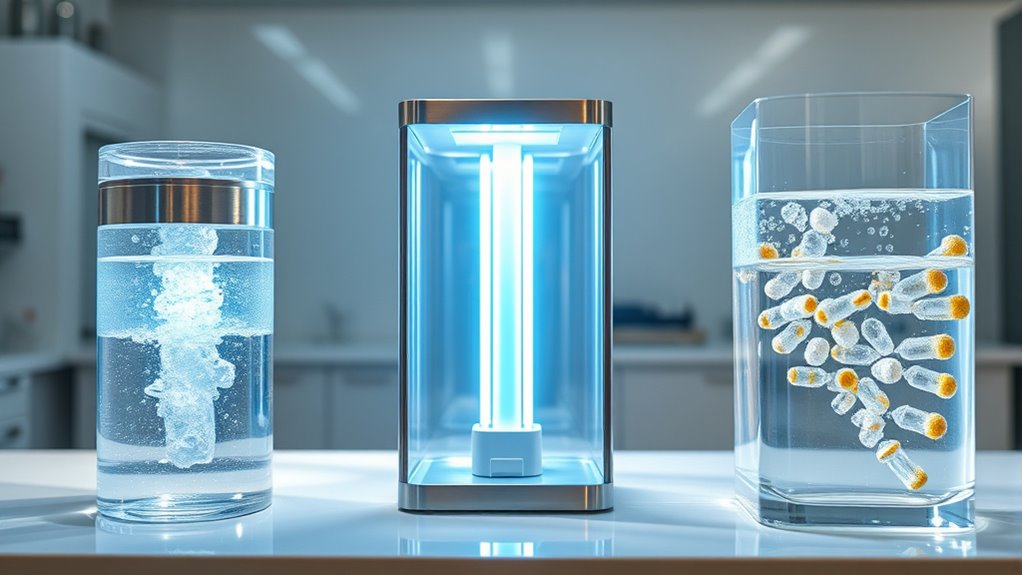
Are you looking for effective ways to sanitize without relying on harsh chemicals? If so, exploring eco-friendly disinfectants can be a game-changer. Many people are turning to plant-based sanitizers because they offer a natural way to keep surfaces clean without exposing themselves or the environment to toxic substances. These natural alternatives are not only safer but often just as effective as traditional chemical disinfectants. You can find a variety of plant-based sanitizers that use essential oils, botanical extracts, and natural acids to eliminate germs. They work by disrupting microbial cell walls or interfering with their reproduction, providing a powerful, chemical-free cleaning option. Plus, they tend to be biodegradable, reducing your ecological footprint.
Beyond plant-based sanitizers, technologies like ozone and UV systems are gaining popularity for their ability to sanitize effectively without chemicals. Ozone generators produce ozone gas, which is a strong oxidizer that destroys bacteria, viruses, and other pathogens on contact. When used correctly, ozone systems can disinfect air, water, and surfaces without leaving harmful residues. They’re especially useful in food processing, water treatment, and HVAC systems. UV sterilization, on the other hand, employs ultraviolet light to deactivate microorganisms by damaging their DNA or RNA. UV systems are highly effective and quick, making them suitable for hospitals, laboratories, and even household use. They don’t require chemicals, and once the UV light is off, no residues remain. Both ozone and UV systems offer a sustainable, chemical-free approach to sanitation, aligning with eco-conscious practices.
Incorporating these natural alternatives into your cleaning routine not only minimizes the use of harsh chemicals but also promotes a healthier environment. Plant-based sanitizers are gentle on your skin and respiratory system, making them ideal for households with children or allergy sufferers. Using local gym hours knowledge can help you schedule your cleaning routines during off-peak times when your home is less occupied, ensuring safety and convenience. Ozone and UV systems, meanwhile, provide high-level disinfection without the need for disposables or chemical residues, reducing waste and potential health risks. As awareness about environmental impact grows, more companies are developing innovative solutions that combine these technologies for safer, greener cleaning. Whether you’re aiming for a more sustainable home or a professional setting committed to eco-friendly practices, these natural sanitizer alternatives present versatile options. They allow you to maintain cleanliness and hygiene without compromising your health or the planet. By choosing eco-friendly disinfectants, plant-based sanitizers, or advanced ozone and UV systems, you take a step toward a cleaner, safer future—one that’s free from the hazards of traditional chemical disinfectants.
As an affiliate, we earn on qualifying purchases.
Frequently Asked Questions
How Do Ozone, UV, and Mineral Systems Compare in Cost?
You’ll find that ozone systems generally have higher initial costs but lower ongoing expenses, making them cost-effective long-term. UV systems typically have moderate installation expenses and are easy to maintain, while mineral systems often have the lowest upfront costs but may require more frequent replacement parts. When considering cost comparison, factor in installation expenses and long-term maintenance to choose the best natural sanitizer for your needs.
Are Natural Sanitizers Effective Against All Pathogens?
Natural sanitizers are effective against many pathogens, but their pathogen specificity varies. For instance, UV light quickly neutralizes bacteria and viruses, while ozone is strong against molds and some bacteria. Mineral systems may have limited spectrum. You should consider their environmental impact, as natural sanitizers often reduce chemical use and pollution. However, for extensive disinfection, combining methods or using traditional sanitizers might be necessary to cover all pathogen types.
What Maintenance Is Required for Ozone, UV, and Mineral Systems?
An ounce of prevention is worth a pound of cure, so you need to stay on top of maintenance. For ozone, UV, and mineral systems, regular cleaning and bulb or component replacements extend system lifespan. Check filters, replace UV bulbs typically every 12 months, and inspect ozone generators regularly. Maintenance frequency varies, but staying consistent guarantees your system functions effectively, saving you time and money in the long run.
Do These Systems Produce Any Harmful Byproducts?
These systems are designed to produce minimal harmful byproducts, ensuring byproduct safety and reducing environmental impact. Ozone systems convert oxygen into ozone, which quickly decomposes into harmless oxygen, while UV systems use light to destroy pathogens without creating toxic residues. Mineral systems release natural minerals that don’t produce harmful chemicals. Overall, these options prioritize safety and eco-friendliness, making them excellent natural alternatives to chemical sanitizers.
Can Natural Systems Be Integrated Into Existing Sanitation Protocols?
Of course, you can easily integrate natural systems into your existing sanitation protocols—because who wouldn’t want to boost regulatory compliance with eco-friendly options? Just remember, proper user training is essential to guarantee these systems work effectively and safely. Ironically, replacing chemicals with natural methods often requires extra effort upfront, but in the long run, it’s a sustainable choice that aligns with health standards and environmental goals.
As an affiliate, we earn on qualifying purchases.
Conclusion
By exploring gentle yet effective options like ozone, UV, and mineral systems, you embrace a more harmonious approach to sanitation. These alternatives subtly elevate your cleanliness routine without relying solely on traditional chemicals, allowing nature’s quiet strength to shine through. As you consider these refined methods, you foster a safer environment that respects both your well-being and the planet’s delicate balance. Ultimately, you find that sophistication and sustainability can beautifully coexist in your sanitation choices.
As an affiliate, we earn on qualifying purchases.
As an affiliate, we earn on qualifying purchases.
Cold & flu season Picks
humidifiers
As an affiliate, we earn on qualifying purchases.